News
Three Mexicans, others denied bail over alleged N480bn meth lab

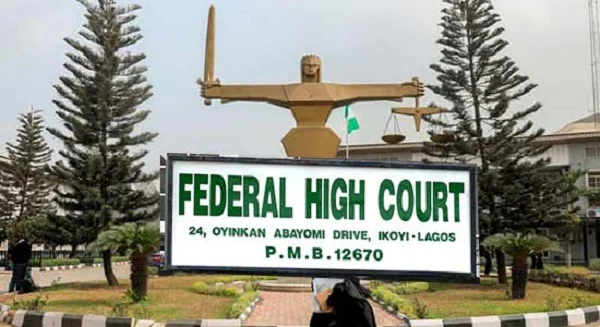
Justice Akintayo Aluko of the Federal High Court in Lagos on Wednesday denied bail to three Mexican nationals and seven Nigerians accused of operating a clandestine methamphetamine laboratory in Ogun State, citing the risk that some of them could abscond and evade trial.
The judge held that the defendants failed to place sufficient materials before the court to justify granting them bail, stressing that although bail is discretionary, the discretion must be exercised judicially and judiciously.
The defendants are Juan Carlos Meza Torrero, Nemecio Martinez Felix, Jesus Lopez Valles, Anochili Innocent, Nwankwo Sunday Christian, Egwuonwu Uchenna Victor, Igwe Abuchi Remijus, Ifeanyichukwu Chibuike Joshua, Omonughwa Kingsley Orike and Emeka Christopher Nwobum.
The defendants are facing an 11-count charge filed by the National Drug Law Enforcement Agency over alleged conspiracy, production and trafficking of methamphetamine and the acquisition and transportation of precursor chemicals used in its manufacture.
The NDLEA alleged that the defendants established a clandestine laboratory in a forest at Iloti Village, Ijebu East Local Government Area of Ogun State, where 2,419.48 kilogrammes of methamphetamine, valued at over N480bn internationally, was allegedly produced.
Delivering his ruling, Aluko held that bail could be refused where there were reasonable grounds to believe that an accused person might abscond, commit another offence, interfere with the investigation or trial, destroy evidence or otherwise undermine the administration of justice.
He said the primary purpose of bail was to ensure that an accused person remained available to face trial.
The judge said NDLEA counsel, Buhari Abdullahi, had raised specific allegations in the prosecution’s counter-affidavit which were relevant to the bail applications.
He observed that the defendants did not effectively deny some of the allegations.
Aluko also noted that some defendants admitted that chemicals were recovered from their possession but claimed they were meant for legitimate purposes and had no connection with methamphetamine production.
Relying on judicial authorities, the judge held that failure to deny material facts in a counter-affidavit effectively could amount to an admission.
He consequently held that the uncontroverted allegations provided sufficient grounds to refuse the bail applications.
The judge also rejected the defendants’ reliance on alleged medical conditions, noting that no medical reports were attached to substantiate their claims of ill health.
He further held that there was no evidence that the correctional facility was incapable of providing adequate medical care.
“The application for bail is not well made out,” Aluko held.
The judge also relied on Court of Appeal decisions cautioning against granting bail where there were grounds to believe that an accused person might abscond.
He cited the Supreme Court decision in Bamaiyi v. State, stressing the need to safeguard the interests of the prosecution, accused persons and victims within the criminal justice system.
Aluko, however, noted that an accelerated trial could serve as a safeguard where there were concerns about the defendants’ availability.
He said the substantive case had already been ordered for accelerated hearing and proceedings had commenced before Justice Musa Kakaki.
The prosecution had also called its first witness, the judge noted.
Justice Aluko consequently dismissed the bail applications and ordered that the defendants remain in custody pending the continuation of their trial.
Earlier, counsel for the defendants, Chief Benson Ndakara, urged the court to grant bail, arguing that the continued detention of his clients violated their fundamental rights.
Ndakara said the offences were bailable and that the defendants were presumed innocent until proven guilty.
He argued that Anochili was unjustifiably detained because no hard drugs were allegedly recovered from him at the time of his arrest.
The lawyer also denied that the defendants were establishing a methamphetamine laboratory, saying they were putting structures in place for poultry farming, piggery and alcoholic-wine production.
He assured the court that the defendants were willing to provide reliable sureties and comply with any bail conditions.
The defence also cited the alleged deteriorating health of some of the defendants, arguing that they required special medical attention.
But the NDLEA opposed the applications, describing the defendants as flight risks.
Abdullahi argued that no exceptional circumstance warranted the defendants’ resort to the vacation court because the substantive case was already before Justice Kakaki.
He said the defendants had been arraigned, their pleas taken, and an order made for accelerated hearing.
The prosecutor noted that three of the defendants were Mexicans. At the same time, Anochili was a Nigerian-Mexican, arguing that their release could enable them to leave the country and frustrate the trial.
Abdullahi also rejected the defence’s claim that the facility where the alleged laboratory was discovered was intended for legitimate businesses.
He alleged that NDLEA investigations showed that the facility was owned, financed and sponsored by Anochili for the illicit production of methamphetamine.
According to the prosecution, operatives recovered equipment, apparatus, chemicals and other materials allegedly used in producing controlled substances.
The agency specifically identified Phenyl-2-Propanone, or P2P, as a major precursor used in methamphetamine production.
The NDLEA alleged that the defendants formed part of an organised network involved in the production and trafficking of methamphetamine and the acquisition and transportation of precursor chemicals.
The defendants have denied the allegations and remain presumed innocent until proven guilty.
They were arrested during coordinated operations in Ogun and Lagos states between May 16 and 18, 2026.
The NDLEA said its operatives raided the alleged laboratory, hidden in a forest in Ijebu East, on May 16 and arrested four Nigerians alongside three Mexican nationals, whom it described as methamphetamine production experts.





Ex-IYC President Advises Tinubu To Channel Subsidy Removal Savings Into Rehabilitating Refineries, Strengthening LG Autonomy

‘Why can’t Nigerians buy petrol for N441-N872 per litre like, Saudi Arabia, others’ – Atiku questions Tinubu

“If America, Cannot Fully Open Tinubu’s Drug Files, Who Told You Obi or Atiku Can Win Without a Revolution?” – IPOB

Private Business Claims Linked to Permanent Secretary John Chidiebere Ezeamama in Violation of Code of Conduct for Civil Servants – Secrets Reporters Nigeria

Evening recap: Tinubu targets $1tn economy, police rescue NYSC members, IPOB threatens 2027, other top stories

2027: Nigerians Would Have Known Him For Four Years – ADC Spokesperson Reveals How Atiku Will Defeat Tinubu

“No Office, Title Or Social Status Places Anyone Above The Law” — Olukoyede Says EFCC Secured 10,872 Convictions In 34 Months

BUSTED: Highly Classified Intelligence Report Reveals Bola Tinubu Is Not on Vacation, But in Europe to Seek Political Protection From His “Friends” to Ensure His US Drug-Related Documents Are Never Released
Atiku’s Absence At Coalition Talks For Single-candidate Should Not Be Interpreted As Boycott – Phrank Shaibu

Tinubu’s Old Certificate and U.S. Forfeiture Controversies Resurface Ahead of Nigeria’s 2027 Election

Trading food for medicine and crossing the river by zip line are part of life in Nepal flood zone

How I made N10m monthly from akara business — Akwa Ibom gov

FAAN Training School Opens Registration For Aviation Courses In 2026

Explosive devices damage power lines near German coal plant

Funke Akindele Unveils First Look at New Movie ‘The Four’

Fury confirms Joshua fight in USA

NLNG/SEPNU leads as domestic cooking gas supply rises
“The wedding I never had”

Zamfara CPG Arrests Nine Suspects Over Banditry, Ransom Operations

Galamsey Operators Destroy Motorcycle Belonging To Suspected Robbers After Clash At Mining Site

 News21 hours ago
Exclusive: Federal Government Indicts MDGIF Director Oluwole Adama Of N33.6 Billion Under-Remittance of Gas Flares Penalty To Public Purse – Secrets Reporters Nigeria
- Viral17 hours ago
Backlash as Governor Oborevwori Allegedly Distributes Billions to Council Chairmen, Vice, Councilors Amid Economic Hardship
 News23 hours ago
Exclusive: N1 Billion Into Private Pockets: How Finance Permanent Secretary Lydia Jafiya Routed Public Funds Through Personal Bank Accounts In Six Days – Secrets Reporters Nigeria
- Special Report24 hours ago
Ferry Conductor Snatches And Throws Passenger’s Phone Into River For Recording Him, Incident Creates Scence
- Entertainment19 hours ago
“For over 30 years” – Lady who received ₦1M from Peller reveals amount she gave her mother for business support in 2024
- Entertainment18 hours ago
“My baby come use English explain give this people” – Hilarious moment Peller calls Jarvis to defend him during tiktok live dispute
- Viral18 hours ago
Having sexual intercourse with your wife without her consent attracts life imprisonment – Lagos gov’t warns husbands
- News19 hours ago
N5 Billion On “Travel and Training”: Inside Dayo Mobereola’s First Full Year Of Questionable Spending As NIMASA DG – Secrets Reporters Nigeria