News
Red Cross trains Abuja e-hailing drivers on emergency roadside first aid

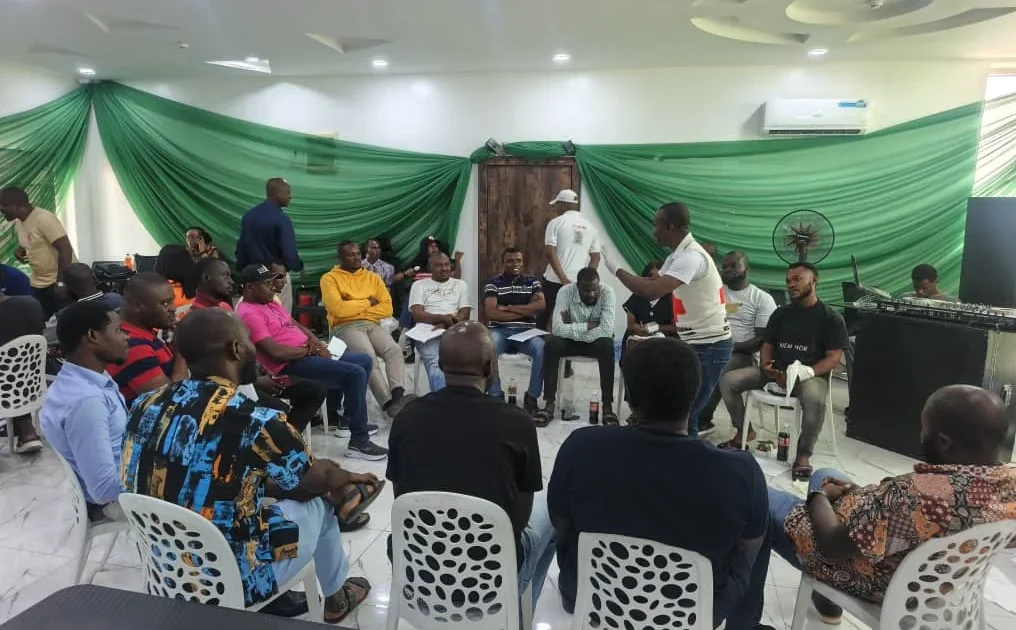
The Nigerian Red Cross Society has trained e-hailing drivers in Abuja on emergency roadside first aid and crash casualty management to improve survival rates during road accidents.
The initiative, implemented through the Red Cross Social Enterprise in partnership with ride-hailing platform Bolt, seeks to equip commercial drivers with practical skills to act as initial first responders before professional medical teams arrive at the scene.
Speaking during the practical session in Abuja on Tuesday, the Managing Director of the Nigerian Red Cross Social Enterprise, Gbubemi Uba, emphasised that because e-hailing drivers operate continuously on urban roads, they are frequently among the first individuals to encounter road accidents.
She said, “Like you rightly know, drivers are always on the road. So, in cases of motor accidents on the road, they are most likely to be the first responders. All we are trying to do with this training is to ensure that they have all the technical skills, as well as the confidence, to be able to respond when they find such a crisis.”
Uba noted that improper handling of accident victims by untrained bystanders often worsens injuries, sometimes resulting in permanent disability.
She said, “What statistics have shown us is that when there’s an accident, the victim has very few seconds before death. So, if you have a first responder there, you’ll be able to administer first aid before the professional medical team comes in.
“The method of carrying them can actually lead to them becoming paralysed at the end of the day. So, this training is just to train the drivers on how to position them and how to carry them before the medical team arrives.”
The Driver Community Manager for Bolt Nigeria, David Ohuka, highlighted that emergency intervention within the initial minutes of a crash often determines survival.
He said, “We are training some of our driver partners on first aid and emergency response. As a company, we are big on safety. So, equipping our drivers with these skills helps them be better prepared for incidents that occur on the road.
“And them knowing these skills keeps our society safer because our drivers are in a unique position around cities. This means that they are most likely to be among the first people to arrive at the scene of an accident. So, equipping our drivers with these skills helps make our drivers and our cities safer.”
Ohuka stated that the Abuja workshop serves as a pilot phase for a broader rollout planned across other major urban centres in Nigeria, including Lagos, Port Harcourt, Ibadan and Calabar. Participating drivers were also provided with first aid kits to maintain readiness on the road.
“What’s happening here right now is just the pilot programme. We intend to scale this across the cities that Bolt is operational in. Currently, Bolt is operational in 12 cities in Nigeria, and we plan to go to as many cities as possible. So, from here, we’ll be looking at Lagos, Port Harcourt, Ibadan, Calabar and the rest. We’ll just keep going,” he said.
The Head of Training at the Nigerian Red Cross Society, Audu Goji, explained that the programme combines digital theoretical learning with hands-on practical exercises.
According to him, these include placing unconscious victims in the recovery position, administering cardiopulmonary resuscitation, controlling severe bleeding, immobilising fractures and carrying out safe patient transport.
“Today, because they have used the app and read all the theoretical components of first aid, they are coming for the practical aspect. We teach them some simple ways of picking up casualties so that the casualty will be safe, and how to handle the casualty from the scene into the car, so that they will have the skills.”





EPL: ‘No longer sharp, quick’ – Carragher names who to blame for Arsenal’s first goal against Chelsea

Oyo 2027: Civil servants wait for seven to 10 years before receiving entitlements – ADC guber candidate

2027: If You Had The Guts To Challenge Sitting President, Why Didn’t You Come Out? – Sambo Fires Datti

Evening recap: FG to give Nigerian shipowners $25m, Drivers, cooks, traders can own refinery shares, other top stories

CBN Deputy Governor Emem Usoro Who Was Side Chic To A Married Man Accused Of Watching Him Take His Last Breath, Buried Him Alone And Took His Death Certificate From His Wife – Secrets Reporters Nigeria

Paper Promises vs. Real Pulses: Why Nigeria’s Hypertension Crisis Demands Cash-Backing, Not Just Budget Speech-Making – Professor Emmanuel Alhassan and LISDEL

‘After Working With Peter Obi, You Risk Suffering Post-political Identity Crisis’ – Kenneth Okonkwo Defends Datti

Exclusive: Niger Delta Suffers While MDGIF Director Oluwole Adama Hides N12.9 Billion Natural Gas Fund – Secrets Reporters Nigeria

Ibiyeomie Rejects Offerings From Internet Fraudsters, Tells Them To Leave » Apples Bite Int’l Magazine

APC challenges Adeleke’s August win as Osun tribunal posts petitions

Brazil Supreme Court removes federal police chief, deepening crisis at the top court

CAF Confederation Cup: Shooting Stars train under floodlight for CS Sfaxien return leg
CAF Confederation Cup: Shooting Stars train under floodlight for CS Sfaxien return leg

MDGIF rejects Auditor-General’s N94.4bn audit query
Reforms moving from stability to investment – Tinubu

Kenya's doctors threaten to join strike by nurses, citing increased workload in hospitals

UCL: Allegri reveals mistake Napoli players must not make against Arsenal

Troops rescue 12 civilians from terrorists in Zamfara
Troops rescue 12 civilians from terrorists in Zamfara

China rejects Taiwan independence claim, defends UN resolution

 Headlines14 hours ago
Oyo 2027: Civil servants wait for seven to 10 years before receiving entitlements – ADC guber candidate
- News23 hours ago
Evening recap: FG to give Nigerian shipowners $25m, Drivers, cooks, traders can own refinery shares, other top stories
 News20 hours ago
CBN Deputy Governor Emem Usoro Who Was Side Chic To A Married Man Accused Of Watching Him Take His Last Breath, Buried Him Alone And Took His Death Certificate From His Wife – Secrets Reporters Nigeria
- Politics13 hours ago
‘After Working With Peter Obi, You Risk Suffering Post-political Identity Crisis’ – Kenneth Okonkwo Defends Datti
 News19 hours ago
Exclusive: Niger Delta Suffers While MDGIF Director Oluwole Adama Hides N12.9 Billion Natural Gas Fund – Secrets Reporters Nigeria
- News17 hours ago
Ibiyeomie Rejects Offerings From Internet Fraudsters, Tells Them To Leave » Apples Bite Int’l Magazine
- News13 hours ago
Shettima Tasks Transporters on Peaceful Mobilisation for Tinubu’s 2027 Re-election Bid » Apples Bite Int’l Magazine
- News15 hours ago
Investigation: SEEPCO’s Anthony Chukwueke Was the FG Regulator Sacked in 2007 for Improperly Awarding Oil Licenses and Is Now Chairman of the Company That Walked Away With Nigeria’s Richest Well – Part One – Secrets Reporters Nigeria