News
Private vasities back FG’s plan for 20,000 medical students yearly


The Association of Presidents and Proprietors of Higher Institutions in Nigeria has backed the Federal Government’s plan to increase annual medical student admissions to 20,000, urging the Ministry of Education to ensure that private higher institutions are fully integrated into the initiative.
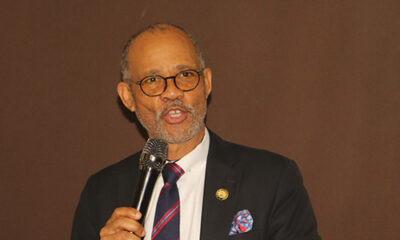
APPHIN, in a statement signed by its National Secretary, Dr Kamaludeen Muhammed, on Thursday, described the planned expansion of medical education as a significant step towards addressing Nigeria’s shortage of healthcare professionals and strengthening the country’s human capital.
The association said, “APPHIN particularly applauds the Federal Ministry of Education for its bold and forward-looking initiative aimed at expanding medical education and supporting the recruitment and training of 20,000 medical students annually.”
The group, however, stressed that achieving the target would require the participation of both public and private institutions, particularly higher institutions with adequate infrastructure, qualified academic personnel and the capacity to contribute to medical workforce development.
The Federal Government had recently unveiled plans to establish medical simulation centres across Nigeria’s six geopolitical zones as part of efforts to expand training capacity and improve practical learning for medical and other health-related students.
The Minister of Education, Tunji Alausa, had said the government was targeting an increase in annual medical admissions from almost 12,000 currently to about 20,000 within the next three years.
The minister also disclosed that nursing enrolment had risen significantly, from about 38,000 students three years ago to more than 120,000 across nursing schools, further underscoring the need for expanded infrastructure and practical training facilities.
Against this backdrop, APPHIN urged the Federal Ministry of Education and relevant regulatory agencies to establish clear mechanisms for private institutions to access and utilise accredited medical simulation centres.
The association said the guidelines should cover accreditation requirements, approved simulation centres, applicable fees, partnership arrangements and other operational requirements.
It said, “We specifically call for clear and accessible guidelines on the procedure for private institutions to access, engage and utilise accredited medical simulation centres for clinical and practical training.”
According to APPHIN, making such information publicly available would encourage educational investors and private institutions with the requisite capacity to invest further in medical education and contribute to developing Nigeria’s healthcare workforce.
The association further called for the establishment of a publicly accessible framework for collaboration between private higher institutions and accredited medical simulation centres.
“Transparent procedures, accreditation requirements, approved simulation centres, applicable fees, partnership arrangements and other operational guidelines should be clearly communicated to existing institutions and prospective educational investors,” it stated.
APPHIN argued that the private sector possessed significant capacity for investment, innovation and infrastructure development, adding that its inclusion would make the Federal Government’s medical education expansion programme more effective and sustainable.
The association also commended Alausa for what it described as broader efforts to reform and reposition Nigeria’s education sector to meet the demands of the 21st century.
It said sustained collaboration between government and private educational institutions would be critical to achieving the desired transformation in the sector. APPHIN maintained that the expansion of medical education should be approached as a collective national effort involving government, private institutions, educational investors, regulators and other stakeholders.
“Together, we can build a stronger medical education system and develop the skilled healthcare workforce required for Nigeria’s future,” the association said.
The development comes as Nigeria continues to grapple with concerns over inadequate healthcare manpower and the migration of trained professionals abroad. The Federal Government’s proposed expansion of medical training is therefore aimed not only at increasing the number of professionals produced locally but also at strengthening the capacity of institutions to provide quality and practical training.






Nigerian Christians Warn of Political Exclusion as Nasarawa’s Ruling Party Selects All‑Muslim Slate for 2027

Electricity: Nigerian university campuses will be taken off national grid — Education Minister Alausa

“Politics Is My Business” — Ebonyi LG Chairman Threatens Political Opponents After Nwifuru Warns Chairmen Against Losing Their Councils

Exclusive: How NSIA MD Aminu Umar-Sadiq Started Assets Construction Project With N363 Million And Jumped To N44.8 Billion In One Year – Part 1 – Secrets Reporters Nigeria

You’ll get lawsuit – Abati, Rufai clash on live TV over comment against presidential candidate [VIDEO]

Yobe Chairman Ask Wives To Divorce Husbands If They Stop Them From Voting APC, Vows To Pay New Bride Price

‘Everybody Knows Wike Is Synonymous With Violence’ – ADC Dismisses Claims Of Winning Rivers, FCT For Tinubu

Cash In Hand: The Multi Million Naira Olubunmi Tunji-Ojo Federal Ministry Of Interior Money Paid Directly To Individual Staff Accounts Without Vendors – Secrets Reporters Nigeria

₦1.37 Trillion Unrecovered: The Auditor General’s Report That Put Governor Yemi Cardoso Central Bank On Trial – Secrets Reporters Nigeria

Morning recap: FG counters opposition on Tinubu’s 2027 chances, 37 die from toxic fumes in Rivers, other top stories

Six Things To Know About Miss Grand USA 2026 Victoria Oluwakotanmi

Milei escalates Argentina’s Falklands dispute with UK as Trump hints at US policy shift

IYC CENTRAL ZONE PAYS COURTESY VISIT TO NNS SOROH IN YENAGOA

Rivers Assembly probes government funding of PAMO University

Eight Parcels of Canadian Loud Recovered From Car Tyre in Oyo
Rivers Assembly probes government funding of PAMO University

Russian attacks kill 4 in Ukraine as Moscow and Kyiv prepare for visit by US envoys

2027: Obi Challenges Nigerians to Expose Any Wrongdoing in His Past

130 suspected hoodlums arrested in Lagos raid

Tinubu To Address UN General Assembly On September 23

 News15 hours ago
Morning recap: FG counters opposition on Tinubu’s 2027 chances, 37 die from toxic fumes in Rivers, other top stories
- Entertainment17 hours ago
“If women are called gold diggers, what do we call those men who benefit from their fellow men’s wealth?” – Mary Njoku asks
- Entertainment24 hours ago
“These people contributed nothing to my life” – Lady fumes over traditional wedding demands from family members
- Viral19 hours ago
“Wickedness dey oo” – Lady calls out ‘desperate’ abroad men who pay bride price, sleep with women and later request dowry
- Metro20 hours ago
“Patient Received ₦93,950 Support, No Treatment Was Delayed” — Lagos Govt Rejects Hospital Extortion Claim
- Entertainment3 hours ago
“Make una keep deceiving una sef with brand deals” – Phyna reacts to Tochi’s advice to BBNaija ex-housemates
- Viral20 hours ago
[JUST IN]: APC GOVERNORSHIP CANDIDATES LANDS IN BIG TROUBLE AS TERRORISTS ATTACKS CONVOY WHILE TRAVELLING
- Entertainment21 hours ago
Court restrains Liz Anjorin from posting Priscilla Ojo and Juma Jux’s son, Rakeem