News
Only 3% of PHCs meet minimum staffing requirements – Report

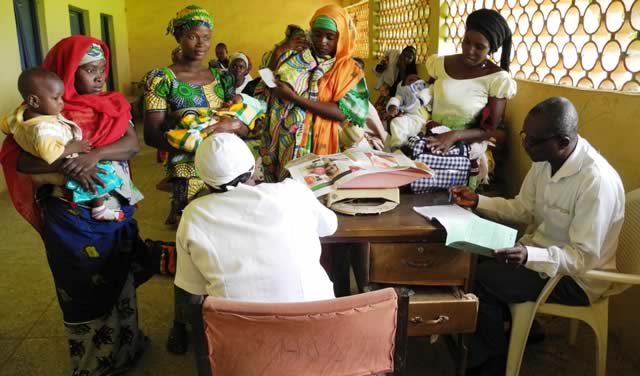
A new assessment has revealed that 97 per cent of primary healthcare centres across 16 states failed to meet national staffing standards.
The PHC Operational Capability Report, produced by Orodata Science and Civic Tech, which was released on Friday, assessed 1,480 PHCs across 277 local government areas in Nigeria’s six geopolitical zones.
According to Operations Lead at Orodata Science, Mr John Eromosele, the assessment, conducted between October 2023 and June 2025, used the CheckMyPHC Digital Scorecard to evaluate staffing, infrastructure, equipment, electricity, water supply and accessibility.
The report showed that only three per cent of the assessed facilities met the national minimum staffing requirement.
It said 11 of the 16 states assessed had no PHC that met the minimum staffing standard.
According to the report, about 75 per cent of the facilities assessed were located in rural communities.
It also revealed that 40 per cent of the facilities had broken ceilings or leaking roofs.
The report said 38 per cent of the PHCs operated without electricity, while 39 per cent relied on unsafe water sources.
It identified significant deficiencies in maternal and newborn healthcare, with 75 per cent of the assessed facilities lacking essential neonatal resuscitation equipment.
The equipment is required to support emergency interventions for newborns experiencing complications during childbirth.
The report further found that 66 per cent of the facilities lacked accessibility provisions for persons with disabilities and people with mobility challenges.
It said the challenges were interconnected and collectively undermined the ability of PHCs to provide safe, reliable and equitable healthcare.
According to the report, poor infrastructure, inadequate staffing, unreliable electricity and water supplies, limited equipment and accessibility barriers often occurred within the same facilities.
It said the combination increased risks for patients and placed additional pressure on available health workers.
The report also noted that 51 per cent of surveyed community members rated services at their local PHCs as poor.
It identified significant variations among states, saying some locations experienced challenges more severe than the overall assessment figures.
The report identified Kano and Sokoto as having particularly serious shortages of safe water, reliable electricity, and essential newborn equipment.
It also reported that Gombe recorded an 80 per cent rate of PHCs without accessibility provisions.
Orodata said improving primary healthcare required more than isolated renovation projects, urging coordinated interventions based on verified facility-level data.
The organisation recommended that states develop clear intervention plans identifying affected facilities, specific problems, responsible institutions, required resources and implementation timelines.
It also called for measurable targets, regular monitoring and evaluation, accessibility-compliant renovations and the incorporation of community feedback into monitoring processes.
The report recommended urgent repairs to damaged roofs and ceilings, provision of safe water and improved electricity supply to affected PHCs.
It further recommended solar or hybrid power systems for facilities without reliable electricity from the national grid.
Orodata urged the National Primary Health Care Development Agency and state PHC agencies to address frontline health-worker shortages.
It called for the recruitment, effective deployment and retention of health workers, particularly in underserved communities.
The report also urged authorities to ensure that PHCs providing delivery services had essential neonatal resuscitation equipment.
The assessment involved physical facility visits, direct observation, interviews with health workers and community members, photographs, GPS coordinates and facility records.
It said the CheckMyPHC Digital Scorecard was developed with reference to NPHCDA minimum standards and relevant inclusion requirements.
According to the report, the assessment sought not only to document deficiencies but also to provide facility-level evidence for implementation and resource allocation.
It said the evidence could also support monitoring and evaluation of interventions across the assessed facilities.
The report stressed that investment decisions should be linked to verified needs rather than assumptions.
It added that progress should ultimately be measured by whether PHCs became safer, better staffed, properly equipped, functional and trusted by the communities they served.





ALERT: Nigerian Army Warns of Possible Coordinated Terrorist Attacks on Churches, Schools and Youth Camps

EPL: Why I played Ola Aina as centre-back in 2-1 win over Aston Villa – Nottingham Forest boss, Glasner

Evening recap: Bamanga Tukur dies at 90, Dangote projects N10,000 refinery shares, 54 countries offer eVisa, other top stories

Morning recap: Again, Nigerians lose savings to Ponzi scheme, Dangote refinery raises petrol gantry price, other top stories

Verydarkman shares first video of Poco Lee and Burna Boy following his alleged release from UK prison

Infinix Launches GT 50 Pro: The Ultimate Hardcore Gaming Flagship with Industry-First Cooling and Control

Morning recap: Terrorists plot attacks on Osun worship centres, Lagos crackdown raises child protection concerns, other top stories

Foreign Minister, Hon Okudzeto Ablakwa Presents Chop Boxes, Beds And 100 Bicycles To North Tongu Students Ahead Of SHS Resumption

We Won’t Release You Until The Network Improves — Residents Tell Telecom Employee As They Tie Him To A Pole Over Poor Network

“Is NELFUND Upkeep Meant To Feed The Student Or Her Family?” — APC Campaign Spokesman’s ₦10,000 Example Raises Questions
2027: My achievements will speak for me – Benue gov
Nigeria not corrupt as world thinks, very safe too – Omokri

Petrol price rises to N1,450/litre in Abuja, N1,400 in Lagos amid Middle East tensions

ADC demands probe into arrest of three members in Rivers

S’Africa silent as outrage trails killing of two Nigerians

Oyintiloye urges FCC to resist pressure, ensure transparency in federal jobs

Man drowns in Lagos river

“Even my husband is upset with me” – Warri Pikin apologizes after Timaya lifted her on stage

Fubara mourns former SSS DG Horsfall, describes death as major loss to Nigeria

‘Let Him Excavate It’ – NDC Challenges Arabambi To Find Dirt On Peter Obi

 News22 hours ago
Morning recap: Terrorists plot attacks on Osun worship centres, Lagos crackdown raises child protection concerns, other top stories
- Politics17 hours ago
Nigeria Offers ₦30 Million Bounty for Separatist Commander ‘Gentle the Yahoo,’ Sparking Sharp Regional Divide
- News17 hours ago
UK Court Allows Niger Delta Community to Sue Shell Over Alleged Evidence Destruction » Apples Bite Int’l Magazine
- Entertainment16 hours ago
“I bookmarked it” – Simi Sanya recalls X user’s prediction about her relationship with Femi Dapson before marriage
 News10 hours ago
Five Islamic Clerics Abducted After Prayer Meeting At Yari’s Zamfara Residence » Apples Bite Int’l Magazine
- News19 hours ago
SDNON Congratulates Judith Akatugba on Appointment as NDC Delta Campaign Media Director » Apples Bite Int’l Magazine
- Entertainment20 hours ago
“I sold my land to open this business, I’m doomed” – Man cries out after thieves loot his gadget store in Osun
- Entertainment18 hours ago
“What if she’s still thinking about it?” – Lady laments how quickly men withdraw during talking stages