News
Kwara targets food security, job creation with livestock production reforms

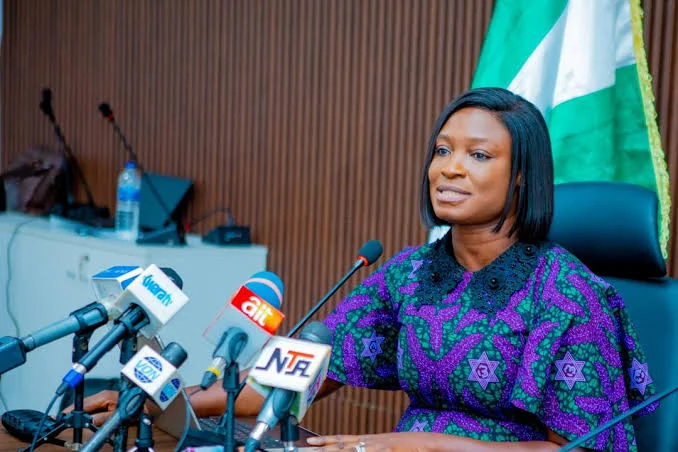
The Kwara State Government is targeting increased food production, job creation and higher incomes for farmers and pastoralists as it intensifies reforms aimed at transforming the livestock sector into a commercially viable industry.
The State Commissioner for Livestock Development, Oloruntoyosi Thomas, disclosed this on Tuesday while reviewing the achievements of the administration of Governor AbdulRahman AbdulRazaq in the sector.
“Our ultimate objective is to move Kwara from livestock keeping to a commercially driven livestock economy capable of creating jobs, improving food security, strengthening rural livelihoods and increasing the income of farmers and pastoralists,” the commissioner said.
She noted that the interventions had already produced measurable improvements in animal productivity, adding that average milk production had risen from 274.5 litres per cow per year at baseline to 352.2 litres in 2025, representing a 28.3 per cent increase.
The commissioner also disclosed that the average cattle carcass weight increased from 135kg to 190.8kg, while sheep carcass weight rose from 14.2kg to 23.7kg, representing improvements of 41.3 per cent and 66.7 per cent, respectively.
“The gains recorded so far are the result of deliberate interventions in animal health, farmer training, infrastructure, pasture development and the commercialisation of livestock production,” the commissioner said.
She attributed the progress largely to activities under the Livestock Productivity and Resilience Support Project and other government initiatives targeting different parts of the livestock value chain.
As part of efforts to control diseases and improve animal health, the commissioner said 238,718 animals, including cattle, sheep, goats and poultry, had been vaccinated against major livestock diseases.
She added that more than 1,100 livestock farmers benefited from the vaccination exercise.
“Since the commencement of L-PRES activities in October 2023, we have profiled 8,951 people across selected livestock value chains and held about 100 engagements with communities and other value-chain stakeholders,” she said.
The government, she disclosed, had also rehabilitated and equipped the veterinary laboratory in Ilorin, the state capital, and strengthened its vaccine cold-chain system through the installation of solar power.
She said the interventions had increased the number of animals screened by the laboratory from 157 to 246.
The commissioner said the government’s livestock intervention was not limited to disease control, as infrastructure was also being developed to improve production conditions in livestock communities.
She listed facilities provided by the administration such as solar-powered boreholes, drinking troughs, cattle sheds, feedlots, elevated goat pens, among others.
“We have developed 10 integrated ruminant farming clusters that combine water facilities, livestock housing, cattle dips, solar lighting and pasture demonstration sites,” the commissioner said.
The commissioner noted that the facilities were designed to provide farmers with a more conducive environment for livestock production while encouraging more productive and sustainable methods of animal husbandry.
On farmer development, the commissioner said 1,509 livestock farmers had been trained in small-ruminant production, crop-residue utilisation, commercial fodder production and bull fattening, among others.
“We are taking extension services closer to the people because productivity cannot improve sustainably without knowledge, technical support and access to appropriate technologies,” she said.
On climate resilience, the commissioner said about 34 per cent adoption of climate-smart technologies had been recorded among targeted farmers.
She said Automatic Weather Stations had also been installed in partnership with the Nigerian Meteorological Agency and Michigan State University.
According to her, the stations would provide localised weather information to guide drought preparedness, pasture planning, water management and livestock production.
Despite the reported gains, the commissioner acknowledged that the sector still faced challenges that required sustained attention.
She identified farmer-herder conflicts, inadequate access to veterinary and extension services for women, weak artificial insemination and breeding services, insufficient pasture production and poor maintenance of completed infrastructure as some of the major concerns.
She also called for greater private-sector participation, particularly in livestock markets, feed processing, cold-chain infrastructure and other areas of the value chain.
“Government cannot do everything alone. We need stronger private-sector participation in livestock markets, feed processing, cold-chain infrastructure and other areas if we are to unlock the full potential of the sector,” she said.
The commissioner said the state government would continue to expand pasture and fodder production, strengthen animal health and breeding services and improve the maintenance of livestock infrastructure.
She added that more attention would be given to increasing the participation of women and young people while attracting private investment into the sector.



EPL: ‘No longer sharp, quick’ – Carragher names who to blame for Arsenal’s first goal against Chelsea

Oyo 2027: Civil servants wait for seven to 10 years before receiving entitlements – ADC guber candidate

2027: If You Had The Guts To Challenge Sitting President, Why Didn’t You Come Out? – Sambo Fires Datti

Evening recap: FG to give Nigerian shipowners $25m, Drivers, cooks, traders can own refinery shares, other top stories

CBN Deputy Governor Emem Usoro Who Was Side Chic To A Married Man Accused Of Watching Him Take His Last Breath, Buried Him Alone And Took His Death Certificate From His Wife – Secrets Reporters Nigeria

Paper Promises vs. Real Pulses: Why Nigeria’s Hypertension Crisis Demands Cash-Backing, Not Just Budget Speech-Making – Professor Emmanuel Alhassan and LISDEL

‘After Working With Peter Obi, You Risk Suffering Post-political Identity Crisis’ – Kenneth Okonkwo Defends Datti

Exclusive: Niger Delta Suffers While MDGIF Director Oluwole Adama Hides N12.9 Billion Natural Gas Fund – Secrets Reporters Nigeria

Ibiyeomie Rejects Offerings From Internet Fraudsters, Tells Them To Leave » Apples Bite Int’l Magazine

APC challenges Adeleke’s August win as Osun tribunal posts petitions

Brazil Supreme Court removes federal police chief, deepening crisis at the top court

CAF Confederation Cup: Shooting Stars train under floodlight for CS Sfaxien return leg
CAF Confederation Cup: Shooting Stars train under floodlight for CS Sfaxien return leg

MDGIF rejects Auditor-General’s N94.4bn audit query
Reforms moving from stability to investment – Tinubu

Kenya's doctors threaten to join strike by nurses, citing increased workload in hospitals

UCL: Allegri reveals mistake Napoli players must not make against Arsenal

Troops rescue 12 civilians from terrorists in Zamfara
Troops rescue 12 civilians from terrorists in Zamfara

China rejects Taiwan independence claim, defends UN resolution

 Headlines14 hours ago
Oyo 2027: Civil servants wait for seven to 10 years before receiving entitlements – ADC guber candidate
- News23 hours ago
Evening recap: FG to give Nigerian shipowners $25m, Drivers, cooks, traders can own refinery shares, other top stories
 News20 hours ago
CBN Deputy Governor Emem Usoro Who Was Side Chic To A Married Man Accused Of Watching Him Take His Last Breath, Buried Him Alone And Took His Death Certificate From His Wife – Secrets Reporters Nigeria
- Politics13 hours ago
‘After Working With Peter Obi, You Risk Suffering Post-political Identity Crisis’ – Kenneth Okonkwo Defends Datti
 News19 hours ago
Exclusive: Niger Delta Suffers While MDGIF Director Oluwole Adama Hides N12.9 Billion Natural Gas Fund – Secrets Reporters Nigeria
- News17 hours ago
Ibiyeomie Rejects Offerings From Internet Fraudsters, Tells Them To Leave » Apples Bite Int’l Magazine
- News13 hours ago
Shettima Tasks Transporters on Peaceful Mobilisation for Tinubu’s 2027 Re-election Bid » Apples Bite Int’l Magazine
- News15 hours ago
Investigation: SEEPCO’s Anthony Chukwueke Was the FG Regulator Sacked in 2007 for Improperly Awarding Oil Licenses and Is Now Chairman of the Company That Walked Away With Nigeria’s Richest Well – Part One – Secrets Reporters Nigeria