News
Group urges FBI, EFCC to widen donor health funds probe

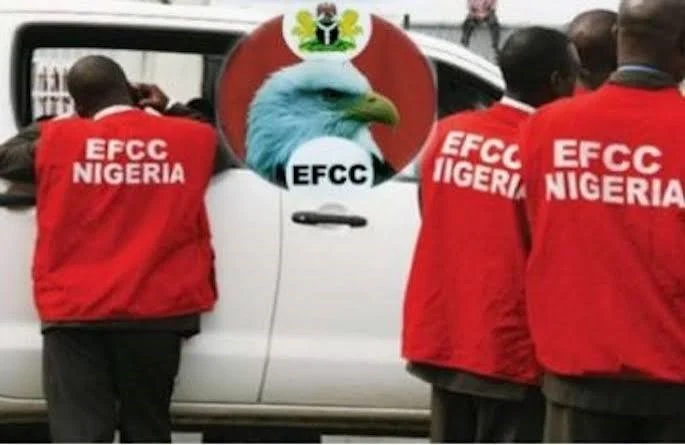
A civil society group, Good Governance Initiative, has urged the Federal Bureau of Investigation and the Economic and Financial Crimes Commission to expand their probe into alleged diversion of donor-funded health intervention funds to cover procurement and project implementation.
The group said the investigation should particularly scrutinise the activities of the National Agency for the Control of AIDS and the National Tuberculosis and Leprosy Control Programme, which are involved in implementing health programmes funded by international donors.
The GGI Coordinator, Eugene Morka, made the call in a statement on Thursday, warning that weak procurement controls and inadequate oversight could expose funds meant for healthcare interventions to abuse.
Morka said investigators should not limit their inquiry to financial transactions but should also examine how contracts were awarded and implemented.
“To truly protect critical health programmes, the investigation must thoroughly examine the integrity of procurement processes, contractor eligibility, compliance requirements and programme implementation,” he said.
He urged the investigators to determine whether contracts were awarded transparently and whether the companies that won the bids met the required regulatory conditions.
Morka also called for checks on whether contractors had valid government certificates when they participated in the bidding process.
According to him, examining the procurement chain would help establish whether contractors were qualified and whether due process was followed in the award and execution of projects financed through donor-funded health programmes.
The group also called for closer scrutiny of international donor agencies responsible for monitoring local implementing organisations.
The organisation noted that the Global Fund has a dedicated audit department aimed at reducing procurement risks, while information on successful bidders could be obtained through the Freedom of Information framework.
It added that corporate information on companies that participate in bids is forwarded to relevant regulatory authorities after the opening of bids.
Morka, however, said the existence of such safeguards should not stop investigators from examining specific allegations of wrongdoing.
“While these mechanisms provide useful safeguards, specific corruption allegations must still be independently examined wherever credible concerns exist,” he said.
The group said its engagements with anti-corruption authorities suggested that procurement compliance was receiving greater attention, particularly in cases involving companies allegedly unable to provide valid government certificates or suspected of benefiting from political connections.
Describing the FBI-EFCC collaboration as timely, Morka said cooperation between the two agencies could help uncover how funds meant for health interventions were managed.
“The decision by the FBI and EFCC to work together is timely and reassuring,” he said.
He urged the agencies to examine financial records, procurement documents, company registration details and bank transactions linked to the programmes.
“We expect the EFCC to follow the money wherever it leads. If there was diversion, inflated expenditure or fictitious activities, the law must take its course,” Morka said.
He also urged the investigators to ensure that their findings were based on evidence so that innocent individuals were not wrongly implicated.
He called on the FBI and EFCC to publish their findings when the investigation is concluded, particularly details concerning compliance certificates issued to contractors and implementing agencies.
GGI further urged the recovery of any funds found to have been diverted and called on donor organisations to strengthen monitoring of their programmes in Nigeria.
The group said tighter procurement controls, closer supervision of implementing agencies and greater transparency would help ensure that donor funds reach the people for whom they were provided.







Kawas: Some People Sponsor Terrorism To Discredit Tinubu, As They Did Jonathan » Apples Bite Int’l Magazine

“How stingy can you be?” – Lady blasts landlord after building over soakaway collapses, destroys tenants’ belongings

2027: ‘I Will Stop Campaigning’ – Peter Obi Challenges Critics On Misappropriation Of Funds In Anambra

“if you allow osuofia, he will talk from now till tomorrow” — Producer Mr Martins Onyemobi on Nkem Owoh

Governor Dauda Lawal Attends UNGA in New York, set to engage Global investors on Zamfara’s Potential » Apples Bite Int’l Magazine

“He would call me a thief” – Spyro opens up on painful childhood trauma with pastor father, reveals 22-year-old scar

“NO WRITTEN LAW, NO CONVICTION” — THEN HE CONVICTED HIM UNDER A DEAD LAW: Inside the Judicial Gravedigging That Voided Nnamdi Kanu’s Trial

“Use the rent to buy land” – Man shares how landlord surprises neighbour after 9 years in his compound

‘If He Sees a Snake, It’s Wike’ — FCT Minister Mocks Kwara Governor

Jehovah Witness Members Make Sharp U-turn After Arriving At Man’s Residence To Preach Only To See Him Holding Machete To Butcher Them

FG Begins Review of Implementation of 2025 Tax Reform Laws

Nigerian Newspapers September 18: Wike, APC Governors, Rift, Mambilla Hydroelectric ICC Ein, Others

“I just received alert of N20 million” — Burgled Ilesha shop owner thanks Adeleke, Pelumi Olajengbesi
“I just received alert of N20 million” — Burgled Ilesha shop owner thanks Adeleke, Pelumi Olajengbesi

EPL: ‘Cut your losses’ – Cundy names manager Man Utd should appoint as Carrick’s replacement

Tinubu reacts as Nigeria wins arbitration against Sunrise’s $2.35bn Mambilla claim – The Witness Nigeria

Ballon d’Or 2026: He’s extremely talented – Mbappe responds to Lamine Yamal’s comments

Benson-Idahosa donates solar-powered borehole to Correctional centre in Edo

China launches Pinglu Canal; Hong Kong unveils first 5-year plan: SCMP’s 7 highlights

Court upholds 30-day detention of KC Luxury over alleged cocaine trafficking

 Politics21 hours ago
2027: ‘I Will Stop Campaigning’ – Peter Obi Challenges Critics On Misappropriation Of Funds In Anambra
- Special Report20 hours ago
Nursing Student Overwhelmed With Emotion After Father Surprised Her With Brand-new Jetour T2 SUV As Graduation gift
- Special Report20 hours ago
Meet The Visually Impaired Elderly Man Who Has Been Selling Coconuts In Akuapem Akropong For Over 20 Years Despite His Condition
- Metro9 hours ago
“We’ll Take A Back Seat After Choosing A Successor” — Otti Says He Won’t Control Abia Politics After Leaving Office
- Entertainment22 hours ago
“You don old pass this kind performance” – Emeka Ike gets dragged over video of him reacting to Olu Jacobs’ demise
- Special Report20 hours ago
“Nigeria Is No Longer Safe, We Cannot Even Eat Safely” — Lady Laments After Opening Tin Of Milk And Finding Strange Substance Inside
- Special Report21 hours ago
Next Time, No Matter Who Calls To Beg, You Will Still Be Jailed — Blue Water Guards Warns Two Galamseyers After Catching Them In The Middle Of Road Doing Galamsey
- Special Report21 hours ago
Mother Held “Hostage” For 3 Weeks At Komfuo Anokye Teaching Hospital Over Unpaid Bills Breaks Down In Uncontrollable Tears As Actress McBrown Offers To Settle The Bills And Set Her Free