News
From beaches to plates: How Lagos plastic waste pollutes aquatic life, threatens humans

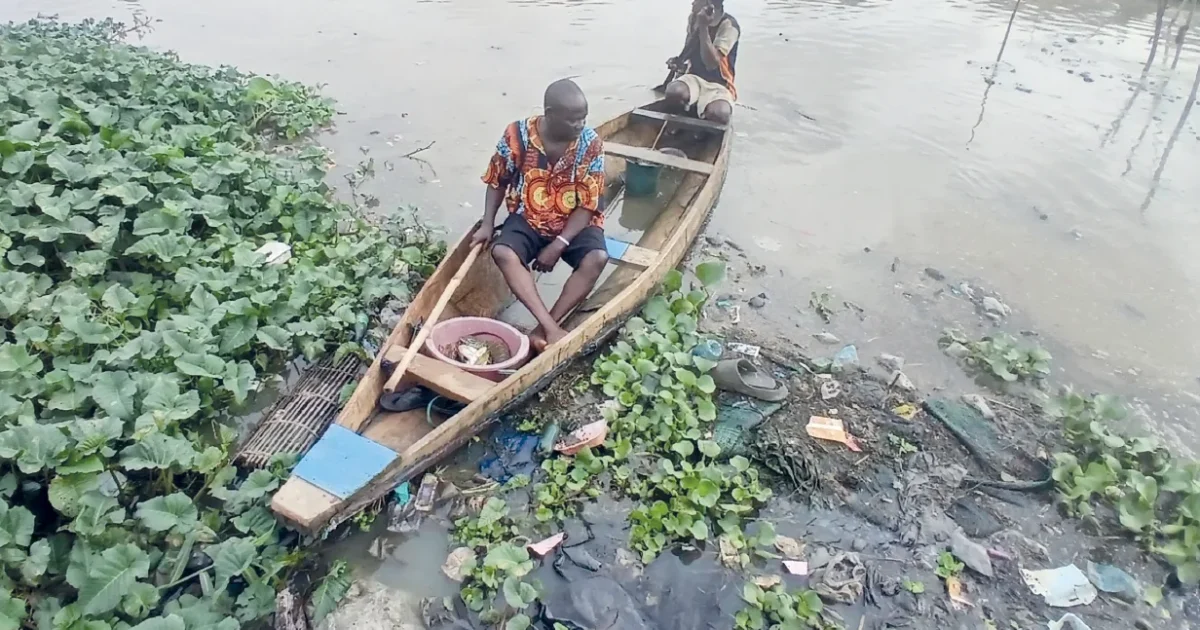
From Lagos’ beaches to its lagoons and drainage channels, discarded plastic is finding its way into the marine ecosystem, entangling fishing nets, polluting coastal waters and entering fish consumed by residents. DANIEL AYANTOYE traces the journey of plastic waste from the streets to the sea, revealing how a growing environmental menace could be putting fishermen, aquatic life and seafood consumers at risk
At first glance, the Lagos coastline can appear deceptively inviting. The gentle waves roll towards the shore, their white foam spreading across the sand before slipping back into the vast expanse of the Atlantic. Along the beaches, fishermen return with their catch, while visitors linger by the water, seemingly absorbed in the familiar beauty and rhythm of the sea.
But a closer inspection reveals another reality, one that threatens not only the marine life that depends on the coastline, but also the people who live, work and eat from its waters.
The signs are often easy to miss at first. They may not come in the form of discoloured water or an overpowering stench. Instead, they appear in small, almost ordinary objects scattered across the shoreline: a plastic bottle bobbing between the waves, a nylon bag caught in the surf, a food wrapper washed onto the sand, or a pure water sachet drifting with the tide.
With each incoming wave, the sea pushes some of these discarded items towards the shore, while the retreating water pulls others back into the ocean.
These fragments of rubbish are often part of a much larger trail of plastic waste travelling through the city’s drains, canals, creeks and waterways before eventually reaching the vast expanse of the sea, where they can become entangled with marine life, be swallowed by aquatic organisms and gradually break down into smaller particles that are far more difficult to see and even harder to remove.
It is a scene that is becoming increasingly familiar along parts of Lagos’ coastline.
The waste behind the waves
At Alpha Beach, located in a community called Okun Alfa in Lekki, a plastic bottle drifts slowly with the tide, bobbing on the surface before a wave pushes it back towards the shore.
A few metres away, pieces of nylon, sachets, food wrappers and other discarded materials lie scattered across the sand, some washed up by the waves, others left behind by beachgoers.
Nearby, an obviously exhausted fisherman, John Akan, sits beside his fishing equipment, carefully sorting through his catch for the day.
But fish are not the only things he has to sort through. Mixed among his catch are pieces of plastic and nylon, waste that has become an unwelcome part of his daily haul.
“Yes, we catch fish, and sometimes clothes, nylon, plastic bottles and even slippers will enter the net,” he told Saturday PUNCH.
As he speaks, another fisherman, a Ghanaian identified simply as Gbeho, points towards a dilapidated building where, according to him, residents frequently dump plastic waste.
The discarded materials had accumulated around the structure, turning the abandoned-looking building into an informal dumpsite.
He said, “You see that house, it is where many people in the area dump their waste, and most times when the water level increases at night, which frequently happens, it will get into the building and wash some of them into the ocean.”
A closer look at two houses with peeling paint in the Alpha Beach community offered a glimpse into the waste-disposal challenges faced by some residents. Surrounding these homes were mounds of debris.
Attempts to identify a community representative who could speak officially about waste disposal in the area were unsuccessful.
But 65-year-old Elder Adebayo, who said he had resided in the area for more than 20 years, told our correspondent that some residents burn their waste, while others dump it at unknown locations.
He said, “I don’t understand what you mean by a waste disposal system. But I know that some people usually burn their waste, while some others take it somewhere else.”
Another resident, Annabel, said, “There is no other place to take waste to than to burn it. That is what we do. There are times when the ocean will fill up and bring waste into the area. We don’t know where the waste is coming from.”
For residents and visitors who depend on the coastline for recreation, fishing or other activities, the accumulation of plastic waste presents more than an aesthetic problem.
Lagos’ plastic waste problem
At another location, Elegushi Beach, Lekki, the situation was somewhat different. The main recreational stretch appeared relatively cleaner, although plastic waste remained visible at several points along the shoreline.
Unlike Alpha Beach, the beach was divided into sections managed by different private operators, with each area having its own recreational facilities and vendors.
During the visit, one of the operators, who identified himself simply as Olawale, explained the arrangement and how it operates.
He said, “The beach has been divided and handled by different managements. If you want to have a nice time for an event, you can use any area here. If you come with just your family, there is another section where you can stay.”
Meanwhile, the level of cleanliness varied across the different sections. While some managed areas had relatively clean sand, a closer inspection revealed discarded plastic bottles, sachet-water nylons, food wrappers, disposable cups and carrier bags mixed with seaweed, driftwood and other debris.
Plastic waste was particularly noticeable in areas frequently occupied by visitors and food vendors. Empty drink bottles, takeaway containers, straws and other single-use plastics could be seen all over the place.
A similar visit to Takwa Beach revealed a starker reality, with a high amount of plastic waste and other discarded materials scattered along the shoreline.
The debris gave parts of the otherwise scenic coastline an untidy appearance.
For some visitors, however, the waste has become not only an eyesore but also a safety concern.
A beach user, Bose Olaide, who said she visits the beach regularly with friends, described the coastline as beautiful but expressed concern about the plastic litter scattered across the sand.
She said, “I come here regularly and sometimes with my friends. It is a beautiful sight, but I am being careful too. You can see I am using my bare feet and there are plastics everywhere. I carefully look out for broken bottles.”
From gutters to the lagoon
The plastic waste found on Lagos beaches does not necessarily begin its journey there.
A plastic bottle discarded on a roadside, a nylon bag dropped after a meal or an empty food pack tossed into a gutter may appear insignificant. But when the rain comes, the waste can begin a journey far beyond the street where it was discarded.
Floodwaters moving through communities carry things in their path into gutters and drainage channels. From there, the waste moves through canals, creeks and larger waterways, travelling gradually towards the lagoon and, eventually, the Atlantic coast.
The pathway was visible during visits by Saturday PUNCH to drainage channels around the Apapa-Oworonshoki Expressway, Ikeja, Ojota, Ketu and the Ikorodu axis.
Plastic bottles, nylon bags, food packs and other disposable materials littered several of the drainage channels.
In some places, the waste was trapped among weeds and silt; in others, it had accumulated around blocked or poorly maintained sections of the drains.
The city’s drainage network is connected to an extensive system that provides potential pathways through which land-based waste can move into larger water bodies.
A World Bank analysis of plastic pollution in Lagos identified rivers and waterways as important conduits through which mismanaged plastic waste can eventually reach larger water bodies. Among the waterways identified were the Owo and Ogun rivers, Badagry Creek, Ajegunle Canal and Lagos Harbour.
The journey is also evident around communities built around the water.
Research and mapping work in Makoko has highlighted the accumulation of plastic and organic waste along canals and waterways used by residents, fishers and traders.
The mapping showed how land-based waste can gather along drainage and canal edges before being carried towards the lagoon during rainfall.
For residents living close to these waterways, however, this movement of waste is not an abstract environmental process. It is part of everyday life.
In Ikorodu, Kayode Adeolu described how seemingly ordinary acts of disposal can set the process in motion.
“Everybody contributes to the mess. If a person buys a plastic drink, uses a nylon after eating puff-puff, they will drop it on the road, and it will enter the gutters. It is a big problem,” he said.
Adeolu said waste generated by traders further compounded the problem.
“If you add that to the traders’ waste issues, you will understand that is why everywhere is always dirty,” he added.
Fishermen pay the price
By the time such waste, especially plastic, reaches the lagoon or the sea, the street where it was first discarded may be miles away and long forgotten. But the plastic has not disappeared; it has simply entered another stage of its journey.
For fishermen, however, the consequences of that journey are not theoretical.
Speaking with Saturday PUNCH, a fisherman at Alpha Beach, Olorunshola Idowu, lamented that plastic waste frequently becomes entangled in his net, adding hours to what should be a routine fishing trip.
“Fishing that should ordinarily take one hour, I will spend close to three hours on the river because while you are catching fish, plastic, nylon will also follow. You can see everything,” he said, pointing at the littered water.
Another fisherman, 70-year-old Agunwa Iseriologini, said the persistent accumulation of plastic waste had also taken a toll on his fishing nets.
“We practically have to either change or fix the fishing net from time to time. And that is why I prefer the basket type that I am using now. Even though it still affects it, it is not as bad as the normal nets.”
The global treaty battle
While plastic waste continues to accumulate along Nigeria’s beaches, efforts to tackle the problem at the international level remain unresolved.
The proposed Global Plastics Treaty, being negotiated under the auspices of the United Nations Environment Programme, was born from a landmark 2022 decision by the United Nations Environment Assembly to develop a legally binding international instrument to end plastic pollution.
The treaty is intended to address the entire plastics lifecycle, moving beyond waste collection and recycling to issues including product design, production, consumption, reuse and producer responsibility.
But negotiations have been marked by deep divisions, particularly over whether the agreement should include binding measures to reduce the production of virgin plastics.
While the European Union and other high-ambition countries have pushed for stronger controls across the plastics lifecycle, major fossil-fuel-producing nations have generally favoured greater emphasis on recycling, waste management and clean-up.
The disagreements continued at negotiations in Busan, South Korea, in 2024, and Geneva, Switzerland, in 2025, with countries failing to reach a final agreement.
Further efforts are expected as negotiators seek to bridge the remaining differences.
For communities along Nigeria’s coastline, however, the diplomatic negotiations may seem distant from their everyday reality. On the beaches, plastic bottles, sachets, food wrappers and fishing-related materials continue to accumulate, raising questions about how effectively global commitments will translate into action on the ground.
Studies expose scale of Lagos plastic pollution
A 2025 study, Assessing Marine Litter Pollution and Ecotourists Dynamics along Lagos Coastline Beaches: Sources, Composition, and Impacts, published in the Journal of Diversity Studies by Ayo-Dada et al., examined six Lagos beaches: Atican, Alpha, Elegushi, Narval, Oniru and Takwa, and recorded 12,968 marine-litter items.
The study found plastic to be the largest category of litter, accounting for about 29 per cent, while Styrofoam accounted for 22.25 per cent. The researchers recorded an average of about 164 plastic items per 100 metres of beach.
Another study carried out by Adewumi and Titiloye in 2026, comparing Eleko and Elegushi beaches, found that Eleko recorded 291kg of waste over six observation days, compared with 264.5kg at Elegushi.
A related 2026 study by the same researchers found that plastic accounted for 11.01 per cent of litter recorded at Eleko Beach.
Also, a 2026 study of microplastic pollution in selected Lagos beaches, published in the journal Environmental Pollution and Management, found that Elegushi had the highest Pollution Load Index, at 2.17, making it the most severely contaminated of the four beaches examined. Alpha followed with 1.88.
In July, Union Bank of Nigeria, in a statement, said it removed over 200 kilogrammes of waste from Alpha Community Beach.
The researchers attributed the litter to several factors, including recreational and tourism activities, poor waste management and materials transported by water.
A United Nations Environment Programme report published in 2025, based on a waste audit carried out with Lagos authorities in 2023, estimated that 34kg of plastic waste per person per year is leaking into Lagos’ water system.
A World Bank document estimates that Nigeria generates at least 1.5 million tonnes of plastic waste annually, equivalent to about 7.5kg per person, and projects that the figure could more than double to approximately 3.3 million tonnes by 2040 if current trends persist.
Where does the plastic finally go?
According to Professor of Marine Biology at Niger Delta University, Yenagoa, Bayelsa State, Emmanuel Ogamba, with time, these plastics disappear from the shoreline, becoming less visible and potentially more difficult to retrieve.
He explained that plastics that enter the marine environment can remain there for prolonged periods, gradually breaking down into smaller particles rather than naturally decomposing like many organic materials.
The don explained that sunlight, waves and physical abrasion could cause larger plastic materials to fragment into progressively smaller pieces, eventually forming microplastics.
“These microplastics are small and not easily collectable. When swallowed, they move from one organism to the other and remain in the ecosystem,” Ogamba said.
From lagoon to fish
The journey of discarded plastics and waste from a Lagos street can therefore be much longer than it appears.
It can enter a drainage channel, flow into a canal or creek, and eventually reach the lagoon and the sea.
As larger plastic materials are exposed to sunlight, waves and physical abrasion, they can gradually fragment into smaller particles known as microplastics.
Unlike a bottle or food wrapper that can be physically collected, these tiny particles can disperse through water and sediment and become available to aquatic organisms.
Research conducted in Lagos shows that this is not merely a theoretical pathway.
A 2023 study published in the journal Environmental Science and Pollution Research investigated microplastics in water, sediment and four fish species from the Lagos Lagoon.
The researchers detected microplastics in the water and sediment and in three of the four fish species examined.
Another study, published in Scientific African in 2024, examined four commercially important fish species: Nile tilapia, silver catfish, African catfish and African knifefish, obtained directly from the Lagos Lagoon.
The researchers found microplastics in the liver tissues of the fish. Of the 32 fish livers examined, microplastics were detected in 13.
The microplastic load ranged from about 7.2 to 9.5 particles per individual, with the highest concentration recorded in the African knifefish.
The particles were predominantly black and blue fibres, while laboratory analysis identified polyethene as the dominant polymer.
The researchers also examined biological responses associated with the microplastic contamination.
They reported changes in the expression of two genes associated with cellular stress and detoxification in most of the microplastic-laden liver samples.
However, they cautioned that further research was needed to understand the effects of environmentally relevant microplastics on edible fish tissues.
The evidence extends beyond the Lagos Lagoon. A 2023 study published in Food Control examined the gastrointestinal tracts of 160 fish obtained from Nigerian coastal waters.
The researchers recovered 5,744 microplastic particles from the fish, an average of 39.65 particles per individual.
The fish were obtained immediately after landing at the Makoko seafood market in Lagos.
The researchers identified several forms of microplastics, including microbeads, fragments, burnt film, threads, fibres and pellets. They also estimated potential annual human intake of microplastics through consumption of the fish, although the estimate represents a calculated exposure rather than evidence that a specific number of people had consumed or been harmed by those particles.
More recently, a 2025 study published in the Journal of Natural Sciences, Engineering and Technology examined tilapia, African catfish, shrimp and apple snail collected from three locations on Epe Lagoon: Jubilee Chalete, Ojuolokun and Oko Orisan.
Upon examining the gills, guts and muscle tissues of the seafood, the researchers found varying concentrations of microplastics in the tissues of all four species.
Tilapia recorded the highest mean concentrations in the gills and muscle, at 16.00 and 9.25 particles per individual, respectively, while shrimp recorded 7.33 and 6.50 particles per individual.
The particles included fragments, fibres, filaments, pellets or beads, films and foam.
The researchers said the findings suggested a potential risk of human exposure through seafood consumption.
Costly consequences to humans
The plastic journey doesn’t end in the water, according to experts. They noted that microplastics can be ingested by fish and other aquatic organisms, creating a potential route of human exposure through seafood.
Professor Ogamba, the marine biologist, said the particles could enter aquatic organisms and affect their biological functions.
He said, “Some of them can be incorporated into the blood tissues and into muscles and lining, which will affect and distort the functions of the organism.”
Similarly, a Professor of Veterinary Public Health at Modibbo Adama University, Yola, Adamawa State, Muhammed Ardo, said microplastics in fish could expose consumers to the particles.
He said, “Microplastics in waters can be deposited in the flesh or tissues of the fish. If you cook it, it is heat-stable, so there is a possibility that such plastic can be deposited in human tissue once consumed and may cause cancer.”
Professor of Analytical and Environmental Chemistry at the Federal University of Agriculture, Abeokuta, Ogun State, Toyin Arowolo, said chemicals used in plastics could have toxic effects, but acknowledged that a direct link between microplastics and cancer remained difficult to establish.
He said, “They may eventually lead to cancer, although it is difficult to ascertain for now; research is still ongoing.”
The World Health Organisation, in its 2022 assessment, based on evidence available through December 2021, identified food, water and air as potential routes of human exposure to microplastics but said significant uncertainties remained about their health effects.
We’re fighting plastic pollution – Lagos
The Lagos State Government acknowledged that indiscriminate disposal of plastic waste remains a challenge despite its efforts to curb the practice.
Speaking with Saturday PUNCH, the Special Adviser to the Governor on Environment, Olakunle Rotimi-Akodu, said the state continued to engage residents through public enlightenment campaigns on proper waste disposal.
He said, “That you find such infraction being committed is not strange. We have new entrants into Lagos, and our advocacy is strange to some of them. That is why you see that after much effort from the state government, these things continue.”
Rotimi-Akodu added that the Ministry of Environment carried out public enlightenment on waste disposal, including the proper handling of plastic waste.
When contacted, the Public Relations Officer of the Lagos State Ministry of Environment, Adekunle Adeshina, did not respond to inquiries as of the time of filing this report.





Nigerian Christians Warn of Political Exclusion as Nasarawa’s Ruling Party Selects All‑Muslim Slate for 2027

Electricity: Nigerian university campuses will be taken off national grid — Education Minister Alausa

“Politics Is My Business” — Ebonyi LG Chairman Threatens Political Opponents After Nwifuru Warns Chairmen Against Losing Their Councils

Exclusive: How NSIA MD Aminu Umar-Sadiq Started Assets Construction Project With N363 Million And Jumped To N44.8 Billion In One Year – Part 1 – Secrets Reporters Nigeria

You’ll get lawsuit – Abati, Rufai clash on live TV over comment against presidential candidate [VIDEO]

Yobe Chairman Ask Wives To Divorce Husbands If They Stop Them From Voting APC, Vows To Pay New Bride Price

‘Everybody Knows Wike Is Synonymous With Violence’ – ADC Dismisses Claims Of Winning Rivers, FCT For Tinubu

Cash In Hand: The Multi Million Naira Olubunmi Tunji-Ojo Federal Ministry Of Interior Money Paid Directly To Individual Staff Accounts Without Vendors – Secrets Reporters Nigeria

₦1.37 Trillion Unrecovered: The Auditor General’s Report That Put Governor Yemi Cardoso Central Bank On Trial – Secrets Reporters Nigeria

Morning recap: FG counters opposition on Tinubu’s 2027 chances, 37 die from toxic fumes in Rivers, other top stories

Turkey: ‘You must treat Osimhen like precious gem’ – Ex-Besiktas star, Engin warns Galatasaray
Turkey: ‘You must treat Osimhen like precious gem’ – Ex-Besiktas star, Engin warns Galatasaray
Turkey: ‘You must treat Osimhen like precious gem’ – Ex-Besiktas star, Engin warns Galatasaray

Amaechi’s Mother’s Burial: Wike Plans to Shut Access Roads – ADC

Driver Raises Alarm As Unknown Individual Turns Part Of Accra Circle Overhead Into A Bedroom

JAMB releases underage UTME results

Dangote refinery set for stock market debut at N525
Trump calls Iran conflict ‘small potatoes’ as US weighs strike on Pickaxe Mountain

EPL: Alonso opens up on Chelsea beating Arsenal to Morgan Rogers’ signature

“I’m a freaking doctor” — Lady laments Nigeria’s economy as she debates affording gym, Greek yoghurt

 News17 hours ago
Morning recap: FG counters opposition on Tinubu’s 2027 chances, 37 die from toxic fumes in Rivers, other top stories
- Entertainment19 hours ago
“If women are called gold diggers, what do we call those men who benefit from their fellow men’s wealth?” – Mary Njoku asks
- Viral21 hours ago
“Wickedness dey oo” – Lady calls out ‘desperate’ abroad men who pay bride price, sleep with women and later request dowry
- Metro22 hours ago
“Patient Received ₦93,950 Support, No Treatment Was Delayed” — Lagos Govt Rejects Hospital Extortion Claim
- Entertainment4 hours ago
“Make una keep deceiving una sef with brand deals” – Phyna reacts to Tochi’s advice to BBNaija ex-housemates
- Viral21 hours ago
[JUST IN]: APC GOVERNORSHIP CANDIDATES LANDS IN BIG TROUBLE AS TERRORISTS ATTACKS CONVOY WHILE TRAVELLING
- Entertainment23 hours ago
Court restrains Liz Anjorin from posting Priscilla Ojo and Juma Jux’s son, Rakeem
- News6 hours ago
Trump Appoints Atiku’s US Lobbyist Karl Von Batten to White House Commission » Apples Bite Int’l Magazine