News
Fibre cuts threaten national security, economy, public services – ONSA

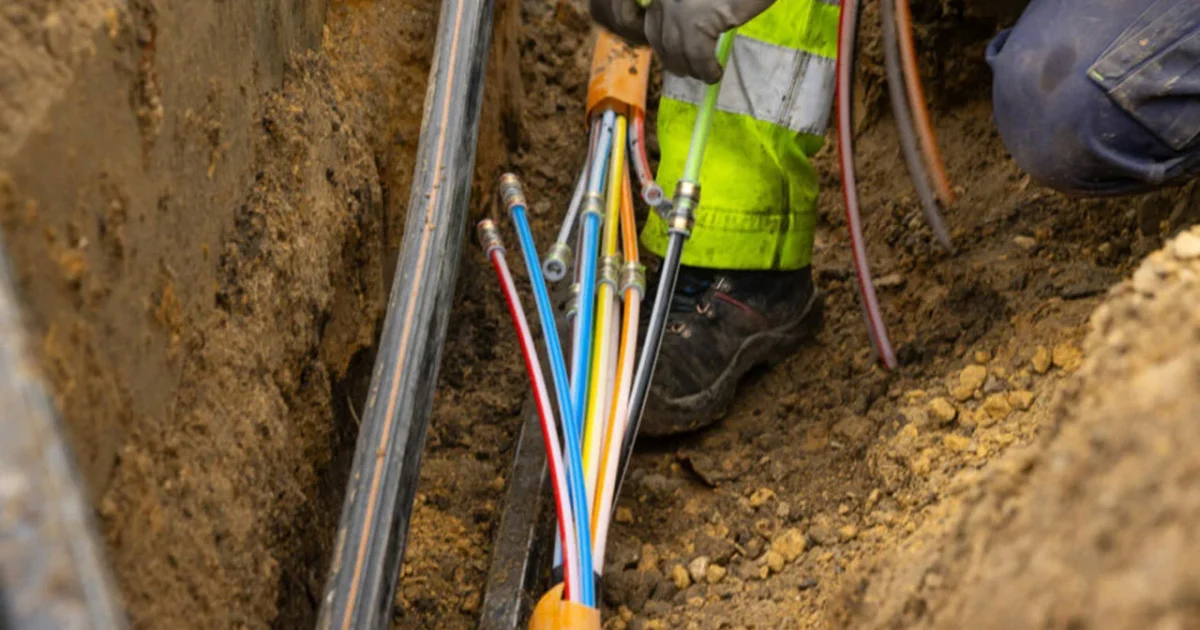
The Office of the National Security Adviser has warned that damage to fibre-optic cables is disrupting governance, economic productivity and public services, and not just telecommunications.
According to a statement made available to PUNCH Online on Monday, the Director of Critical National Security and Infrastructure Protection at the ONSA, Effiom Ewa, said this at the Stakeholders’ Workshop for the Protection of Fibre Optic Cables During Road Construction held in Abuja.
The workshop was held at the Conference Room of the Office of the National Security Adviser.
“Every fibre-optic cable damage is more than a disruption to a network, or simply a cable cut.
“It is indeed a disruption to governance, economic productivity, public services, and the daily lives of Nigerians,” Ewa said.
He said fibre-optic infrastructure had been designated as Critical National Information Infrastructure under Nigerian law, adding that damage caused through negligence or interference could constitute a criminal offence.
Ewa’s warning came as the Nigerian Communications Commission disclosed that 5,934 fibre-optic cable cuts were recorded across the country in the first six months of 2026.
The figure represents an average of about 65 incidents daily, with the number rising from 1,883 cuts in the first quarter to 4,051 in the second quarter.
Fibre-optic networks support telecommunications services as well as banking transactions, electronic payments, Point of Sale terminals, fintech platforms, logistics, hospitals, businesses and other essential services.
The Permanent Secretary, Federal Ministry of Works, Olarinre Adeladan, said road construction was one of the major activities associated with damage to underground telecommunications infrastructure.
She said road construction and telecommunications infrastructure often occupied the same physical space.
“Appropriate mapping and coordination with telecoms operators before any excavation will help prevent damage to underground cables,” Adeladan said.
She added that the ministry would work with the NCC to develop joint protocols for federally funded road projects.
The Permanent Secretary, Federal Ministry of Communications, Innovation and Digital Economy, Nadungu Gagare, was represented at the workshop by the Director of Telecommunications and Postal Services, Stanley Musa.
Musa said a Standing Committee on the Protection of Fibre Optic Cables, jointly inaugurated by the Ministry of Communications, Innovation and Digital Economy and the Ministry of Works, had expanded its membership to include the ONSA.
“The committee is not just a consultative body,” Musa, who represented Gagare, said.
He added that it had “a mandate to produce enforceable coordination frameworks within a defined timeline.”
The NCC Executive Vice Chairman, Aminu Maida, recalled the consequences of major fibre damage in February 2024, when road construction-related cuts contributed to a near network-wide disruption for one telecommunications operator and affected millions of users.
“To a machine operator on a construction site, it may appear to be one buried cable.
“To the nation, it can mean failed calls, stalled payments, interrupted services and missed opportunities,” Maida said.
The financial impact of the damage has also been significant.
The Chairman of the Association of Licensed Telecommunications Operators of Nigeria, Gbenga Adebayo, said operators spent N2.2bn on direct repairs arising from fibre cuts in the first half of 2026.
He said the figure excluded revenue lost during outages and capital diverted from network expansion to emergency repairs.
Adebayo called for road construction contractors to obtain clearance from the NCC before excavating areas with mapped underground telecommunications infrastructure.
The NCC is developing a centralised underground infrastructure mapping database to enable road agencies and contractors to identify telecommunications infrastructure before excavation.
The commission has also drafted a framework requiring pre-excavation notification to network operators and financial penalties for contractors who damage marked infrastructure.
However, the measures are yet to become enforceable rules, while the mapping database remains incomplete in some states.
The NCC has set a target of reducing fibre-cut incidents by 40 per cent before the end of 2026.
The development comes as Nigeria’s reliance on digital infrastructure continues to grow, with the Central Bank of Nigeria reporting that electronic payment transactions reached N1.053 quadrillion in the first quarter of 2026.





EPL: Why I played Ola Aina as centre-back in 2-1 win over Aston Villa – Nottingham Forest boss, Glasner

Nigeria Offers ₦30 Million Bounty for Separatist Commander ‘Gentle the Yahoo,’ Sparking Sharp Regional Divide

Morning recap: Terrorists plot attacks on Osun worship centres, Lagos crackdown raises child protection concerns, other top stories

“I bookmarked it” – Simi Sanya recalls X user’s prediction about her relationship with Femi Dapson before marriage

Five Islamic Clerics Abducted After Prayer Meeting At Yari’s Zamfara Residence » Apples Bite Int’l Magazine

UK Court Allows Niger Delta Community to Sue Shell Over Alleged Evidence Destruction » Apples Bite Int’l Magazine

They Abuse Tinubu On Social Media Like Kindergarten Fighting Over Groundnuts – APC Chieftain Mocks Opposition

“What if she’s still thinking about it?” – Lady laments how quickly men withdraw during talking stages

“I sold my land to open this business, I’m doomed” – Man cries out after thieves loot his gadget store in Osun

Ex-USCIS Officer Made $1.7m Bribes Approving Fake Green Cards for Nigerians, Others — FBI » Apples Bite Int’l Magazine

Customs spends N70bn on CSR projects – Comptroller-General

“What did we do?”- Peller recounts conversation with billionaire Ocacho’s wife

Rivers Assembly summons PAMO varsity VC, others over scholarship funds

Nigeria returns to JP Morgan bond index after 11 years

Gunmen Kill 13, Injure Others in Fresh Attacks Across Plateau » Apples Bite Int’l Magazine

Monitor Oyo govt’s spending ahead of 2027 elections, AAC urges EFCC

2027: APC Governors Pledge Full Support For Tinubu’s Re-Election

2027: Uzodimma inaugurates Imo APC campaign council

Senator Buba Submits Self For Probe Over Banditry, Terrorism Financing Allegations

Mahmoud Khalil lawsuit says Columbia failed to protect pro-Palestinian activists

 Politics16 hours ago
They Abuse Tinubu On Social Media Like Kindergarten Fighting Over Groundnuts – APC Chieftain Mocks Opposition
- News14 hours ago
Ex-USCIS Officer Made $1.7m Bribes Approving Fake Green Cards for Nigerians, Others — FBI » Apples Bite Int’l Magazine
- News15 hours ago
GRA-1 Residents Applaud Senator Abiru for Transformative Solar Street-Light Project » Apples Bite Int’l Magazine
- News15 hours ago
Morning recap: INEC unveils list of Senate race, banks shut 476 branches in three years, other top stories
- News16 hours ago
IGP Endorses Societal Concerns Organization’s Drone, Intelligence Training for 300 Police Personnel » Apples Bite Int’l Magazine
- News13 hours ago
Police Alert Nigerians Over Planned Attacks On Schools, Churches, NYSC Camps » Apples Bite Int’l Magazine
- Special Report14 hours ago
Residents Rush In Numbers With Gallons To Siphon Fuel From Overturned Tanker On Ejisu-Adadientem Stretch
- Politics5 hours ago
NDC Will Allow Nigerians Donate Small Amounts To The Party Like Obidient Movement Did In 2023 – Director