News
Federal Workers Demand N300,000 Minimum Wage From Tinubu

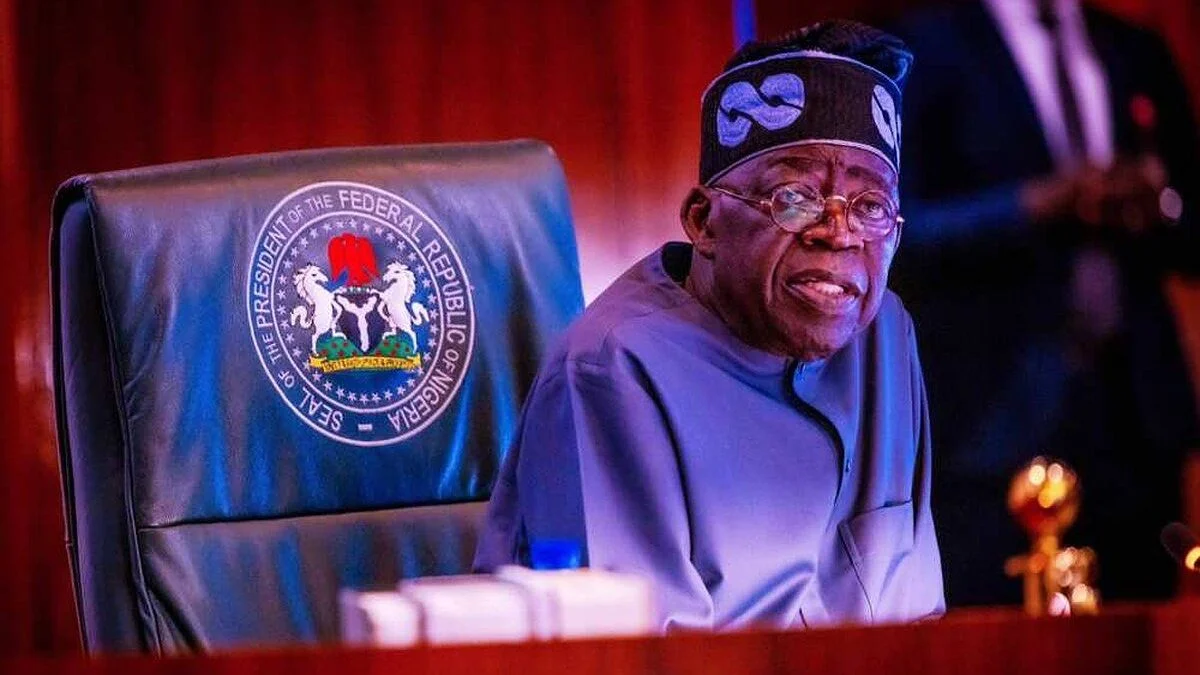
Federal workers have renewed their demand for a major increase in their salaries, asking President Bola Tinubu and the National Assembly to raise the minimum wage for federal civil servants from N70,000 to N300,000.
The demand was contained in a fresh letter dated September 2, 2026, by the Federal Workers Forum, FWF.
The group said the current salary structure no longer reflects the economic conditions facing workers and their families.
The letter was signed by the National Coordinator of the forum, Andrew Emelieze, and its General Secretary, Ogundele Ayodele. It was addressed to the Senate President and Speaker of the House of Representatives through the Clerk of the National Assembly.
President Tinubu, the Chief Justice of Nigeria and the Head of the Civil Service of the Federation were also listed among the recipients.
The workers are seeking a complete review of the federal salary structure.
Under their proposal, the lowest-paid federal workers would receive N300,000 monthly, while officers on Grade Level 17 would earn up to N1.5 million.
Backing the demand, the forum said, “We call for justice and immediate wage review now, adjust the federal minimum wage to N300,000 and a maximum wage of N1.5m for the Level 17 officers.”
The group said the call was not only about increasing salaries but also about resolving what it described as outstanding issues surrounding the implementation of the 2024 minimum wage.
According to the workers, the N70,000 minimum wage approved in 2024 has not translated into the full salary adjustments and allowances they expected across the federal civil service.
“It will surprise you to hear that the Federal Government has not fully implemented the new national minimum wage since July 2024. We have been in the battle for full consequential adjustment of the new minimum wage.”
The N70,000 minimum wage was agreed by the Federal Government and organised labour in July 2024 after months of negotiations. President Tinubu later signed the amended minimum wage law into effect, replacing the previous N30,000 benchmark. The new law also shortened the review period from five years to three years.
The Federal Workers Forum, however, argued that the review timeline should not stop government from responding to the present economic difficulties.
It claimed that workers across different salary levels effectively received an additional N40,000 when the new minimum wage structure was implemented.
The forum said, “Only N40,000 was added to the salaries of every federal worker across all levels.”
The Workers cite rising cost of living
The forum listed food, transportation, accommodation, electricity, cooking gas, water, communication and other daily needs among the expenses putting pressure on workers.
It said the N70,000 wage was no longer sufficient to meet basic family obligations, particularly for workers supporting children and other dependants.
The group stated, “As a matter of fact, it is suicidal for the federal workers to continue in this ugly situation. Hence, based on the current cost-of-living crisis, it can only be a matter of justice that the federal wages be immediately reviewed to meet up with the current economic realities in Nigeria.”
The forum further described the situation facing federal workers as increasingly difficult.
“Federal workers have been enduring the situation, and everything has been frustrating and nauseating. We cannot cope again. Federal workers are dying in instalments; we are suffering in silence; our salary is too poor; it is not taking us home,” the letter stated.
It also claimed that some workers had turned to borrowing to cover basic expenses, including transportation to their places of work.
“Federal workers are now heavily indebted to microfinances and, most times, federal workers resort to phone loan apps to get transportation to work,” the group said.
The forum also alleged that some workers could no longer afford cooking gas and had resorted to firewood.
It warned that continued financial pressure on civil servants could have consequences for productivity and public administration.
“While the Federal Government is making more money now, the federal workers are underpaid and subjected to unprecedented sufferings and hardship,” the workers said.
The group described federal employees as the people responsible for carrying out government policies and programmes, arguing that their welfare should receive greater attention.
“The federal workers are the goose that lays the golden egg, but we are alienated from our labour.”
Proposed salary structure
The salary structure attached to the workers’ demand proposes N300,000 for a Level 1 Step 1 employee.
The amount would rise progressively through the various grade levels, reaching N1.5 million for a Level 17 Step 1 officer.
The proposed structure includes N330,000 for Level 2, N360,000 for Level 3, N390,000 for Level 4 and N420,000 for Level 5.
Level 6 workers would receive N450,000, while Level 7 would receive N480,000.
The forum proposed N510,000 for Level 8 and N550,000 for Level 9. Level 10 would receive N600,000, while Level 12 would receive N700,000.
Under the proposal, Level 13 workers would earn N750,000 and Level 14 workers N800,000.
The salary rises to N1 million for Level 15 and N1.2 million for Level 16, before reaching N1.5 million at Level 17.
The forum said the figures were based on what it considered the actual monthly needs of workers and their families.
“Our projections here are fair, and we believe it can still be accommodated in the present budget based on the daily increased earnings and the excess crude oil sales earnings,” the forum said.
Workers demand payment of arrears
Beyond the proposed new minimum wage, the workers are demanding the payment of outstanding salaries, promotion arrears and other entitlements.
They also want the government to pay what they described as outstanding arrears relating to the 40 per cent peculiar allowance and complete the consequential adjustment arising from the 2024 minimum wage.






Ex-IYC President Advises Tinubu To Channel Subsidy Removal Savings Into Rehabilitating Refineries, Strengthening LG Autonomy

‘Why can’t Nigerians buy petrol for N441-N872 per litre like, Saudi Arabia, others’ – Atiku questions Tinubu

“If America, Cannot Fully Open Tinubu’s Drug Files, Who Told You Obi or Atiku Can Win Without a Revolution?” – IPOB

Evening recap: Tinubu targets $1tn economy, police rescue NYSC members, IPOB threatens 2027, other top stories

Private Business Claims Linked to Permanent Secretary John Chidiebere Ezeamama in Violation of Code of Conduct for Civil Servants – Secrets Reporters Nigeria

2027: Nigerians Would Have Known Him For Four Years – ADC Spokesperson Reveals How Atiku Will Defeat Tinubu

“No Office, Title Or Social Status Places Anyone Above The Law” — Olukoyede Says EFCC Secured 10,872 Convictions In 34 Months

BUSTED: Highly Classified Intelligence Report Reveals Bola Tinubu Is Not on Vacation, But in Europe to Seek Political Protection From His “Friends” to Ensure His US Drug-Related Documents Are Never Released
Atiku’s Absence At Coalition Talks For Single-candidate Should Not Be Interpreted As Boycott – Phrank Shaibu

Tinubu’s Old Certificate and U.S. Forfeiture Controversies Resurface Ahead of Nigeria’s 2027 Election

Trading food for medicine and crossing the river by zip line are part of life in Nepal flood zone

How I made N10m monthly from akara business — Akwa Ibom gov

FAAN Training School Opens Registration For Aviation Courses In 2026

Explosive devices damage power lines near German coal plant

Funke Akindele Unveils First Look at New Movie ‘The Four’

Fury confirms Joshua fight in USA

NLNG/SEPNU leads as domestic cooking gas supply rises
“The wedding I never had”

Zamfara CPG Arrests Nine Suspects Over Banditry, Ransom Operations

Galamsey Operators Destroy Motorcycle Belonging To Suspected Robbers After Clash At Mining Site

 News21 hours ago
Exclusive: Federal Government Indicts MDGIF Director Oluwole Adama Of N33.6 Billion Under-Remittance of Gas Flares Penalty To Public Purse – Secrets Reporters Nigeria
- Viral17 hours ago
Backlash as Governor Oborevwori Allegedly Distributes Billions to Council Chairmen, Vice, Councilors Amid Economic Hardship
 News23 hours ago
Exclusive: N1 Billion Into Private Pockets: How Finance Permanent Secretary Lydia Jafiya Routed Public Funds Through Personal Bank Accounts In Six Days – Secrets Reporters Nigeria
- Special Report24 hours ago
Ferry Conductor Snatches And Throws Passenger’s Phone Into River For Recording Him, Incident Creates Scence
- Entertainment19 hours ago
“For over 30 years” – Lady who received ₦1M from Peller reveals amount she gave her mother for business support in 2024
- Viral18 hours ago
Having sexual intercourse with your wife without her consent attracts life imprisonment – Lagos gov’t warns husbands
- Entertainment18 hours ago
“My baby come use English explain give this people” – Hilarious moment Peller calls Jarvis to defend him during tiktok live dispute
- News19 hours ago
N5 Billion On “Travel and Training”: Inside Dayo Mobereola’s First Full Year Of Questionable Spending As NIMASA DG – Secrets Reporters Nigeria