Politics
Northern Nigeria Court Curbs Hisbah Power Over Christian Convert

By Luka Binniyat
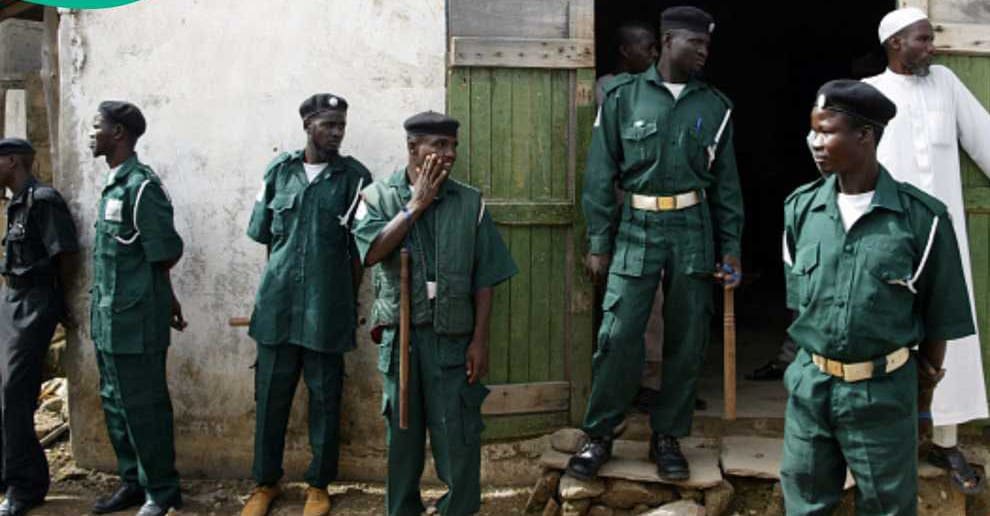
(Kaduna – NIGERIA ) – A Federal High Court in northern Nigeria has ruled that Islamic religious police, known as Hisbah, have no authority to arrest a woman because she converted from Islam to Christianity, Alliance Defending Freedom (ADF) has reported.
The judgment could place an important legal limit on the activities of enforcement agencies in northern Nigeria, ADF said.
The case involved “Sarah,” a 22-year-old woman from Kano State who fled her family home in 2025 after allegedly suffering abuse from her elder siblings, who were also trying to force her into marriage.
Her parents had died years earlier, the report said.
ADF said Sarah’s siblings subsequently worked with local Hisbah officials to have her arrested. She was detained for four days, during which time she allegedly was beaten and pressured to accept the marriage she had fled.
Sarah took refuge with a Christian family, the Abaras. While living with them, she voluntarily converted to Christianity, according to ADF.
After her release, Sarah feared further threats. The Abaras helped her relocate to Jos in January 2026. Her siblings then accused the Christian family of kidnapping her.
The Christian Family Arraigned In Court
On February 26, the Abaras were arraigned in Kano without legal counsel. Sarah had filed a fundamental-rights enforcement action two days earlier.
On May 26, 2026, the court ruled in Sarah’s favour, restraining Kano State and Hisbah from pursuing her arrest because of her conversion to Christianity or her refusal to marry.
ADF said the court described the actions against Sarah as a “flagrant violation” of her fundamental rights to human dignity and freedom of religion and ordered financial compensation.
“No one should be coerced to leave their faith, and certainly no Christian should ever be threatened by Islamic morality police,” said Sean Nelson, Senior Counsel for Global Religious Freedom at ADF.
The court’s ruling in Sarah’s case affirms that the Hisbah police have no jurisdiction over Christians or other non-Muslims. Sarah’s choice to convert and reject a forced marriage is her right under law,” Nelson said.
The Abaras’ criminal case remains pending in Kano, with ADF providing legal support.
Sarah Hails Court’s Ruling
Sarah herself said the Christian family had protected her when she had nowhere else to turn.
“The Abara family kept me safe in a time when I had nowhere else to go. I am grateful to them especially for introducing me to the Gospel. It is not against the law for me to choose my faith in Jesus,” she said.
She added: “I am thankful the court has recognized my freedom to become a Christian and that I am now protected from the religious police.”
Earlier cases show a wider problem.
Sarah’s case is not the first controversy involving Muslims who converted to Christianity in northern Nigeria and subsequently faced intervention by state authorities or Islamic religious institutions.
In January 2018, the case of Nabila Umar Sanda, a 19-year-old university student who converted from Islam to Christianity, attracted national attention.
Nabila, a student of Bingham University, Abuja, became interested in Christianity and eventually decided to become a Christian.
According to reports at the time, the Department of State Services (Nigeria’s Secret Police) arrested her and Christian associates after Islamic leaders were informed of her conversion.
The Guardian newspaper of Nigeria reported that Nabila’s conversion had become a major controversy in Jos, Plateau State, and that Christian leader Jeremiah Datim and Simput Dafup were also involved in the case.
Christian Today reported that Datim said DSS operatives stormed his home after he informed Islamic leaders about Nabila’s decision.
Datim alleged that the security operatives assaulted members of his family before taking Nabila away, according to media reports.
Hisbah Enforcement Agents and Christians
Hisbah, established in several northern states of Nigeria to enforce Islamic moral codes, also has been accused of interfering with Christians who are not subject to Islamic religious obligations.
In November 2023, International Christian Concern reported that Hisbah officials in Kano stopped five Christian girls who were on their way to church.
The girls were reportedly ordered to dress like Muslims and were prevented from attending church until the service had ended.
These cases have generated concern among Christian organisations because Kano and several other northern states operate Sharia-based legal- and moral-enforcement systems alongside Nigeria’s federal constitutional system.
Murder of Pastor Accused of Conversion
Perhaps the most tragic example involved Rev. Yohanna Shuaibu, a Christian leader in Kano State.
In September 2021, Shuaibu was attacked by a mob after allegations circulated that he had been involved in the conversion of a Muslim man to Christianity.
The United States Commission on International Religious Freedom said the mob attacked and killed the Christian pastor in Kano in retaliation for his alleged involvement in converting a member of a Muslim family to Christianity.
Christian Solidarity Worldwide (CSW) reported that Shuaibu died from wounds inflicted during the attack on his home in Massu village, Sumaila Local Government Area.
According to CSW, the Muslim man at the centre of the controversy had actually left Islam but was not attending either a church or mosque. Nevertheless, members of the local Muslim community reportedly believed he had converted to Christianity and blamed Shuaibu.
The pastor returned to the area to evacuate children from a Christian school before the mob attacked him.
Luka Binniyat writes for TruthNigeria on Religion, Politics and Conflict from Kaduna.
Related


Dollar to Naira exchange rate today, August 12, 2026: Nigerian Naira bounces back, appreciates against US currency

Special Report: N75 Trillion Borrowed By President Tinubu In Three Years, Each Nigerian Owes Foreigners N300,000 As Debt Repayment – Secrets Reporters Nigeria

‘He Is Parading Fake Certificates’ – LP Chieftain, Arabambi Accuses Peter Obi Of Certificate Discrepancies

NNPC Boss Bala Wunti Paid $250,000 Without Supporting Documents in Etihad Energy Contract – Secrets Reporters Nigeria

“While he was coming from…”- Man shares encounter with FireBoy, claims he was singer’s roommate for 3 years

“Which money them dey make on TikTok?” – Peller continues to call out parents over social media activities

“I’m your man, not your father” — Lady recalls boyfriend’s response after she asked permission to go out

“I was wowed”- Man shares encounter with man who received multi-million naira gift from Dangote cement

What’s The Desperation To Take Osun State When All Governors Are Supporting You? – Adeyanju Questions Tinubu

“I made one big mistake that led to my UK Global Talent Visa being rejected” — Nigerian lady reveals

Two people seriously injured after train with 150 on board derails in England

Killing-accused Luigi Mangione expected to plead guilty to federal charges

Eight of 37 Ariko Hostages in Rijana Gulag Reported Dead

BREAKING: Osun 2026: Sensitive Materials Arrive CBN Osogbo for Distribution to LGAs

US inquiry finds engine part shattered window on Ryanair flight

Huge fires start tearing through homes in central England

EPL: Maresca to sign two Chelsea players for Man City

Israeli settlers’ siege of Palestinian homes draws sharp US rebuke

2027: Makinde Picks Ex-DSS Boss, Lawal Daura As Running Mate

Nero's Bridge emerges from Tiber River as Rome faces water crisis

 News22 hours ago
NNPC Boss Bala Wunti Paid $250,000 Without Supporting Documents in Etihad Energy Contract – Secrets Reporters Nigeria
- Entertainment22 hours ago
“While he was coming from…”- Man shares encounter with FireBoy, claims he was singer’s roommate for 3 years
 News10 hours ago
Federal Energy Centre at UNILAG Under Scrutiny Over ₦29.8m Procurement and Financial Irregularities – Secrets Reporters Nigeria
- News21 hours ago
Aviation Unions Ground Domestic Flights in Lagos, Abuja, Passengers Stranded
- Entertainment6 hours ago
“You charged me ₦7m, but quoted ₦5m for someone else” – Man calls out friend over solar deal betrayal
- Metro11 hours ago
“JonahCapital Nigeria Limited Did Not Invest In River Park Estate” — Solicitor Seeks EFCC Probe Of Alleged $300m ICC Claim, Documents
- Metro11 hours ago
“Legal Education Extends Beyond The Classroom” — OBRA Legal Foundation Interns Visit Enugu CP, Gain Insights On Policing, Leadership
- Metro10 hours ago
“Legal Education Extends Beyond The Classroom” — Obra Foundation Interns Visit Enugu CP, Gain Insights On Policing, Leadership