News
LASU Students In Limbo As Curriculum Change Triggers Missing Results

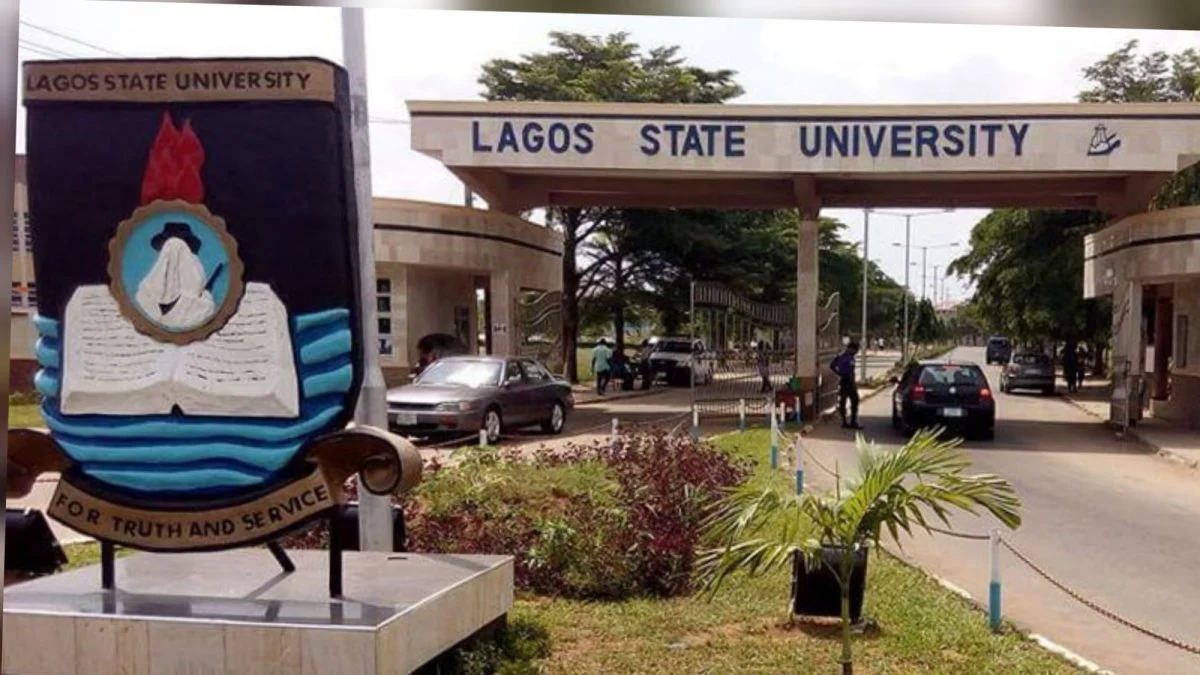
Some students of the Department of English at Lagos State University (LASU) have been left in uncertainty over their academic records following a change of curriculum in the department.
TIMESNG understands that the curriculum transition has, however, resulted in missing results, conflicting course codes and erroneous grades appearing on students’ profiles.
The situation, according to affected students, has persisted for several months, with some unable to ascertain whether they have outstanding courses, while others are worried that inaccurate grades could affect their cumulative grade point averages (CGPAs) and even graduation prospects.
It was gathered that the problem was triggered by the transition from the former Benchmark Minimum Academic Standards (BMAS) curriculum to the new Core Curriculum and Minimum Academic Standards (CCMAS) with some English courses assigned new codes.
A student, who spoke on condition of anonymity with our reporter, said the curriculum changes initially generated confusion among students because the changes appeared to involve more than simply replacing old course codes with new ones.
According to the source, students had observed that the department was introducing new courses and revalidating existing ones, while some courses appeared to have been substantially altered under the revised curriculum.
He said the changes became particularly noticeable when comparing the curriculum used by students who recently graduated with that of students currently progressing through the department.
“I saw the curriculum they used in 200 level, which these guys were lamenting,” the student said, explaining that students who had recently completed their studies were working with a different curriculum from those who came behind them.
He said the development initially appeared to affect mainly 200-level students, leaving students in other levels uncertain about whether they were also expected to make changes to their course registrations.
“We assumed that it was just something that affected only 200-level students because they were the only ones that I knew of that were lamenting.”
According to the student, those in the affected level were reportedly given directives concerning the new course codes, but students in other levels did not receive similar instructions.
He said this became a major concern when results began to emerge.
One of the most troubling cases involved ENG 104, Introduction to Linguistics, a course taken by the affected students before the curriculum changes.
When the result was released, the student said virtually everyone in the class received an F.
“Every single person had an F in ENG 104,” the student said. When asked about the number of students who took the course, he said, “We were around 360 or so students who registered for ENG 104.”
The widespread failure immediately raised suspicions among students because the affected students had otherwise performed normally in their examinations. The student said the result was particularly surprising because of the personal academic performance of some students who received the F.
“I did excellently in all other courses,” the student said, explaining that the unusually poor result in ENG 104 made it appear that there could have been an administrative or system-related problem rather than a general failure by the class.
The student said the situation became more suspicious after enquiries showed that other students who were considered strong academically had also received zero in the same course.
“That was when I just knew right there and then it was going to be a general issue,” he said.
The student subsequently attempted to approach the lecturer responsible for the course to seek clarification and, if necessary, have the students’ scripts and scores reviewed.
However, the Head of Class advised that such a visit was unnecessary because the lecturer was already aware of the problem. The student said further enquiries were made on several occasions, including visits to the lecturer’s office, but the matter remained unresolved.
On one occasion, the lecturer reportedly told the student that he had completed his own part of the process and that the matter was now with the Head of Department. The delay continued even after the affected students progressed into another academic session.
According to the student, ENG 104 was a second-semester course taken in the students’ 100-level year, yet the result remained unresolved when they entered the second semester of their 200-level year.
This created another concern for students who were unsure whether the course would eventually be treated as a carryover.
Although the course was displayed as an elective, the student said inconsistencies between the university’s course and academic portals made students reluctant to assume that they could simply ignore it.
The student explained that some courses appeared as compulsory on one platform but elective or otherwise classified on another. As a result, students wanted a clear confirmation that they had not failed the disputed course before proceeding with subsequent registrations.
The curriculum confusion has not been limited to ENG 104.
The student also disclosed that students who had registered for courses under the old curriculum were confronted with similar problems when new course codes appeared on their academic profiles.
Some students who had taken courses under old codes reportedly had zeros recorded against those codes, while their actual grades appeared under newly introduced codes.
The student cited courses such as ENG 204, ENG 206 and ENG 208 among those affected.
In some cases, the university appeared to have started correcting the records by adding the new course codes and uploading students’ actual scores. However, the correction itself created another problem because the original zero under the old course code remained visible.
“So it would show ENG 204 zero, and then ENG 214 under it as B,” the student disclosed.
This particular issue happened in at least two of the affected courses, while other courses continued to display zeros without the corresponding corrected course codes or grades.
The result, the student said, was that the affected students’ CGPAs became distorted.
While the students whose records had been affected in that way have seen some signs that the university is working on the problem, the situation remains unresolved for others.
The development has also created uncertainty over courses that students were expected to carry over from the old curriculum.
Some students who had carried over ENG 201 under the old curriculum became confused when another ENG 201 appeared under the new curriculum with a different course title and content.
Students who had previously carried over ENG 201 as Introduction to Grammatical Models were reportedly unsure whether they were expected to register for the new ENG 201, which was being offered as English Morphology.
The student said the confusion was compounded by the fact that some courses from the old curriculum appeared to have disappeared or been replaced under the new structure.
Another issue highlighted is the delayed uploading of results for courses like LIT 201 that are not necessarily connected to the curriculum dispute.
The student said some results remain unavailable despite students having completed the examinations, leaving them unable to determine their actual academic standing.
This has become particularly concerning for students applying for jobs, scholarships, internships and other opportunities that require specific CGPAs.
The student said some students simply want their results uploaded so their academic performances can be accurately reflected in their CGPAs.
However, many of final year students with unresolved outstanding courses on their profiles have faced difficulties obtaining clearance for graduation. Recall that the university held its 29th and 30th combined convocation ceremonies on August 18 at the main campus, Ojo. Some students were still yet to be cleared for graduation due to the outstanding courses.
The students said the situation has persisted with repeated calls for patience failing to provide a clear timeline for resolution.
“Some of us are frustrated while others are demoralised or simply exhausted,” the student added.
Meanwhile, the development has attracted the attention of the National Association of Nigerian Students (NANS), Joint Campus Council (JCC), Lagos State.
A statement released on Saturday by its Chairman, Comr. Quadri Ishola Odewunmi, expressed concern over reports alleging that more than 100 LASU students could be affected by outstanding results dating back to their 300-level studies.
NANS JCC Lagos alleged that the affected students had completed their academic requirements but were unable to graduate because some results had reportedly not been uploaded.
The student body called on LASU management and relevant academic authorities to investigate the allegations, verify the academic records of affected students and ensure that legitimate outstanding results are processed without further delay.
It also urged the university to ensure that students are not compelled to spend an additional academic year where such a delay is established to have resulted from an administrative or academic lapse beyond their control.
NANS further called for a clear explanation of the students’ academic status and an expedited mechanism for resolving the matter.
“We wish to assure the affected students that NANS JCC Lagos is on this matter. We will engage the relevant authorities, seek clarification, and explore every legitimate avenue available to us to ensure that the matter is properly addressed,” the statement added.
Similarly, authorities in the university have also announced commencement of investigation into the issues. In a post on its official X account on Saturday, the university wrote, “The attention of the University Management has been drawn to this allegation, and the matter is currently being looked into. Thank you for bringing it to our attention.”






EPL: They’ll even win Champions League this season’ – Gary Neville names one player Arsenal should sign

Nigerian Government Paid $1.7 Million To Renovate São Tomé Ambassador’s House And Abandoned It – Secrets Reporters Nigeria

EPL: ‘It showed today’ – Owen Hargreaves pinpoints major issue with Man United after Hull City defeat

Money Waster: Without Clear Journey , Ex Aviation Minister Hadi Sirika Paid N219m As Touring Allowances While in Office – Secrets Reporters Nigeria

“Hi Tony” – Old video of Stanford student calling Tony Elumelu by first name resurfaces amid viral incident

2026 JAR: Bayelsa Health Ministry Holds Joint Annual Review, Assures More Commitments On Healthcare Dev’t

OGTAN Presents Award Of Excellence To KEFFESO Trust For Human Capital Development In Host Communities

JUST IN: Bello, They Should Ask Him What Was He Trying To Achieve Burning Cap With Symbol Of President _ Jibrin

Verydarkman challenges Davido to speak up against APC in 2027

Edo Youth Tennis Championship ends on high in Benin as Sports Commission boss hails Organisers 82.ng

Mary Habila finally buried in Kaduna after dying at Umahi’s residence
Mary Habila finally buried in Kaduna after dying at Umahi’s residence
Mary Habila finally buried in Kaduna after dying at Umahi’s residence

“Stop Making False, Defamatory Statements About Me And My Family” — Sheggz Reportedly Serves Bella Okagbue Cease-And-Desist Notice Amid Messy Breakup

Manchester City Complete Dramatic Comeback To Beat Bournemouth 2-1

Anambra SSG clarifies involvement in ‘fake’ federal agency

Bandits kill two, abduct two in Kaduna community

Mary Habila Finally Buried Weeks After Death at Umahi’s Residence

Video shows Israeli airstrike hit Zawayda in Gaza Strip

“If truly my wife is pregnant, the world will know”

 Headlines23 hours ago
EPL: ‘It showed today’ – Owen Hargreaves pinpoints major issue with Man United after Hull City defeat
- Viral20 hours ago
JUST IN: Bello, They Should Ask Him What Was He Trying To Achieve Burning Cap With Symbol Of President _ Jibrin
- Entertainment6 hours ago
“The bullet struck exactly where she was sleeping” – Nigerian doctor recalls sister’s miraculous escape from death
- Viral22 hours ago
1. KANU’S CONVICTION UNDER FIRE: LAWYER QUESTIONS LAW USED AFTER 2022 REPEAL
- Metro19 hours ago
DSS, Other Security Forces Rescue Kidnap Victim in Imo
- Metro20 hours ago
2027: Winning Your State for Tinubu More Important Than Becoming Campaign DG – Wike
- News19 hours ago
Edo Govt Speaks on Claim Davido Was Barred From Entering State
- Metro20 hours ago
ECOWAS Mission In Guinea-Bissau Holds 5km Route March To Boost Fitness, Teamwork