News
LASU, NIS convene conference to address border security

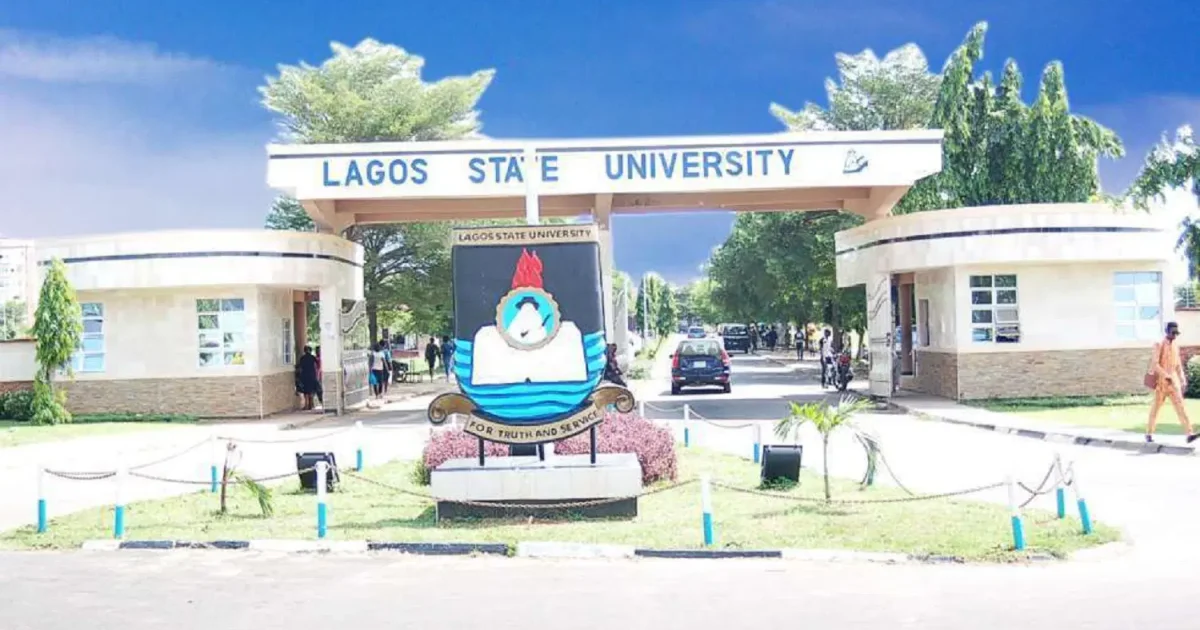
Lagos State University and the Nigerian Immigration Service have called for stronger collaboration among researchers, policymakers, security agencies and border communities to address emerging security challenges and promote socio-cultural integration across African borders.
The call was made on Monday at the 2026 annual conference of the African Borderlands Research Network, held in Ikeja, Lagos, with the theme, “The Connected Borderlands: Socio-Cultural Integration and the Centrality of Policy, Research and Security.”
The conference, co-hosted by LASU and the NIS, brought together scholars, practitioners, policymakers and other stakeholders to examine border management, migration, security, regional integration and the socio-economic realities of border communities.
Speaking at the conference, the Vice-Chancellor of LASU, Prof. Ibiyemi Olatunji-Bello, said the gathering was an opportunity to promote research that responds to the realities of Nigeria and Africa, noting that borderlands should be viewed as living spaces where people, cultures, languages, markets and histories intersect.
She said, “The theme invites us to look beyond the border as a line and to see the borderland as a living space where people, cultures, languages, markets, and histories intersect; where national interest meets regional aspirations; and where policy, research, and security must work together.”
She noted that Lagos was an appropriate setting for the conference because of its strategic position along the Lagos-Abidjan corridor and its importance to trade, movement and regional integration.
Olatunji-Bello said LASU’s commitment to border studies was reflected in the establishment of its Bachelor of Arts programme in Border and Migration Studies, stressing that Africa needed a new generation of scholars and practitioners who understood the relationship between borders, livelihoods, identity, security, development and human mobility.
She said the university’s partnership with the NIS was important because effective border management required both research and practical experience.
“Research needs practice, practice needs research, and both need policy. That is the triangle within which meaningful border governance must operate,” he said.
The VC also commended the Nigerian Immigration Service for partnering with the university to bring the conference to Nigeria, adding that universities must help shape policies and practices governing migration and border management.
In his address, the Comptroller-General of the NIS, Kemi Nandap, said border management was undergoing significant transformation as a result of technological advancement, changing migration patterns, regional integration, cross-border economic activities and emerging security threats.
Nandap, noted that the responsibility of the government was to ensure that border areas remained secure while facilitating lawful mobility, strengthening regional cooperation and preserving the social, cultural and economic integration of border communities.
According to her, traditional physical patrols and document inspection were no longer sufficient to tackle challenges such as human trafficking, migrant smuggling, identity fraud, organised crime, terrorism and cyber-enabled threats.
She said the NIS was therefore combining the experience of its officers with technology, intelligence and stronger inter-agency cooperation.
Nandap said Nigeria had made significant progress in modernising its border management system, including the introduction of electronic passports, enhanced e-passports, biometric identity verification, automated passport processing and e-gates at international airports.
She added that investments in surveillance, command and control systems, communications infrastructure and integrated data platforms were aimed at enabling immigration officers to identify emerging risks early and facilitate the movement of legitimate travellers.
However, she stressed that technology alone could not guarantee effective border management.
“Technology cannot replace professionalism, experience, judgment, and the integrity of the officers entrusted with securing our borders,” she said.
Nandap also called for greater involvement of border communities in security and border management, describing them as strategic partners whose knowledge of their environments could not be replicated by technology.
She said Nigeria’s border-management policies must also uphold the ECOWAS principles of free movement while strengthening security and supporting legitimate trade and livelihoods.
The NIS boss said the border of the future would be increasingly digital, biometric and intelligence-led but should remain human-centred.
“Our vision is therefore broader than securing Nigeria’s borders. We seek secure, connected, and resilient borderlands where communities can prosper, legitimate trade and mobility can flourish, and countries can cooperate in confronting shared threats,” she concluded.
Also speaking, the Senior Special Adviser on Policy to the Minister of Interior, Dr Kareem Oladokun, who represented the minister, said effective border management required stronger partnerships among government institutions, universities, security agencies and development partners.
Oladokun said border communities were often the first to experience the consequences of insecurity and irregular migration, but also possessed valuable knowledge that could contribute to early warning, conflict prevention and effective border management.
He said, “Building resilient border lines therefore requires us to see border communities not merely as populations to be secured, but as partners in security and development.”
He urged researchers to produce knowledge capable of anticipating emerging challenges rather than merely explaining past problems, stressing the need to translate research findings into practical and sustainable policy solutions.
Declaring the conference open on behalf of the Federal Government, Oladokun said the gathering provided Nigeria with an important platform to contribute to the development of secure and resilient borderlands across West Africa and Africa.
Representing the Lagos State Governor, Babajide Sanwo-Olu, the Commissioner for Tertiary Education, Tolani Sule, said the conference demonstrated the importance of universities engaging with real-world challenges.
Sule said African communities had for generations traded across frontiers, intermarried and shared languages and traditions, adding that the challenge was to ensure that borders protected legitimate national interests while supporting African integration.
He added that border and migration studies had become increasingly relevant because they intersected with national security, economic development, international relations, cultural integration, public health, employment, trade, demography, climate change and human rights.
According to him, Lagos’ position as Nigeria’s economic and commercial hub made discussions on mobility, migration and border governance particularly relevant to the state.
He noted that the state government remained committed to supporting tertiary education, research and innovation that responded to societal needs.
He continued, “The university provides research and critical inquiry, the practitioner provides operational experience, and the government provides the frameworks within which both can contribute.”
In his remarks, the Chairman of ARBONE Chiefs, Prof. Paul Nugent, said the network was established in 2007 to promote research into Africa’s borderlands and understand the unique challenges and opportunities associated with them.
Nugent said ABORNE was founded by 12 scholars at the University of Edinburgh but had grown into an international network comprising academics, institutions and government departments across Africa and other parts of the world.
He said issues such as migration, urbanisation, climate change, cross-border trade, public health and insecurity were increasingly centred on border regions, making borderland studies critical to understanding Africa’s development.
Nugent said ABORNE was working towards becoming an African-led border research network and expressed appreciation to Lagos State University and the Nigerian Immigration Service for hosting the conference, saying the partnership would help connect research with policy and practical border management.
The conference also highlighted the contributions of Professor Emeritus Anthony Asiwaju, a renowned Nigerian scholar of African boundaries and borderlands, whose work helped advance the understanding of borders as spaces of interaction, exchange, identity and contestation rather than merely a territorial dividing line.







‘It Is A Disgrace Tinubu Doesn’t Trust Anyone’ – Melaye Slams President’s Self-Appointment As Campaign Chairman

“A governor once gave Wizkid a bag full of dollars” – Kizz Daniel’s bouncer reveals what singer allegedly did next

“I spent months praying for God to take my husband’s money away” — Woman opens up on painful marriage

“My brother Davido, I love you” — Gov. Okpebholo’s aide who banned Davido from entering Edo apologises

Atiku slams Oyedele, demands details of $5bn Abu Dhabi loan

Morning recap: KWAM1 breaks down in tears over Ogogo’s death, govs face questions as FAAC payouts hit N47tn, other top stories

Economic Impact of Extracted Precious Metals from Electronic Waste in South Western, Nigeria; Review of Extraction Methods

23 years of operation: Globacom as the architecture of value and the audacity to never settle for less

Hon Ereyitomi Congratulates Chief Ayiri Emami, Stella Okotete on APC Presidential Campaign Council Appointments

₦394.86m Financial Irregularities: Nigeria’s Bata Consulate Paid Unapproved Subsidy, Retained Public Funds – Secrets Reporters Nigeria

Moffi begins Hamburg training as club chief hails Nigerian

Demehin admits Ucheibe’s influence in Benfica move

Awoniyi opens Coventry goal account

Ogun 2027: APC seeks Hunye’s arrest over alleged impersonation

US starts returning staff to some Middle East missions after Iran war evacuations

Canada hits US goods with retaliatory tariffs

APC Petitions IGP, Demands Arrest and Prosecution of Ogun Guber Aspirant

States’ IGR soars 34% to N2.43tn despite economic hardship

Our family not in politics for money, we have generational wealth – Gov Adeleke’s son, B-Red

After 18 years in limbo, National Library finally gets new lease of life

 Special Report21 hours ago
23 years of operation: Globacom as the architecture of value and the audacity to never settle for less
- News15 hours ago
BAECC Reaffirms Commitment to the Timely Delivery of the Benin-Asaba Expressway Project Following Recent Protest
- Viral15 hours ago
“And this guy collected my 1k” — Man discovers ‘young boy’ he gave transport money was actually the groom
- Headlines10 hours ago
Ogun community raises alarm over alleged destruction of farmlands by land grabbers, begs Gov Abiodun to intervene
- Politics9 hours ago
Fuel Subsidy: They Don’t Have Patience To Study What Atiku Is Proposing – Ologbondiyan Knocks Tinubu’s Govt
- Viral14 hours ago
“Something no clear here” — Lady recounts how friend ended relationship with millionaire ex after strange setbacks
- Headlines7 hours ago
‘He didn’t speak on my authority’ – Atiku counters aide, insists on total restoration of fuel subsidy
- News5 hours ago
Evening recap: Falana faults NBA over George Weah invitation, Poco Lee’s management clears drink-spiking claims, other top stories