Politics
FG Commissions Electric Buses For Civil Servants

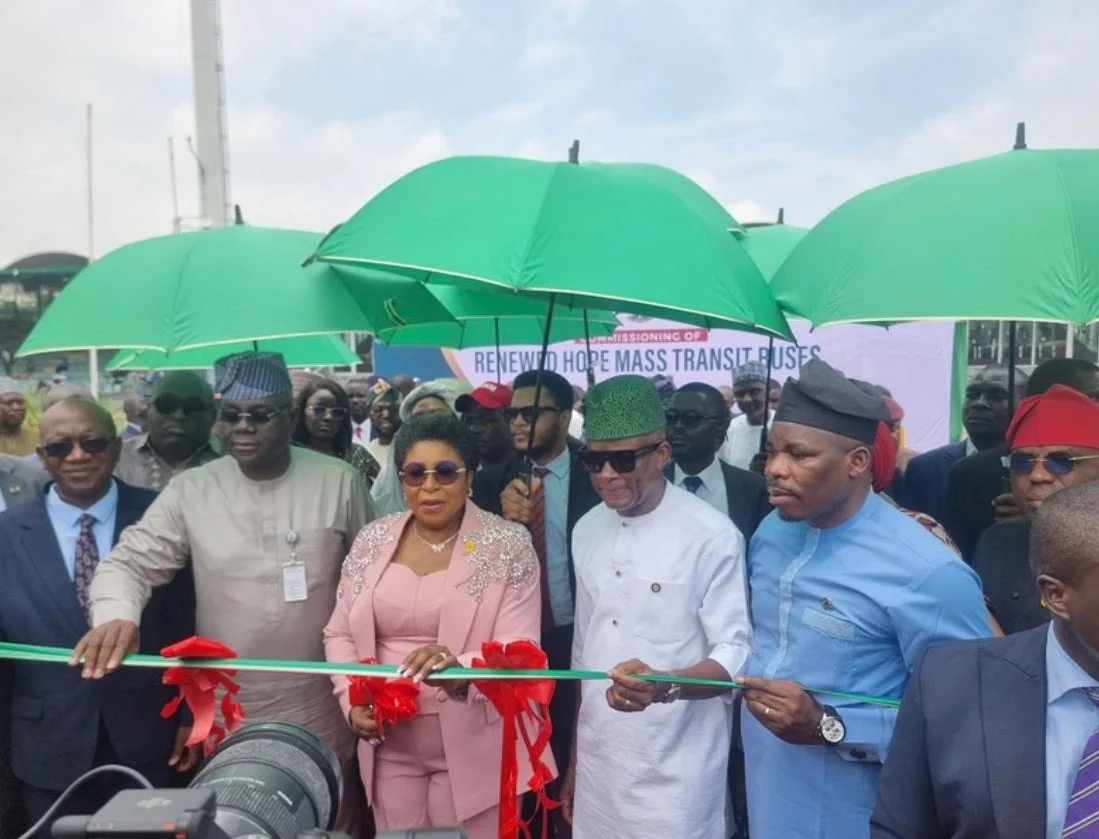
The federal government has commissioned 37 electric buses as the first phase of its plan to deploy 100 buses under the Renewed Hope Mass Transit Programme for federal civil servants.
The buses were unveiled on Wednesday, at the Eagle Square, Abuja, as part of efforts to ease transportation challenges, reduce commuting costs and improve the welfare and productivity of government workers.
Head of the Civil Service of the Federation, Didi Walson-Jack, described the initiative as a major intervention in improving the working conditions of civil servants.
The commissioning is coming less than 24 hours before the end of her tenure, with Walson-Jack describing the project as her “parting gift” to federal civil servants.
“What we have here is 37 buses, being the first instalment of the 100 electric buses,” she said.
According to her, transportation remains a major factor affecting workers’ finances, safety, punctuality and productivity.
Read Also:
“For many civil servants, the daily commute shapes their finances, their safety, their punctuality, and ultimately their productivity,” she said.
Walson-Jack said the programme would help workers save money, reduce commuting risks and arrive at their workplaces with greater energy to deliver effective public service.
She disclosed that the buses would initially operate on selected routes under a pilot phase before the programme is fully rolled out.
She added that the buses would eventually be deployed to the federal secretariats across the states, adding that “a special purpose vehicle has been established to ensure their proper management, maintenance and long-term sustainability.”
Minister of State for Industry, Trade and Investment, John Enoh, said the project goes beyond transportation, describing it as a combination of workers’ welfare, productivity, industrialisation and technology.
Enoh said each of the 100 electric buses could accommodate up to 200 passengers and travel a minimum of 200 kilometres on a full charge.
He commended the National Automotive Design and Development Council and other stakeholders involved in the project, urging local manufacturers to establish factories, deepen local content and produce globally competitive electric vehicles.
The minister said the federal government remained committed to ensuring that its economic reforms translated into industrial growth, job creation, infrastructure development and improved living standards.
Also speaking, the Director-General of the National Automotive Design and Development Council, Olu Osanipin, said the initial deployment marked the beginning of a phased rollout.
Osanipin said the full complement of 100 electric buses was expected to be deployed by December 2026.
The programme is expected to provide federal civil servants with more affordable and reliable transportation while supporting the federal government’s push for cleaner mobility and greater local participation in the automotive industry.


That’s How A Statesman Should Behave – Keyamo Praises Atiku For Not Disobeying Court Order Sacking Him As ADC Presidential Candidate

Explain What Your Administration Has Done With ₦15.8 Trillion Saved From Fuel Subsidy Removal – Peter Obi Dares Tinubu

Oyedepo, Adeboye own private jets, universities because Obasanjo allocated oil wells to them – Madugba

“Personal Attacks On Judges Are Not A Substitute For Legal Argument” — C4G Tells Okonkwo, Odinkalu Over ADC Judgment

JUST IN: Nigeria beat Japan to become first African nation to win U-17 Women’s World Cup – The Witness Nigeria

“My First Mistake Was Listening To Buhari” — Amaechi Blames 2022 APC Primary Defeat On Former President’s Unfulfilled Promise

“Ibom Deep Seaport Is Approved” — Tinubu Grants Eno’s Request, Attacks Atiku, Obi, Promises Better Future As He Stumbles During Akwa Ibom Visit

“Why Was Another Case Filed To Reopen The Same Dispute?” — Atiku Questions Conflicting ADC Judgments, Vows Appeal And Stay Of Execution

“Flamingos Are World Champions” — Nigeria Defeat Japan 2-1 To Win Historic First FIFA U-17 Women’s World Cup

“We Haven’t Received The Judgment Yet” — INEC Denies Removing Atiku, Amaechi From 2027 Candidates’ Portal Following ADC Court Ruling

I worked as security guard while in primary school – Gov Kefas

Keyamo Launches TV Campaign Series on Tinubu’s Aviation Reforms Ahead of 2027

Boko Haram fighter surrenders to troops in Borno

Troops intercept military kit, arrest driver, passengers in Bauchi

Troops arrest three suspected human traffickers, recover dead infant in Osun

Seyi Tinubu blasts Fayose for mocking pro-Tinubu walk in Port Harcourt

Godspower Oshodin Launches Book Tour in Kigali

EPL: Carrick speaks on resigning as Man Utd manager after 4-4 draw with Aston Villa

Kaduna Muslims, Christians unite at church’s 25th anniversary
Africa Literature Trust Fund Founder Godspower Oshodin Opens Book Tour With Kigali Launch

 Metro6 days ago
“Nigeria Cannot Afford To Fail In 2027” — UNOWAS Urges Peaceful Elections As NHRC Warns Against Electoral Offences
- Special Report6 days ago
Cocaine: KC Luxury asks judge to withdraw from his trial over missing affidavit – The Witness Nigeria
- Metro7 days ago
“APC’s 2027 Strength Goes Beyond Electoral Victories” — Yilwatda Cites 13m Members, 31 Governors, 88 Senators
- Special Report4 days ago
Namibia President hails Dangote’s $2.5bn investment as historic milestone for African industrialisation – The Witness Nigeria
- Politics7 days ago
They Don’t Want To Contest Against Us – Kwankwaso Accuses Yusuf Of Plotting To Disqualify NDC From Governorship Race
- Headlines5 days ago
Kayode Akinmade: Abiodun’s road revolution – From forgotten communities to connected economic corridors
- Headlines6 days ago
Inaccurate information, algorithmic bias undermine justice – Kaduna Attorney-General warns young lawyers
- Headlines5 days ago
Tinubu went to Mecca with only Northern Govs, cabinet full of Yorubas, height of hypocrisy – Atiku’s aide