Politics
Fake Agencies Expose Nigeria’s Trust Gap Ahead of 2027 Elections

By Onibiyo Segun
(Abuja, FCT) – Two entities described by ICPC as fictitious operated with offices, websites and official-looking communications, exposing a verification gap that allows Nigerians to struggle to distinguish legitimate institutions from impostors.
The Alleged Fake Government That Looked Real
The Independent Corrupt Practices and Other Related Offences Commission (ICPC) said it uncovered entities presenting themselves as federal bodies, including the Presidential Foreign Investment Promotion Council (PFIPC) headed by Adeniyi Adeyemi and the National Brands Development and Made-in-Nigeria Special Project Office, headed by Hon. Nwabueze Buchi George.
ICPC said PFIPC was not created by law, executive order or any valid government instrument, yet it operated with official-looking documents and structures that created an impression of legitimacy.
The commission also said the National Brands Development and Made-in-Nigeria Special Project Office operated from premises linked to the Office of the Secretary to the Government of the Federation without presidential authorisation.
The central question is not only who allegedly created the entities, but how they gained enough credibility to appear official.
The Human Cost: ‘It Looked Like Government’
For Benard Ufom, a logistics contractor based in Onitsha, Anambra State, the problem was that no official channel helped him verify the claim before engagement.
Ufom told TruthNigeria, “I attended a PFIPC programme in early 2025 after seeing a website displaying federal branding and the presidential seal. The invitation, sent through WhatsApp, promised access to investment support and SME grants.”
“The flyer had a government logo. The venue address looked official. I went because I believed it was a presidential initiative,” Ufom said.
Ufom explained: “participants submitted company profiles and CAC documents for screening but received no follow-up. I tried to check PFIPC on the government portal. There was nothing. If the government cannot tell us what is real, how will we know?” he added.
His experience reflects a wider concern: when government identity cannot be quickly verified, citizens and businesses become vulnerable to organisations that appear official.
Inside Nigeria’s Verification Gap
The scandal is not only about alleged fraud. It is about institutional design. Nigeria has no single public platform where citizens, investors and businesses can instantly confirm whether an agency, council or presidential initiative is genuine.
TruthNigeria spoke with governance, anti-corruption, election and digital experts who warned that weak verification systems create wider risks.
Prof. Roju Akinkugbe, Governance and Public Law Expert, based in Abuja said: “Nigeria has no public registry to verify agencies. That flaw lets impostors borrow state authority and enter government.”
Hauwa Aliyu Kainkiya, Anti-Corruption Expert and Director, based in Kaduna said: “This is an oversight failure. If ICPC finds fake offices inside the government, who was checking before citizens were harmed?”
David Olumisi, Digital Governance and Communications Expert based in Canada told TruthNigeria, “A website and logo now equal legitimacy. Nigeria needs a portal to confirm every agency and appointment instantly.”
Who Guards Government Identity?
The allegations have raised a deeper accountability question: who protects the identity and credibility of Nigeria’s government institutions?
Government agencies and initiatives usually require approval through the Presidency, the Office of the Secretary to the Government of the Federation, supervising ministries and, where required, the National Assembly.
The ICPC investigation identified gaps in verification procedures, inter-agency coordination and oversight that allegedly allowed the entities to appear legitimate.
Questions remain over who maintains a public record of recognised agencies, verifies presidential initiatives and approves government branding.
The bigger issue is whether Nigeria’s systems can stop false government identities from gaining public trust.
Election-Year Vulnerability
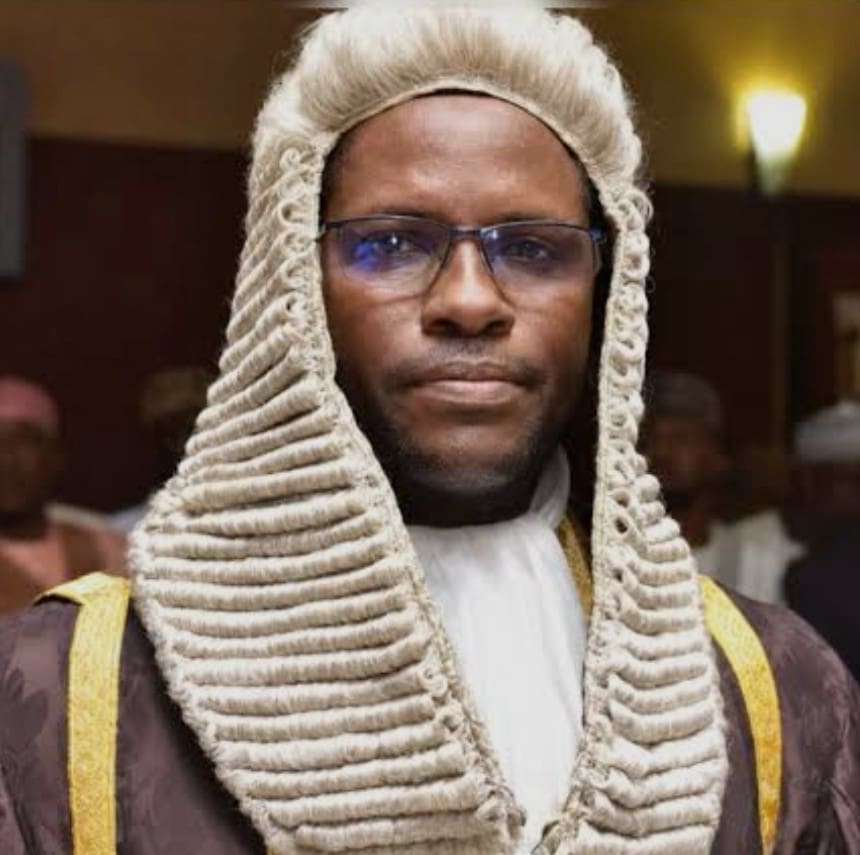
No evidence shows the alleged entities were created for electoral purposes. However, analysts warn similar structures could be exploited during elections through fake empowerment schemes, false appointments and data collection.
Afugba said, “Similar structures could be exploited before elections. Without verification, manufactured authority can sway voters and damage democracy.”
“With Nigeria approaching another election cycle, government identity verification is becoming a democratic issue, not only an administrative one.” Afugba explained.
Government Response And Remaining Questions
President Bola Tinubu directed ICPC to investigate PFIPC after authorities questioned its legal status and claims of government approval.
ICPC later submitted an interim report recommending prosecution of Adeniyi Adeyemi, who allegedly presented himself as PFIPC’s director-general.
ICPC said investigators found Adeyemi was never appointed by the Federal Government, PFIPC lacked legal foundation, and documents supporting the agency’s existence were allegedly forged.
The commission also recommended sanctions against public officers linked to the operation and reforms to strengthen verification systems across government institutions. The investigation further uncovered two additional alleged fictitious agencies linked to the PFIPC operation.
Critical questions remain:
How many other suspected fake agencies exist?
Is government conducting a wider audit of agencies, councils and presidential initiatives?
Will Nigeria create a public verification system for government institutions and appointments?
Building A Government Identity Firewall
Olumisi noted that, “public agency registry, digital verification tools and transparent publication of all new government bodies. Trust is technical. Give Nigerians a tool to check, and fakes die overnight”.
Prof. Akinkugbe went on to say, “The scandal is not only about two entities but whether Nigeria can protect institutional credibility. If a fictitious entity can operate for years, how many others are influencing Nigerians now?”
Onibiyo Segun reports on conflict for TruthNigeria.
Related


How Obasanjo Considered Abandoning Second-Term Bid After South African President Got Wind Of Coup Plot – Donald Duke

‘It Is A Disgrace Tinubu Doesn’t Trust Anyone’ – Melaye Slams President’s Self-Appointment As Campaign Chairman

“A governor once gave Wizkid a bag full of dollars” – Kizz Daniel’s bouncer reveals what singer allegedly did next

“My brother Davido, I love you” — Gov. Okpebholo’s aide who banned Davido from entering Edo apologises

“I spent months praying for God to take my husband’s money away” — Woman opens up on painful marriage

Atiku slams Oyedele, demands details of $5bn Abu Dhabi loan

Economic Impact of Extracted Precious Metals from Electronic Waste in South Western, Nigeria; Review of Extraction Methods

Morning recap: KWAM1 breaks down in tears over Ogogo’s death, govs face questions as FAAC payouts hit N47tn, other top stories

₦394.86m Financial Irregularities: Nigeria’s Bata Consulate Paid Unapproved Subsidy, Retained Public Funds – Secrets Reporters Nigeria

23 years of operation: Globacom as the architecture of value and the audacity to never settle for less

2026 PFA Awards: Full list of winners
2026 PFA Awards: Full list of winners

US issues security alert in Mexican border city and suspends consular activities

Colombian president orders immigration raids, vows deportations of migrants without legal status

Alaafin unveils 37-member Oyo Empire Day celebration committee

Kumuyi urges peace, security as GCK crusade holds in Ogun

More than 50 kidnapped as violent gang attack in Haiti leaves 47 dead
More than 50 kidnapped as violent gang attack in Haiti leaves 47 dead

Eid-el-Maulud: Abiodun urges Muslims to embrace Prophet Muhammad’s teachings of peace, compassion
Eid-el-Maulud: Abiodun urges Muslims to embrace Prophet Muhammad’s teachings of peace, compassion

 News21 hours ago
Economic Impact of Extracted Precious Metals from Electronic Waste in South Western, Nigeria; Review of Extraction Methods
- News17 hours ago
₦394.86m Financial Irregularities: Nigeria’s Bata Consulate Paid Unapproved Subsidy, Retained Public Funds – Secrets Reporters Nigeria
- Special Report14 hours ago
23 years of operation: Globacom as the architecture of value and the audacity to never settle for less
- Metro23 hours ago
“Okpebholo Signs Edo Judiciary, Assembly Financial Autonomy Bills Despite JUSUN Protest” — Capital Funds Return To Executive Control
- Metro23 hours ago
Presidential Campaign Council: Yishawu Urges APC Members to Rally Behind President Tinubu Ahead of 2027 Elections
- News7 hours ago
BAECC Reaffirms Commitment to the Timely Delivery of the Benin-Asaba Expressway Project Following Recent Protest
- Viral8 hours ago
“And this guy collected my 1k” — Man discovers ‘young boy’ he gave transport money was actually the groom
- Viral6 hours ago
“Something no clear here” — Lady recounts how friend ended relationship with millionaire ex after strange setbacks