World
Nuclear weapons agency upgrading blast detectors on GPS satellites

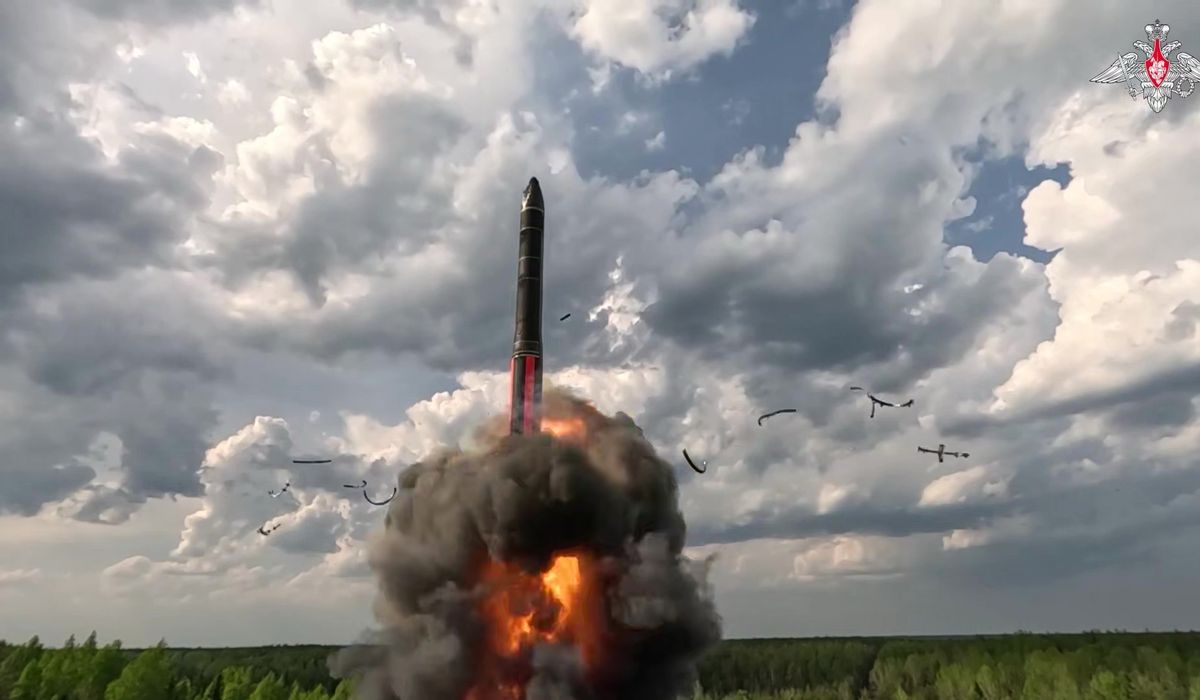
The National Nuclear Security Administration is upgrading sensors on GPS satellites that will better monitor nuclear blasts around the world, according to the Department of Energy’s nuclear weapons agency.
The NNSA sent the fifth, next-generation Global Burst Detector sensor system to the U.S. Space Force earlier this month for future launch on new Global Positioning System satellites, the administration said in a statement.
The new blast monitoring systems will be deployed as Russia has issued nuclear threats in its war against Ukraine, and China is rapidly expanding its nuclear forces beyond those normally needed for deterrence. North Korea also is expanding its nuclear stockpile and missile systems that are capable of striking the United States.
“The threat posed by nuclear weapons is increasing and evolving as nuclear powers modernize and expand their capabilities, the global arms control landscape erodes, nuclear power expands due to increased demand, and emerging technologies accelerate, conceal and democratize weapon development activities,” the federal Lawrence Livermore National Laboratory states on its website.
Less capable sensors already are deployed on GPS satellites and can spot above-ground nuclear blasts from orbits about 12,550 miles above Earth.
Nuclear explosions release a massive burst of X-rays that can be detected by satellites. Groups of the satellites receive the signals and triangulate to locate their origin.
The sensors provide real-time data to the military with 24-hour monitoring of nuclear detonations, and have been in operation since the early 1960s.
The newer detectors will use an instrument called a spectral imaging geolocation hyper-temporal sensor, or SIGHTS, that can record tens of thousands of video frames per second at megapixel resolution. This will allow rapid identification of nuclear blast signatures and reduce false positives.
Improved detectors will be deployed with advanced electronics, more robust materials and other hardening features that are expected to provide more than 15 years of service in orbit.
GPS satellites are expected to become major targets in the opening stage of any future military conflict. China and Russia have deployed anti-satellite weapons, including missiles and lasers that could target the GPS constellation.
The current variant of blast detectors is deployed on eight GPS satellites, with the most recent system launched in May.
Beginning in 2028, a more advanced Global Burst Detector system will be launched aboard all new up-to-date GPS satellites. Up to 22 of the new GPS systems, all made by Lockheed Martin, are planned through 2037.
“A strong nuclear deterrence posture is critical to shielding America against attack, and the delivery of this capability provides the nation with the capability to detect nuclear detonations under all conditions,” said Matthew Napoli, NNSA’s deputy administrator for defense nuclear nonproliferation. “Once launched, this next-gen GBD payload will join the existing satellites, ensuring monitoring capability well into the future.”
A total of 32 GPS satellites are in orbit, with an estimated 11 satellites equipped with older burst detectors.
Technicians from Sandia National Laboratory and Los Alamos National Laboratory worked on the next-generation Global Burst Detector system for more than 12 years, according to the Sandia website.
Sandia designed and produced the optical sensors and electronic management subsystems, and Livermore developed the electromagnetic pulse, X-ray and charged-particle sensors, Sandia said.
In addition to the two laboratories, Livermore and The Aerospace Corp., a contractor, are supplying what NNSA said are systems engineering and mission assurance support for the program.
The satellite sensors are part of a larger system called the Nuclear Detonation Detection System that relies on satellites and other sensors, and ground seismic monitoring stations that can detect, mark the time and record electromagnetic pulse energy in specific bands, and X-ray and optical signals from an explosion.
The detection system is used by U.S. Space Command for the integrated tactical warning/attack assessment mission and nuclear test ban treaty monitoring for the Air Force Technical Applications Center.
The data provided by the system also supports the U.S. Strategic Command and its nuclear warfighting mission.
The May launch of the most recent detector package “marks an important milestone in our efforts to enhance nuclear detection capabilities,” said Sandia manager Andrew Stuart, calling the detectors an “advanced system, which will significantly contribute to our national security by improving our ability to detect nuclear detonations from space.”


“Military Intelligence Officer Col. Abdussalam Ude Killed While Resisting Abduction At Abuja Home” — Wife, Driver, Guard Injured

“That Man Slapped Me Twice and Called Me Bad Names And Gave Me Naira 45M,” Sad as Abuja Woman Reveals How a Top Politician Allegedly Lured Her to a Lodging With an iPhone and Left Her Pregnant

Dollar to Naira Exchange Rate Today, July 29, 2026: Nigerian Naira records third consecutive depreciation

“I hope say dey never collect my glory” – Peller calls out man who allegedly promised him 10 cows at Soso Soberekon’s wedding

Is Tinubu Going For Boxing Or 100 Metres? – APC Chairman, Yilwatda Slams Peter Obi Over ‘Tired’ Remark

Taraba Lawmaker Calls On State Government To Accord Priority, Funding To Hepatitis Treatment As HIV/AIDS

EXCLUSIVE: Police Indict Unity Bank Cooperative Officials in ₦85 Million Fraud Investigation – Secrets Reporters Nigeria

“I opened an account”- Nigerian lady who relocated to Canada displays account balance, amount sparks buzz

NACAT Unveils ‘Breaking the Chains’ Initiative, Premieres Innocence for Sale Documentary to Strengthen Fight Against Human Trafficking – Secrets Reporters Nigeria

“FG Unveils Seven Locally Developed Herbal Products” — NNMDA Targets Cancer, Hepatitis B, Hypertension

INEC Warns Troublemakers, Unveil Enhanced Security Measures

Nigerian Army trains engineers to combat rising bomb threats

EFCC Arraigns Abuja Hotel CEO Over Alleged N15m Fraud
Nigerian Army trains engineers to combat rising bomb threats

There Is A Cabal In NBA’ — Lateef Akangbe

Akangbe Demands Fresh NBA Poll, Insists On Release Of Voting Logs

Suspected Thieves Forced to Dance With Allegedly Stolen Building Rods After Arrest

NITDA to License Tech Firms for Software Testing as New National Framework Takes Effect

Palestinian authorities ask Supreme Court to halt $656M judgment pending appeal

NPFL: Niger Tornadoes bolster squad with three new players

 Headlines24 hours ago
“That Man Slapped Me Twice and Called Me Bad Names And Gave Me Naira 45M,” Sad as Abuja Woman Reveals How a Top Politician Allegedly Lured Her to a Lodging With an iPhone and Left Her Pregnant
- Headlines22 hours ago
Dollar to Naira Exchange Rate Today, July 29, 2026: Nigerian Naira records third consecutive depreciation
- Politics24 hours ago
You Can’t Hide Behind ‘Technocrat’ Titles To Avoid Political Responsibilities – Yilwatda Warns Political Appointees
- Special Report22 hours ago
He Made His Best Friend Nico Williams Chop Me And Later Blocked Me — Lamine Yamal’s Ex-Girlfriend Nicole Explains Reason Behind Her Breakup With The Barcelona Star
- Special Report23 hours ago
Ghana’s Skyline Set For Major Transformation As 30-Storey Villagio Vista Echo Tower Emerges As Potential Tallest Building
- Entertainment23 hours ago
Lawyer reveals 10 things that has happened between Peller and Jarvis immediately after their court wedding
 Special Report23 hours ago
President Mahama Allegedly Takes Charge Of Apostle Kantanka’s Body Amid Family Dispute, Hides It In A Secret Place
- Viral24 hours ago
Yilwatda Confident APC Will Reclaim Osun in August 15 Governorship Election