Society
Court admits confessional statements of suspected coup plotters as evidence

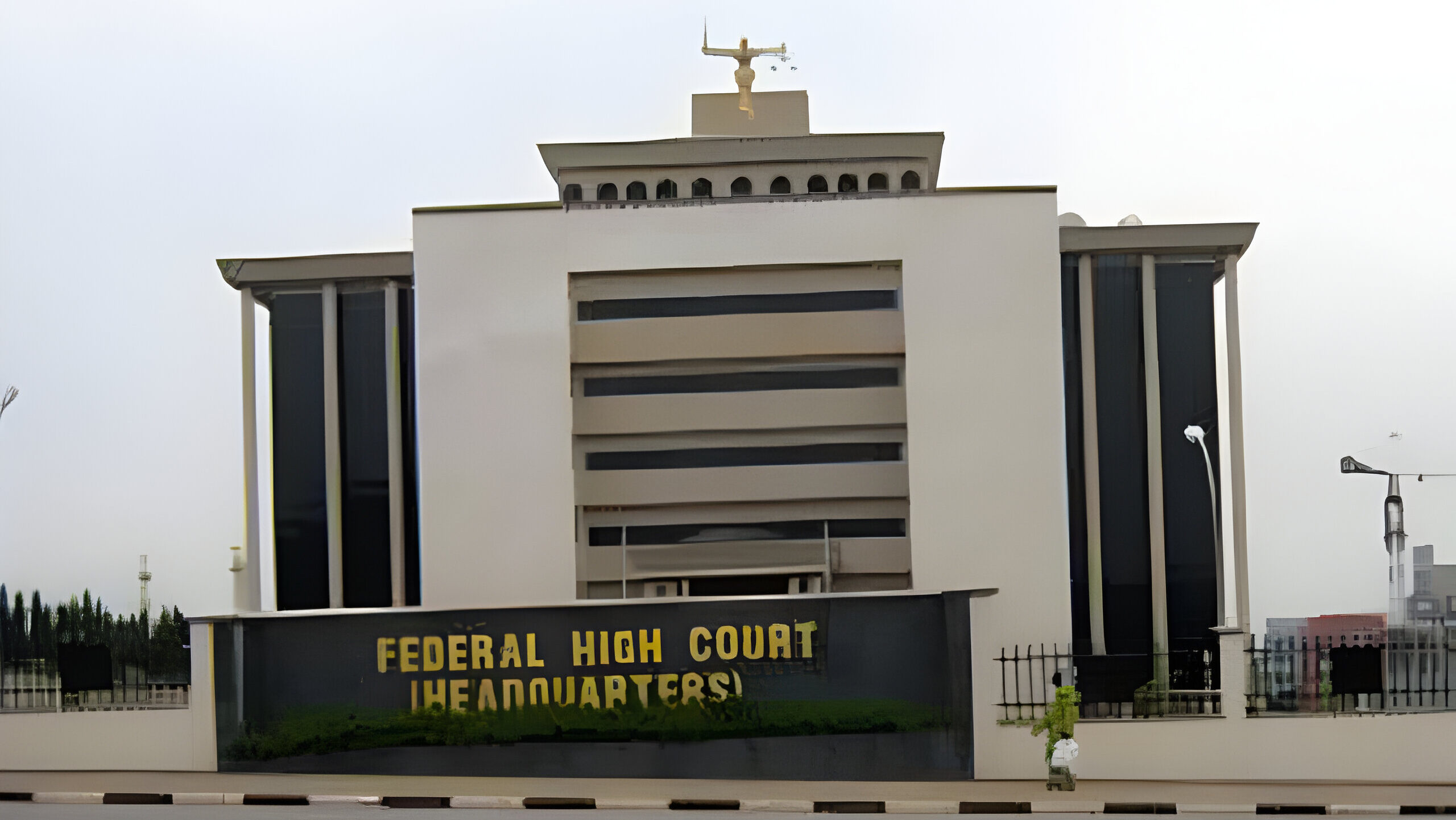
The Federal High Court in Abuja on Thursday admitted all audio-visual recordings of the extra-judicial statements tendered by the Federal Government against six suspected coup plotters.
Justice Joyce Abdulmalik, in a ruling after a trial-within-trial, agreed with the prosecution’s arguments that, from the audio-visual recordings of the extra-judicial statements the defendants made, there was no evidence of torture or oppression as claimed by them.
The judge, who discountenanced all objections of doubts and claims of involuntariness in the recording of the confessional statements, said that from the video recordings, the defendants appeared calm and unruffled.
The judge disagreed with the submissions of the defence that a lawyer must be present while taking the confessional statement of defendants in line with the Administration of Criminal Justice Act (ACJA), 2015.
Citing provisions of the Evidence Act, 2011 and a previous Supreme Court decision to back her ruling, Justice Abdulmalik held that, contrary to the defence arguments, where an audio visual recording of a statement is made by a defendant, and it is proven that there was no element of involuntariness in its making despite lawyer’s absence, such statement will be admissible in evidence in trial.
According to the judge, in criminal trial, the Evidence Act takes precedence over ACJA.
“I discountenance all objections of doubt. Therefore, all the audio-visual recordings were voluntarily recorded and I found no involuntariness in the exercise,” she declared.
The judge, who dismissed the argument of prolonged custody raised by the defence lawyers, also rejected the 6th defendant’s claim that there was no interpreter at the time as his confession was recorded in Hausa Language.
She also noted that the audio-visual recordings of 1st prosecution witness (PW-1) to PW-4 tallied as there was no evidence of torture in the taking of the defendants’ statements.
“The defendants failed to substantiate the allegations of oppression,” she ruled.
Justice Abdulmalik consequently admitted in evidence all the defendants’ extra-judicial statements, including the audio-visual recording, the certificates of compliance, flash drives, external drive from Special Investigation Panel, and the accompanying certificate of compliance. She marked them as exhibits accordingly.
The judge adjourned the matter until Dec. 7 and Dec. 10 at 12 noon, for continuation of trial.
The judge had, on Sept. 30, adjourned for ruling after counsel for the prosecution, Maryam Okorie, and lawyers to the defendants adopted their final written addresses and presented their arguments for and against the application.
The Federal Government, through the Office of the Attorney-General of Federation (AGF), had, on April 22, arraigned the six defendants on 13-count charge.
The charge, marked: FHC/ABJ/CR/206/2026, was filed on April 20 by the Director, Public Prosecutions of the Federation, Rotimi Oyedepo, SAN.
The defendants are retired Maj.-Gen. Mohammed Gana, retired Navy Capt. Erasmus Victor, Insp Ahmed Ibrahim, Zekeri Umoru, Bukar Goni and Abdulkadir Sani as 1st to 6th defendants respectively.
The former Minister of State for Petroleum Resources, Timipre Sylva, who is alleged to be part of the act, is listed as being at large.
The defendants were accused of offences ranging from treason and terrorism to failure to disclose security intelligence and money laundering linked to terrorism financing.
Justice Abdulmalik had, on May 11, ordered the trial-within-trial after defence lawyers objected to the admissibility of the statements and video recordings the prosecution sought to tender.


Police invite late singer, Toluwanisings’s wife, father, as parties sign peace deal – The Witness Nigeria

Fatal Bayelsa clash: Monarch clears Nembe E&P, questions link to land acquisition – The Witness Nigeria

After four years in detention, DSS clears four IPOB suspects, pays N20m compensation – The Witness Nigeria

US elections: Same cabal ousted Jonathan, installed Buhari, unleashed Boko Haram in Nigeria – Ex-Mayor

“Renting Your Property To A Terrorist Is Also An Offence” — FG Warns Landlords, Says Terrorism Support Attracts Minimum 20-Year Jail Term

Lafia Presidential Rally: RELAX DG Ahmed Bala leads members to campaign flag-off, highlights Tinubu’s North-Central projects

“No Degree Of Rigging Can Silence The Will Of The People” — Obi’s Camp Warns Governors Against Manipulating 2027 Elections

Namibia President hails Dangote’s $2.5bn investment as historic milestone for African industrialisation – The Witness Nigeria

They Want To Persecute Me – Karimi Reacts To Court Judgement Sacking Him As Kogi West Senatorial Candidate

“INEC Cannot Investigate INEC” — Ezekwesili Demands Independent Voter Register Audit, Warns Against Compromised 2027 Elections

Bandits attack Kebbi community, kill one, abduct several residents

Kogi West: Karimi rejects court judgement, vows to go on with campaigns

Och’Idoma seeks stronger action against hunger, malnutrition in Benue

From illegal detention to courtroom abuse: NJC punishes three judges

Daniel leads Senate Joint Committee meeting on insecurity in Nigerian waterways

Benue former Chief Judge, Justice Adam Onum is dead

2027: ‘Peter Obi’s Logic Is Short-Term Turnover Unlike Tinubu Who Thinks Of Next Generation’ – Oshiomhole

NPFL: Rivers United responds to sanction over broadcast blockage

Kano seizes 5,964 bottles of expired soft drinks in Singer Market

Makinde, Ajadi, Adekanmbi celebrate NBHA at 2026 Hair and Body Care Exhibition in Ibadan

 Politics5 days ago
Over 200 Boko Haram Terrorists Are Moving To Attack Military Camp In Buni Yadi As Rockets Target Troops; IED Threat Raises Travel Concerns
- Metro5 days ago
“The Election Must Hold As Scheduled” — INEC Chairman Rules Out Postponement Of 2027 General Elections
- Metro5 days ago
“Publishing His Name Is Subject To The Final Outcome Of A Court Order” — INEC Leaves Gwarzo Off Updated Kano Governorship List
- Metro5 days ago
“Ebola Outbreak Is Not Yet Under Control” — Africa CDC Warns As Confirmed Cases Exceed 10,200, Death Toll Surpasses 5,000
- Metro6 days ago
“Death Benefits Will Be Fully Paid To Next Of Kin” — NAF Pledges Continued Salaries For Personnel Killed In October 5 Aircraft Crash
- Metro5 days ago
“Sowore’s Whereabouts Remain Unknown” — Armed Men Allegedly Abduct AAC Presidential Candidate In Ado-Ekiti, Damage Vehicles And Restaurant
- Metro5 days ago
“They Beat Me Like A Criminal” — Sowore Recounts Ekiti Attack As Govt Denies Involvement, Calls For Police Investigation
- Metro5 days ago
“We Know What They Did And How They Did It, But I Don’t Know Why” — INEC Reveals Findings On AI-Generated Photos In Voters’ Register