News
Abiodun’s Ogun ranks 31st of 35 states in BudgIT fiscal report as Lagos leads

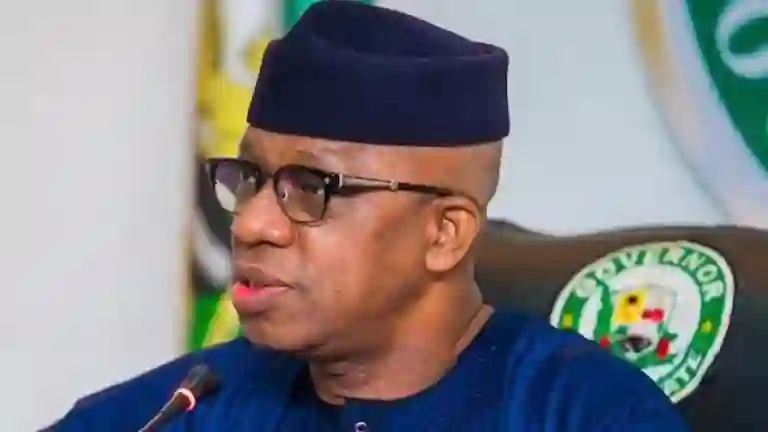
Ogun State under Governor Dapo Abiodun has been placed 31st out of 35 states in BudgIT’s 2026 State of States Fiscal Performance Ranking, a position that puts the Gateway State in the bottom five of the country’s most closely watched annual assessment of subnational finances.
The 11th edition of the report, released on 4 November 2026 under the theme “From Allocation to Impact: Rethinking State Spending Priorities”, reviewed how Nigerian states performed in the 2025 fiscal year. Lagos State, Ogun’s immediate neighbour and the country’s commercial capital, emerged as the best-performing state overall, with Enugu in second place. Cross River sits at the bottom of the table at 35th, with Plateau 34th, Kogi 33rd and Osun 32nd, leaving Ogun just above that group.
The result will sit uneasily with the Abiodun administration, which has repeatedly presented Ogun as one of the country’s leading industrial and investment destinations. The ranking suggests that this standing has not yet translated into the fiscal strength BudgIT’s assessment rewards.
The pressure point is debt. BudgIT’s findings put Ogun’s debt stock at N538.92 billion, which makes it the fourth most indebted state among those assessed. Only Lagos, with a debt stock of about N2.90 trillion, sits far above it in absolute terms, and Lagos has a far larger revenue base against which to carry that burden. Debt sustainability carries 15 per cent of the total score in the revised methodology, so a heavy debt profile weighs directly on a state’s position.
Under that methodology, states were scored across four pillars. Revenue performance accounts for 40 per cent, fiscal viability for 30 per cent, debt sustainability for 15 per cent, and spending on selected critical sectors, namely health, education, agriculture and water, sanitation and hygiene (WASH), for the remaining 15 per cent. Revenue and fiscal viability together make up 70 per cent of the weighting, which means a state’s capacity to raise its own money and live within its means largely decides where it lands.
Rivers State was excluded from the exercise because its audited financial statements and budget implementation reports were unavailable, leaving 35 states in the final ranking.
The contrast with the front of the table is sharp. Lagos generated N1.71 trillion in internally generated revenue (IGR) in 2025, a 35.67 per cent rise from N1.26 trillion in 2024, and its total revenue stood at N2.68 trillion. Enugu, in second place, more than doubled its IGR from N180.5 billion to N407.76 billion, a jump of 125.91 per cent, although BudgIT cautioned that non-tax receipts accounted for most of that increase. Even the leaders were told that strong revenue must translate into better public services and measurable development outcomes, which is the central message of this year’s report.
Ogun’s placement is also a regional story. Osun, another South-West state, was ranked 32nd, with debt servicing of N100.17 billion consuming 28.60 per cent of its total revenue. Oyo ranked 22nd and Ekiti 26th. Lagos aside, the South-West did not distinguish itself in the 2026 table, and Ogun’s position near the bottom raises fresh questions about how the region’s states are balancing expansion in spending against sustainable revenue.
BudgIT has framed this year’s edition as a call to move the debate from how much money states receive to what they do with it. For Ogun, whose debt stock is among the largest in the assessment, the ranking points to the need to strengthen revenue mobilisation, keep borrowing in check and show that spending is delivering results in health, education, agriculture and water and sanitation.
At press time, the Ogun State Government had not publicly responded to the ranking.
Seunmanuel Faleye is a brand and communications strategist. He is a covert writer and an overt creative head. He publishes Apple’s Bite International Magazine.




Fatal Bayelsa clash: Monarch clears Nembe E&P, questions link to land acquisition – The Witness Nigeria

US elections: Same cabal ousted Jonathan, installed Buhari, unleashed Boko Haram in Nigeria – Ex-Mayor

They Want To Persecute Me – Karimi Reacts To Court Judgement Sacking Him As Kogi West Senatorial Candidate

Namibia President hails Dangote’s $2.5bn investment as historic milestone for African industrialisation – The Witness Nigeria

Lafia Presidential Rally: RELAX DG Ahmed Bala leads members to campaign flag-off, highlights Tinubu’s North-Central projects

Lower impairments, higher fees raise Access Holdings 9 months 2026 PBT to N667.4bn – The Witness Nigeria

PSC fires three senior officers, demotes 16, sanctions 23 others over misconduct – The Witness Nigeria

JUST IN: Court removes David Mark-led ADC leadership, nullifies Atiku’s presidential ticket – The Witness Nigeria

LAKURAWA TERRORISTS REPORTEDLY MOVING TOWARD MABURYA VILLAGE AS 21 COMMUNITIES FLEE ATTACKS IN NIGER STATE

2027: Warn Your Children, Don’t Let Politicians Make Them A Statistic – Aisha Yesufu To Nigerian Mothers

Turkey: Galatasaray have found special No.10 to solve their Osimhen problem – Erman Özgür

Police arrest two suspects in Delta, recover pump-action gun, locally made guns

It Is Very Petty For You To Descend To This Level – Obono-Obla Slams Atiku Over Calabar Insecurity

UECL: Arokodare bags brace, assist as Ajax thrash FC Midtjylland 6-1

Funke Akindele’s ‘The Four’ Sells Out London Premiere Ahead Of December Cinema Release

Zidane’s son dropped from Algeria squad for AFCON qualifiers

Abiodun’s Ogun ranks 31st of 35 states in BudgIT fiscal report as Lagos leads

Rainbow Coalition Buses Flood Rivers Ahead of Tinubu’s Visit

$1 cannot buy anything in US, but N2,000 can feed you at ‘mama put’ – Oshiomhole

NPA Calls For Private Investment As Lekki Deep Sea Port Reaches Full Capacity

 Politics6 days ago
Over 200 Boko Haram Terrorists Are Moving To Attack Military Camp In Buni Yadi As Rockets Target Troops; IED Threat Raises Travel Concerns
- Metro6 days ago
“The Election Must Hold As Scheduled” — INEC Chairman Rules Out Postponement Of 2027 General Elections
- Metro5 days ago
“Publishing His Name Is Subject To The Final Outcome Of A Court Order” — INEC Leaves Gwarzo Off Updated Kano Governorship List
- Metro6 days ago
“Ebola Outbreak Is Not Yet Under Control” — Africa CDC Warns As Confirmed Cases Exceed 10,200, Death Toll Surpasses 5,000
- Metro6 days ago
“Death Benefits Will Be Fully Paid To Next Of Kin” — NAF Pledges Continued Salaries For Personnel Killed In October 5 Aircraft Crash
- Metro6 days ago
“Sowore’s Whereabouts Remain Unknown” — Armed Men Allegedly Abduct AAC Presidential Candidate In Ado-Ekiti, Damage Vehicles And Restaurant
- Metro5 days ago
“They Beat Me Like A Criminal” — Sowore Recounts Ekiti Attack As Govt Denies Involvement, Calls For Police Investigation
- Metro5 days ago
“21 Exotic Vehicles Affected, No Life Lost” — LASEMA Confirms Lagos Mechanic Workshop Fire, Averts Disaster At Nearby Filling Station