Politics
The Economist Magazine Predicts Winner of Nigeria’s 2027 Election

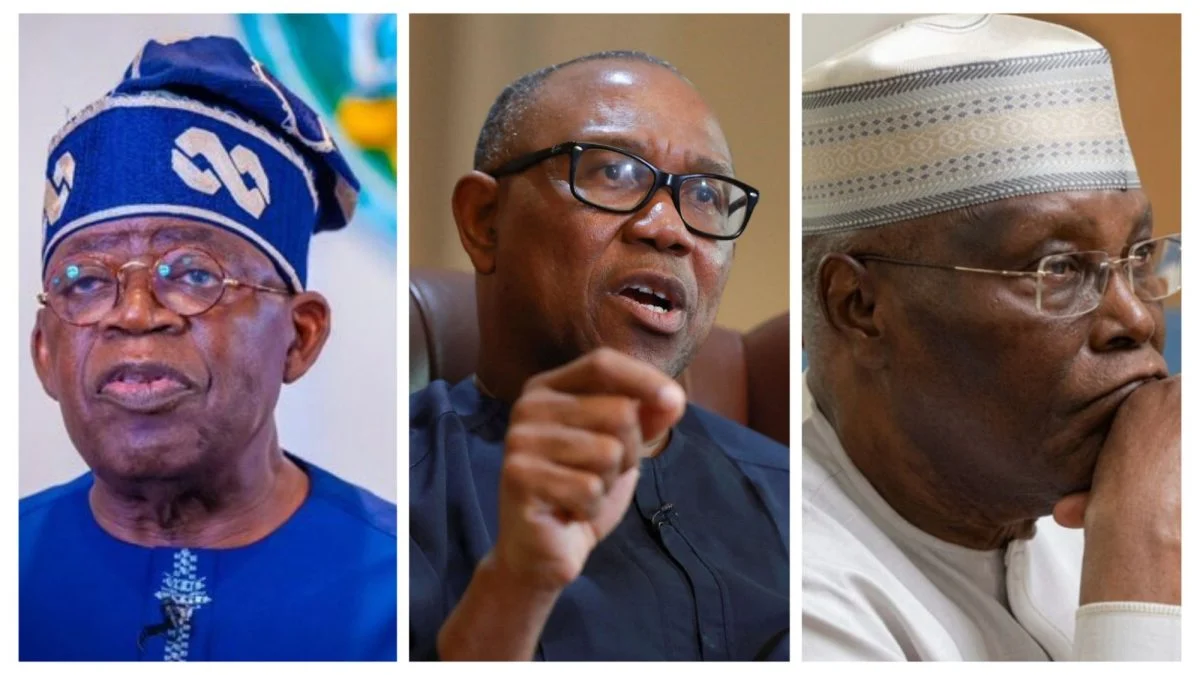
The Economist has projected that President Bola Ahmed Tinubu may secure a second term in 2027, despite insecurity, rising living costs and dissatisfaction with his administration.
The London-based magazine argued that public anger alone might not be enough to remove an incumbent in Nigeria.
It cited the fragmented opposition, religious and regional loyalties, political structures and low voter participation in troubled areas as factors that could favour Tinubu.
The magazine titled it analysis “Nigerians Dislike Their President, But May Re-elect Him Anyway,”
Opposition parties, including the African Democratic Congress (ADC) and the Nigeria Democratic Congress (NDC), have however challenged the assessment.
Both parties rejected the idea that Tinubu’s political position could translate into victory.
Tinubu, who is seeking re-election on the platform of the All Progressives Congress (APC), is expected to face former Vice President Atiku Abubakar of the ADC and former Anambra State Governor Peter Obi of the NDC, among other contenders.
The magazine said Tinubu’s apparent calm was striking given the country’s worsening security situation and economic difficulties.
“On the face of it, Mr. Tinubu’s cool is surprising,” it stated.
It described Nigeria’s security crisis as severe, noting that bandits and insurgents continue to abduct and kill citizens in several parts of the country.
“Nigeria is suffering a worsening security crisis, with people kidnapped and killed by bandits or insurgents on a near-daily basis,” the publication said.
Although investors have welcomed Tinubu’s economic policies, The Economist observed that the reforms had not yet produced meaningful relief for a large proportion of Nigerians.
“His economic reforms, though lauded by investors, have yet to make life better for most of the country’s 240m people,” it stated.
The magazine said Tinubu’s confidence should not necessarily be interpreted as proof that Nigerians are satisfied with his performance. Instead, it attributed his position to the country’s complex political environment.
“That he is not says less about him and more about Nigeria’s complicated electoral dynamics,” it stated.
Borno State was presented as an illustration of the difficulties confronting the administration. The state has endured nearly two decades of insurgency, while jihadist groups continue to carry out kidnappings, extortion and attacks on communities.
The prolonged violence has weakened the local economy, reduced employment opportunities and made it harder for traders to attract customers.
A 27-year-old Maiduguri resident told the publication that he had begun travelling to neighbouring Chad to sell grain because residents could no longer afford to buy it locally.
According to the resident, young people “pack all their things and leave Borno state” for Chad, Cameroon or Ghana “because if you sit down here, there is no food in this country.”
Tinubu’s campaign for another term is expected to rely heavily on his economic programme, particularly the removal of the fuel subsidy.
The Economist said the policy had contributed to “a degree of stability to Nigeria,” while also pointing to lower inflation, stronger government revenue and improved investor interest as gains associated with the reforms.
However, it noted that the adjustment had been especially painful in Borno, where weak harvests, reduced aid and higher energy prices had compounded the effects of insecurity.
The publication put annual inflation in August at about 15 per cent and food inflation at nearly 20 per cent.
It also said the combined effect of economic hardship and insecurity had weakened Tinubu’s support in northern Nigeria, a region where the APC has historically enjoyed considerable backing.
Tinubu secured 54 per cent of the vote in Borno during the 2023 presidential election. But, citing polling conducted by SBM Intelligence, the magazine said he had since fallen behind Obi and Atiku in popularity in the state.
Some Maiduguri residents, it added, were considering using their votes to “fight back” in January.
Still, The Economist warned that dissatisfaction with an incumbent does not automatically produce an opposition victory.
“Incumbents, with access to the ruling-party machinery and plentiful cash to dole out goodies, have tended to have an advantage in recent Nigerian elections,” it stated.
The magazine identified the failure of Obi and Atiku to run on a joint ticket as another possible advantage for the APC. Without a single opposition candidate, it argued, voters opposed to Tinubu may divide their support among several contenders.
Joachim MacEbong of Control Risks was quoted as saying: “Because it’s not a united ticket, that anti-APC vote is not coalesced into a single vote.”
The publication also reported that some voters in Maiduguri were unfamiliar with the other candidates on the ballot and knew only Tinubu.
Religious identity could also shape the election, according to the analysis. Tinubu and Vice President Kashim Shettima are Muslims, while Obi is a Catholic whose running mate is Muslim.
Cheta Nwanze, head of SBM Intelligence, said: “The fact that the president has stuck with the Muslim-Muslim ticket resonates with quite a number of people.”
The Economist added that religious considerations could discourage some voters who otherwise favour Obi.
“Even voters who like Mr. Obi may rule him out because he is a Catholic; the fact that he has a Muslim running-mate may not be enough,” it stated.
The magazine further argued that political disillusionment could benefit the incumbent. In communities where citizens have experienced years of inadequate public services, voters may judge governments against very low expectations.
“Many people are living where there has been no real security, no real health care, no real schools. Over time, people’s expectations get lower and lower,” MacEbong said.
It cited a Maiduguri woman who intended to vote for Tinubu as a “thank you” for medicine she received at a public hospital.
The publication said prolonged hardship could also encourage people to depend more on relatives and religious faith than on government institutions.
“With their home state badly governed for so long, many people are more likely to trust God and their families to improve their lives than a government that rarely has,” it stated.
Low turnout was another concern, particularly in areas affected by violence. The magazine noted that fewer than 20 per cent of registered voters participated in Borno in 2023, compared with 27 per cent nationally.
It argued that insecurity could prevent citizens from travelling to polling units.
“As long as the security crisis remains unresolved and economic growth, which is expected to hit 4.1% this year, does not translate into concrete improvements in Nigerians’ daily lives, many voters will remain disappointed. Yet few will use the ballot box to express their disappointment,” it stated.
Regional loyalty may also matter, especially in Lagos, Tinubu’s home state.
“In parts of the south, especially Mr. Tinubu’s home of Lagos, plenty may swallow whatever bad feelings they have about their day-to-day struggles and vote for their ‘son’,” the publication said.
It linked Tinubu’s willingness to take extended holidays in Paris to his confidence in the political advantages available to him.
“No wonder Mr. Tinubu feels safe enough to take extended holidays in Paris,” it stated.
ADC Disputes The Economist’s Conclusion
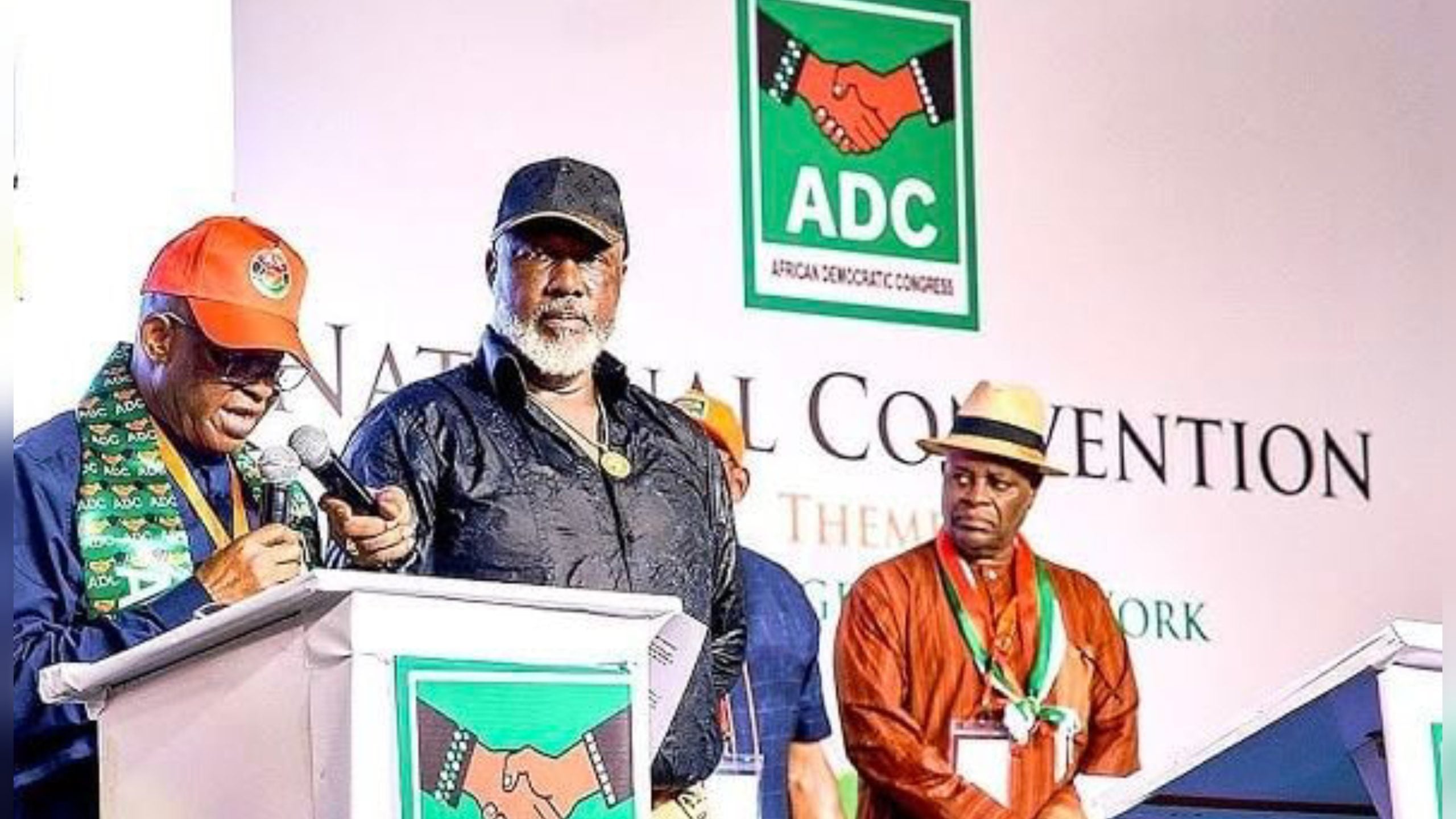
ADC National Publicity Secretary Mallam Bolaji Abdullahi said the party accepted the magazine’s description of Tinubu as unpopular but rejected its prediction that he could still win.
“We think the story is based on assumptions that are not necessarily correct. We agree with the story that President Tinubu is universally disliked, but we disagree that he could win the election,” Abdullahi said.
He maintained that the analysis overstated the importance of religion and ethnicity while underestimating the impact of the cost-of-living crisis.
“The article focuses on the role that religion and ethnicity could play in the election, but the argument is overstated. Nigerians across all divides are united under the cost of living crisis that the Tinubu administration has plunged them into,” he said.
“And this will determine how they will vote more than anything else.”
Abdullahi also questioned Tinubu’s apparent lack of concern about the election.
“The article also suggests that the President does not appear like he is worried about losing the election. If it is true, then he doesn’t understand the mood of the country,” he said.
He alleged that the APC would need to rig the election to remain in power, while claiming that opposition parties had developed measures to prevent such an outcome.
“The only way the APC could think of winning the election is to rig it. We know that and we have our strategy to stop them,” Abdullahi said.
NDC Challenges Tinubu’s Chances
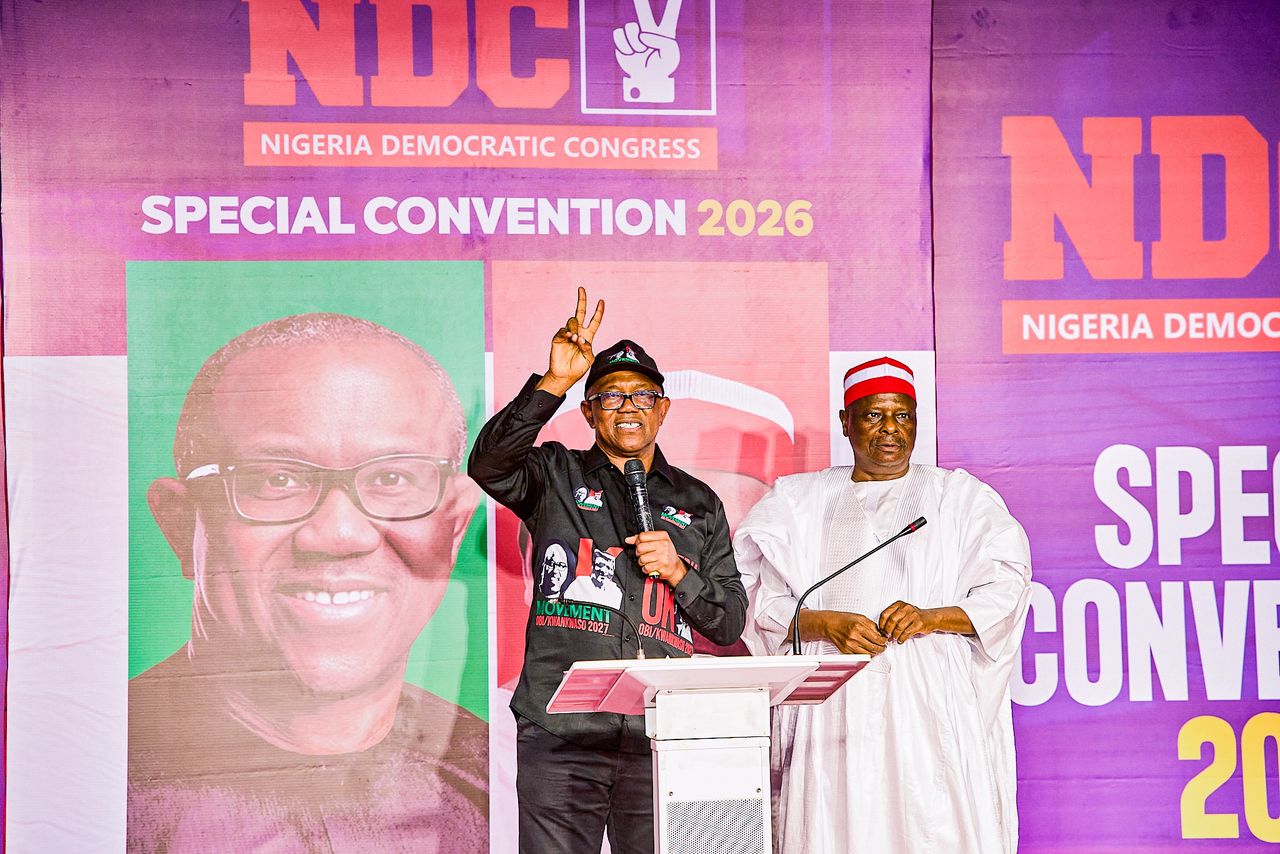
The NDC similarly rejected the magazine’s assessment, asking how Tinubu could be described as deeply unpopular and still be considered the likely winner.
NDC National Publicity Secretary Osa Director said the article did not adequately explain how the weaknesses it identified could become electoral strengths.
“The Economist article agreed that Tinubu is so unpopular. So, how did it arrive at the conclusion that he would still win in spite of that?” the party asked.
It added: “The article decided to leave many things unsaid. Its conclusion was not based on facts and statistics that itself identifies as Tinubu’s Achilles heels.”
The party said it could not identify any legitimate route to victory for Tinubu.
“For us at the NDC, we don’t see any pathway to victory for Tinubu save outright rigging and manipulation,” it declared.
The NDC also said Nigerians would oppose any attempt to compromise the electoral process, stating: “Nigerians are ready to resist this time around.”
The party did not, however, present independently verified evidence to support its claim that the 2027 election would be manipulated in Tinubu’s favour.
Presidency Defends Economic Programme
The Presidency has defended Tinubu’s reforms, saying they were introduced to correct structural weaknesses that had accumulated over many years.
Presidential spokesperson Bayo Onanuga referred in a post on his verified X account to Tinubu’s October 1, 2026 Independence Day address, during which the President defended the policies and criticised previous administrations for avoiding difficult decisions.
Onanuga said earlier governments had treated the symptoms of the economy’s problems without addressing their underlying causes.
“They focused on symptoms while allowing the disease to take hold deep within the fabric of our society. We spent enormous sums sustaining inefficient arrangements that were never intended to last. We hid from difficult truths and passed the consequences from one generation to the next,” he said.
He also highlighted Tinubu’s argument that the reforms did not create Nigeria’s economic problems but were intended to confront them.
“Our reforms did not create the weaknesses in our economy. They confronted them. Now, as certain influential but regressive voices would have us abandon the treatment and return to the abuse of addictive subsidies, we must resist their siren song. We must remember why we began this journey and how far we have already come,” Tinubu said.
In the address, the President claimed that Nigeria’s economy had expanded by more than four per cent in 2026, with growth recorded in both the oil and non-oil sectors.
“For too long, the promise of Nigeria was undermined by choices that postponed difficult decisions and allowed deep economic distortions to grow,” Tinubu said.
“By 2023, poverty was rising, and hope was nearly gone. The country’s situation was darker than ever. We had no choice but to act.”
He compared the country’s economic condition to that of a cancer patient forced to choose between painful treatment that could lead to recovery and medication that merely conceals the illness.
“Nigeria’s leaders chose morphine while praying for a miracle that never came,” he said.
Onanuga also criticised politicians who attacked the Independence Day speech, alleging that some had prepared their reactions before hearing the President’s remarks.
He said the responses suggested that some opponents had either failed to read or had not properly listened to the October 1 address.


Contract Fraud: Nigerian Nuclear Regulatory Authority DG Yau Usman Idris Misappropriated N6.69 Billion

“I was forced to post my boss on WhatsApp or risk salary deduction” – Lady recounts alleged workplace experience

“One Registry, Fewer Fees And Less Bureaucracy” — Akwa Ibom Assembly Advances Bill To Harmonise CSO Registration

Elected To Enjoy: Bayelsa State Governor Douye Diri Burned N14.3 Billion of His Governor’s Office Allocated N32 Billion in Just Six Months

“Decline In Sharia-Learned Justices Is Delaying Appeals” — MULAN Urges Court Of Appeal, Supreme Court To Address Panel Shortage

OAU Under Vice-Chancellor Simeon Bamire Fails to Remit ₦623 Million in Revenue, Skips Required Financial Statements

“My $800 rent covers electricity, water, gas” – Abroad-based Nigerian man compares bills in Nigeria, Canada

“130 Freed In Plateau, 94 In Kogi, 24 In Taraba, Nine In Adamawa” — Governors Grant Independence Day Clemency To Inmates

“We carried TV, Freezer…” — Friends reclaim wedding gifts after groom quits club two weeks after marriage

“We Are Reaching Out To The Left Out” — Tinubu Orders Quarterly Government-CSO Dialogue, Seeks Collaboration On Accountability And 2027 Elections

Ballon d’Or 2026: ‘He’s a phenomenon’ – Brighton’s Luka Vušković picks player to win award

“Enemies for life, I can never forgive Burna Boy” — Speed Darlington

2027: Atiku’s Camp Speaks on G100 Plan for Single Opposition Candidate

Friendly: Super Eagles storm Moscow ahead of Russia showdown

The Economist Magazine Predicts Winner of Nigeria’s 2027 Election

Police confirm two killed, four injured in Osun cult clash

CNG Buses: States Roll Out Transport Relief as Fare Cuts Remain Uneven

NWFL:Remo Stars Ladies set for Bayelsa pre-season tournament

“It’s Good as Done” – Yahaya Bello Reveals Presidential Candidate Who Will Win Kogi

Super Eagles: Chelle makes two changes for Russia friendly

 News20 hours ago
OAU Under Vice-Chancellor Simeon Bamire Fails to Remit ₦623 Million in Revenue, Skips Required Financial Statements
- Metro18 hours ago
“We Are Reaching Out To The Left Out” — Tinubu Orders Quarterly Government-CSO Dialogue, Seeks Collaboration On Accountability And 2027 Elections
- Viral23 hours ago
“Do I actually deserve this?” — Man breaks down after 3-year girlfriend gets pregnant for another man
- Entertainment16 hours ago
“Dem run am street”- Concerns as fashion police calls out Ochacho over alleged fake ‘luxurious’ shirt’
- News16 hours ago
Exclusive: Wema Bank Under MD Moruf Oseni Handed 91% of Its Rights Issue to Two Shareholders and Named No One in Its N50bn Placement
- Viral16 hours ago
“She was going to NYSC camp” – Mother cries out as daughter reportedly gets kidnapped along Imo-Abia route
- Headlines24 hours ago
Flood destroys houses, farmlands in Kwara communities
- Special Report22 hours ago
Nollywood icon, Olu Jacobs buried in Lagos