Politics
Surveillance State and Brutality: Six Years After #EndSARS, Nigeria’s Crackdown on Dissent Deepens

While Abuja splurges billions on digital spyware to silence activists, state security forces continue a legacy of impunity and brute force
By Mary Kiara
LAGOS, Nigeria — Six years after youth-led protests against police brutality shocked the nation, Nigerian authorities are utilizing multi-billion-dollar digital surveillance networks and brute force to systematically crush civic dissent and target peaceful critics.
The systemic crackdown unfolds as the Rule of Law and Accountability Advocacy Centre (RULAAC) warns that the disbandment of the notorious Special Anti-Robbery Squad (SARS) failed to alter institutional behavior.
RULAAC’s Executive Director, Okechukwu Nwanguma, in a statement to TruthNigeria said: “The central question six years after #EndSARS is therefore not whether reforms were announced, but whether policing has become more lawful, professional, humane and accountable.”
“The available evidence shows that the gap between promise and practice remains dangerously wide,” he said.
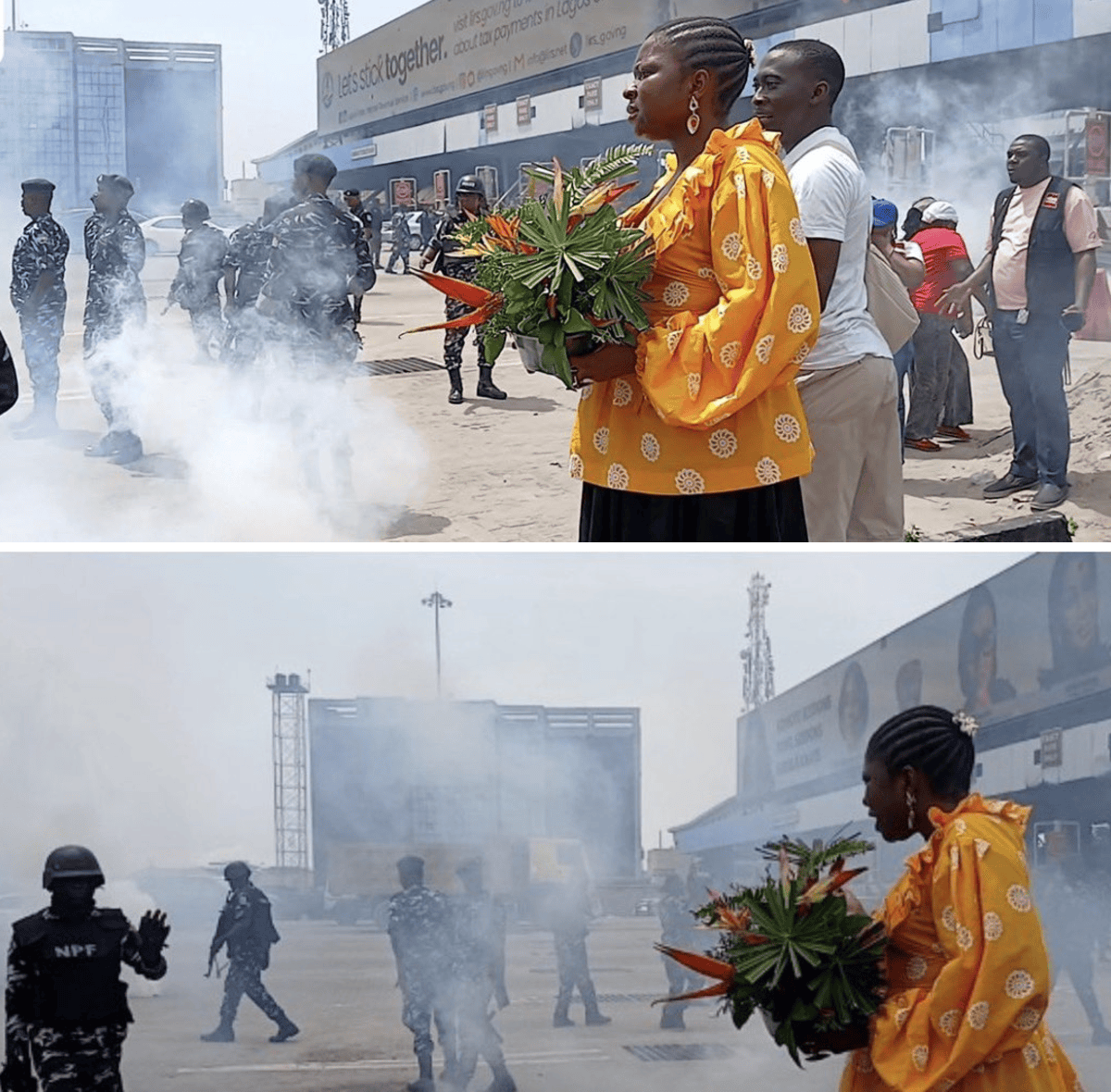
While Nigerians gathered to mark the sixth anniversary of the October 2020 shooting at Lagos’s Lekki tollgate, police fired tear gas at a memorial gathering, preventing participants from laying wreaths in honour of the victims.
The Spyware Economy vs. Insurgency
Rather than deploying intelligence assets against jihadist insurgents and armed terrorists plaguing the country, state agencies have increasingly turned surveillance technologies inward.
Independent investigations and budget office data reveal that Nigeria imported an estimated $6.61 billion worth of spyware tools between 2015 and 2024, positioning the nation as Africa’s largest surveillance customer.
Federal and state authorities frequently utilize the contested Cybercrimes Act to intercept private communications, track activists, and prosecute citizens over online posts.
Civil actors and journalists face swift retaliation for exposing administrative corruption or infrastructural collapse. For instance, Ajibare Oluwasegun, a serving National Youth Service Corps member, was tracked by the Nigeria Security and Civil Defence Corps (NSCDC) digital tracking unit and remanded in prison for criticizing the collapse of a state bridge on social media.
Security experts and digital rights advocates argue that deploying advanced interception systems against unarmed civilians undermines constitutional privacy rights under Section 37 of the Nigerian Constitution.
Ridwan Oloyede, a lawyer and digital rights researcher, in an interview said, “If you live in a society where insurgency is rife, then it means, and also with technology, that you need to stay ahead of crime. One way to stay ahead of crime definitely is through surveillance, but a legal one that conforms to human rights standards.”
“The biggest problem has always been that some of the surveillance being done doesn’t conform to some of the existing safeguards.”
Yet the same security agencies that track citizens for social media posts cannot track the terrorists and kidnappers ravaging the country.
More than 79,000 Nigerians were killed in terrorist violence between 2020 and 2025, according to the Observatory for Religious Freedom in Africa.
“Faced with this existential threat and inadequate security structures, communities must now build self-defence systems to secure their right to life,” Nwanguma added.
“A government that cannot protect its people loses legitimacy.”
Unpunished Abuses and the Shadow of Impunity
The human toll of state overreach remains profound.
Wasiu Rasheed, arrested at age 17 during the October 2020 #EndSARS demonstrations, spent more than five years inside the Kirikiri Correctional Centre under harsh, congested conditions before a court finally discharged and acquitted him.
Human rights defenders emphasize that no official has faced meaningful accountability for the lethal use of force against demonstrators.
Dabiri Olayinka, a human rights activist told TruthNigeria, “I believe the same government today is still the same government that has been in power in the last 12 years and has intentionally ignored this event.”
“We are not going to forget; we are going to keep talking about it until the people who ordered the shooting at Nigerian citizens are brought to book.
“There was no justice till date, and there was no further investigation.
“Instead of looking at leadership, what we see right now is dictatorship and rulership imposed upon the people, so much so that we are not even free to express ourselves,” she added.
“Police brutality and human rights violations in Nigeria stem from a policing culture rooted in colonial-era militarisation and coercion,” analysts at Nextier, a security consultancy, wrote in a 2026 policy brief.
The report cited the April 2026 killing of a 28-year-old man in Effurun, Delta State, allegedly by an Assistant Superintendent of Police.
As civic space contracts under digital monitoring and intimidation, human rights defenders stress that true accountability remains elusive for a population demanding fundamental democratic reforms.
Mary Kiara reports on terrorism, human rights, and religious freedom policy for TruthNigeria.
Related


THE WEEK: Islamist Jihadists Burn Evangelist Alive in Adamawa, Kidnap Catholic Priest in Benue, Strike Bases

Nigerian Content Board Executive Secretary Felix Ogbe Awarded multi million Naira contract to company three weeks before it was even registered

“With Hearts Weighed Down By Immeasurable Grief” — Former Delta Governor Emmanuel Uduaghan Dies At 71, Family Announces

EXCLUSIVE: NCDMB Under Felix Ogbe Faces ₦221m Diesel Procurement Scandal as ₦42.5m Contract Goes to Company Registered Three Weeks Later

Singer Davido’s Uncle Adeleke Stuffed Government House With N50 Billion, Spent N9.5 Billion To Travel In Nine Months, Including N4.6 Billion For His Refreshments And Meals

Politics 57 minutes ago ‘If Buhari As A Retired General Couldn’t End Nigeria’s Insecurity, What Do You Expect Of Tinubu?’ – Yari The Director-General of the All Progressives Congress (APC) Presidential Campaign Council (PCC), Senator Abdulaziz Yari, has defended the performance of President Bola…

NNPC GCEO Bayo Ojulari Who Came In Broke Spent N129.1 Billion on Security Expenses and Named Not One Firm, Guard or Agency Paid

Court Hands UBA Major Victory in Landmark N156 Billion Debt Recovery Judgment Against The VASWANI Brothers and Stallion Group

JUST IN: Ex-Delta governor, Emmanuel Uduaghan is dead

Wicked Kayode Egbetokun Paid N1.21 Billion For Police Poor Feeding To A Company With No Registration Record And Ran N4.78 Billion Of Feeding On Emergency Vouchers As IGP

Ensure every registered voter gets PVC in South East – Amupitan charges INEC officials

Chief Patrick Dele Cole leaves behind a legacy no tribute can fully measure – Otunba Senator Gbenga Daniel

‘I honour you my elder brother’ – Obi celebrates Kwankwaso at 70

‘These Cannot Justify A Second Term’ – Dino Melaye Tackles Shettima Over Performance

Nigeria’s Ministry Of Special Duties Records Financial N411 Irregularities in Seven Findings

UCL: Anthony Gordon names team to beat in Champions League

Minister Of Interior Olubunmi Tunji-Ojo’s Nigeria Immigration Service Paid N4.37 Billion To Iris Smart Technologies Limited For 300,000 Passport Booklets Outside The Subsisting Contract The Ministry Of Interior Already Held With The Same Company

‘Tinubu’s Policies Are Looking Like Those Of Pharaoh’ – Adebayo

FIFA U-17 Women’s World Cup: Two teams qualify for Round of 16 stage

Wike Accuses Peter Obi Of Pretending To Be Humble For Political Gains

 Metro6 days ago
“The Nigeria Airways Mess Was Not Of Obasanjo’s Making” — Fani-Kayode Defends 2004 Liquidation, Says Airline Was Already Ruined By 1999
- News7 days ago
No Nigerian Counted By Nasir Kwarra National Population Commission Yet He Spent N12.5 Billion For Procurement
- Entertainment6 days ago
“We’ll stab, shoot him, then tell everyone he killed our friend” — Lady recounts how armed robbers attacked her brother
- News7 days ago
Umo Eno’s 2025 Books Exposed N78.5 million Naira Farmers’ Loans Trapped in a Dead Bank While Ibom Air Filed No Accounts Since Inception
- Metro7 days ago
“We Are Not Asking Judges To Bend The Rules” — EFCC Chair Olukoyede Calls For Speedy, Rigorous Trial Of Corruption Cases
- News7 days ago
Historic Success Federation Of Registered Nollywood Guilds And Associations (FRNGA) Holds Maiden Presidents Summit
- News7 days ago
Ondo Gov Aiyedatiwa Enjoys Hotel accommodation For N1.6 Billion, Pays N405 Million As Two Years Rent For Abuja Governor’s Lodge And N3.9 Billion To Fly Round Nigeria
- Metro7 days ago
“Establish A National School Of Government For Leadership Development” — Tinubu Asks Senate To Repeal ASCON Act