Politics
Hours After Mass Abduction, Tinubu Delivers Independence Speech with No Mention of Terror

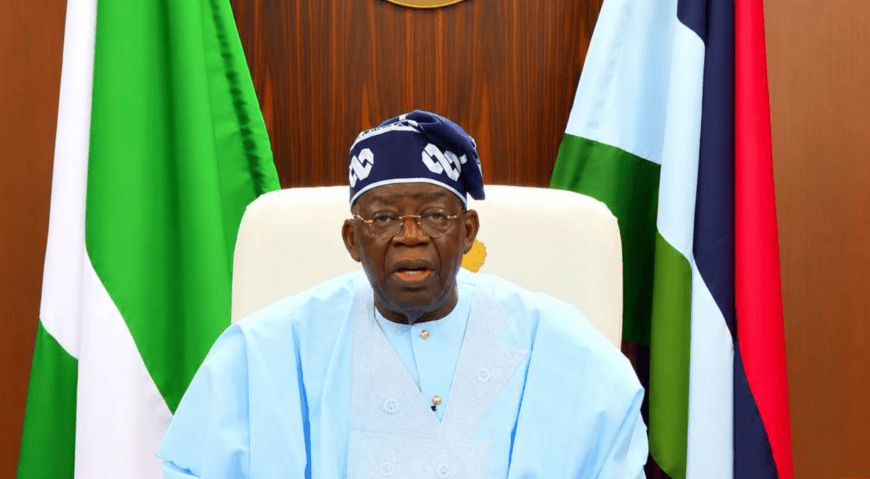
President’s 66th Independence Day address focused on economic reforms, ignoring escalating jihadist violence and fresh kidnappings along the Owerri–Onitsha Expressway.
By Mary Kiara
Abuja — On Nigeria’s 66th Independence anniversary, citizens tuned in to President Bola Tinubu’s address expecting a national strategy to confront the country’s relentless security collapse. Instead, the president delivered nearly 2,000-words on economic structural reforms, erasing the terror campaigns consuming rural Nigeria.
The omission was not an accidental oversight. By reducing security to a single sentence of gratitude to military forces, President Tinubu executed a deliberate strategy of political avoidance, treating the slaughter of Christians in Central Nigeria as a non-issue to minimize public accountability and evade international pressure.
Expressway Raid Challenges Narrative of Stability
Hours before the broadcast, reality shattered the State’s narrative along the Owerri–Onitsha Expressway in southeastern Imo State. Armed Fulani jihadists ambushed two commercial buses, dragging passengers into dense forest hideouts.
Among the captives were 20 college graduates traveling to mandatory postings with the National Youth Service Corps. Police confirmed the assault, providing a grim backdrop to the president’s projection of normalcy.
“The most striking omission in the president’s speech is security,” Suleyman A. Ndanusa, a public affairs analyst, said in a statement.
“Families worried about insurgency, kidnapping, and the safety of their farms needed more than an expression of gratitude. A tractor is useful; a safe journey to the farm is essential.”
Surviving Captives and Advocates Reject Official Silence
For victims of non-state violence, the presidential silence felt like an official abandonment.
Reverend Stephen Ojapah, a Catholic priest who spent 33 days in terrorist captivity, watched the national address with mounting dismay.
“I felt embarrassed and ashamed,” Reverend Ojapah told TruthNigeria.
“The government did not know I was kidnapped. There’s no database for kidnap victims, so not addressing the security crisis tells you how the president is disconnected from ordinary people.”
“Leah Sharibu, who was abducted from Dapchi, remains in captivity. Also, more than 80 of the Chibok schoolgirls abducted in 2014 remain missing,” Reverend Ojapah added.
“Families have sold their lands and houses to pay ransom. When a government does not address the issues of life and property, it has not only failed, it should not even be there.”
Human rights advocate Alamin Usman emphasized that rural populations are currently living under non-state siege, while the administration pretends the crisis has been resolved.
“As of today, 78 innocent children have been in captivity for 139 days, and 47 farmers were rounded up and abducted in Niger State while harvesting their fields,” Usman said.
“Farmers cannot access their farmlands without paying levies to terrorists. How can security be a passing thought? Nigeria has become a nation where citizens cannot question the financials of terrorism despite glaring evidence.”
The Strategic Pattern of Rhetorical Reversal
The president’s silence represents a complete reversal of his own public record across four consecutive October 1 addresses.
In October 2023, President Tinubu promised that his administration would always accord the highest priority to the safety of the people. By October 2024, he claimed the administration was winning the war on terror and eliminating commanders faster than ever.
In October 2025, he declared that peace had returned to hundreds of liberated communities. By October 2026, he made zero mention of ongoing terror campaigns, territorial dispossessions, or the 3.6 million Nigerians internally displaced within their own country.
Furthermore, President Tinubu made no reference to the national security emergency he declared in late 2025 following U.S. President Donald Trump’s redesignation of Nigeria as a Country of Particular Concern.
That unrevoked emergency order fast-tracked military recruitment to clear forest hideouts, yet the administration now operates in speech as if the emergency never existed.
Independent tracking data reveals the human cost of this official silence. According to SBM Intelligence, 7,825 individuals were abducted across 1,411 separate incidents between July 2025 and June 2026, with 1,142 captives murdered in captivity.
Security analysts contend that ignoring these metrics while promoting economic growth is a flawed governance model.
“The key question for Nigeria is not how much the government spent on security, but whether such investments were producing measurable improvements in public safety,” Dr. Kabir Adamu, Managing Director of Beacon Security said in a statement.
“Roads, markets, transport corridors, and rural communities require a secure environment. Security and prosperity are mutually reinforcing.”
Foreign Intervention Forces Capability without Internal Will
The administration’s sudden silence stands in sharp contrast to its actions when confronted by foreign powers. I
In mid-September 2026, after TruthNigeria exposed nearly 1,000 armed Fulani jihadists amassing in Plateau State, intense diplomatic pressure from Washington forced the Nigerian military to deploy air support and ground troops, successfully deterring a mass casualty attack.
The military possessed the operational capability all along, but deployed force only when foreign scrutiny made inaction impossible.
“It is very clear that the state does not have an interest in the general welfare of vulnerable Nigerians in the Middle Belt and the North in particular,” Dr. Christopher Wadibia, an independent scholar on religious movements, told TruthNigeria.
“Ultimately, the eradication of Boko Haram and other violent extremist groups in Nigeria is the responsibility of the Nigerian government. So what do you do when you have a government that is not acting like a government should? Well, you have to find alternative solutions.”
The underlying strategy is clear: by purging terror metrics from state broadcasts, Abuja seeks to neutralize political pressure at home and reduce calls for intervention from abroad.
The less the administration speaks about the killing, the less accountability it faces, leaving millions of vulnerable citizens to navigate survival on their own.
Mary Kiara reports on Terrorism for TruthNigeria.
Related


OAU Under Vice-Chancellor Simeon Bamire Fails to Remit ₦623 Million in Revenue, Skips Required Financial Statements

Exclusive: Wema Bank Under MD Moruf Oseni Handed 91% of Its Rights Issue to Two Shareholders and Named No One in Its N50bn Placement

“We Are Reaching Out To The Left Out” — Tinubu Orders Quarterly Government-CSO Dialogue, Seeks Collaboration On Accountability And 2027 Elections

Nigerians Die of Cancer But There Is Ganduje’s Kano Built Cancer Centre Built With Borrowed N18.425 Billion Centre That Nigerians Are Unaware of to Use

“Do I actually deserve this?” — Man breaks down after 3-year girlfriend gets pregnant for another man

FRSC Audit: Missing Vouchers, Irregular Vehicle Decommissioning Flagged Under Dauda Biu, Shehu Mohammed

“She was going to NYSC camp” – Mother cries out as daughter reportedly gets kidnapped along Imo-Abia route

“No Community Has Authority To Determine Boundaries On Its Own” — Anambra Govt Shuts Otuocha Market As Aguleri-Umuoba Anam Clash Kills Five

“They Were Not Detained Over Slippers But Alleged Armed Robbery” — Lagos DPP Clarifies Case As Court Discharges Defendants

“Lagos is more expensive than UK, don’t let anyone deceive you” – Oyemykke sparks debate over comment

Misplaced Priority: Instead Of Road Maintenance, FERMA MD Chukewuemeka Agbasi Burns N7.23 Billion On Solar Lights Contracts In Three Years

Zlatan Ibrahimovic picks team to win EPL, LaLiga, FA Cup this season

El-Rufai: ‘Tinubu And His People Are Ingrates’ – Buba Galadima

Nations League: Lewandowski breaks Ronaldo’s record

Hours After Mass Abduction, Tinubu Delivers Independence Speech with No Mention of Terror

Bandits use RPG to turn semolina in camp [Video]

Sign of worsening insecurity – Peter Obi demands rescue of 20 abducted NYSC members

“I wish God could let me show you people what hell-fire looks like” – Prophetess Sommy reacts to online backlash

NNL: Bayelsa United sign free agent Sani Yakassai

NPFL: Ejeh steps down as Enyimba assistant coach

 News19 hours ago
FRSC Audit: Missing Vouchers, Irregular Vehicle Decommissioning Flagged Under Dauda Biu, Shehu Mohammed
- Metro23 hours ago
“No Community Has Authority To Determine Boundaries On Its Own” — Anambra Govt Shuts Otuocha Market As Aguleri-Umuoba Anam Clash Kills Five
- Metro19 hours ago
“They Were Not Detained Over Slippers But Alleged Armed Robbery” — Lagos DPP Clarifies Case As Court Discharges Defendants
- Viral22 hours ago
“Lagos is more expensive than UK, don’t let anyone deceive you” – Oyemykke sparks debate over comment
 News21 hours ago
Exclusive: Works Minister David Umahi Conspired With Perm Sec Rafiu Adeladan To Wire N9.3 Billion To An Advertising Agency For Road Contract
- News20 hours ago
Speed Darlington: Is NAPTIP Under Binta Adamu Bello, A Joke Of An Agency, A Toothless Bulldog Making Noises But Can’t Bite?
- Viral21 hours ago
EFCC gets presidential approval to investigate FAAC releases, spending
- News16 hours ago
Wunti Urges Africa to Process Lithium, Cobalt Locally Instead of Repeating Oil Mistake