World
Trump's backing for a united Ireland has reignited a divisive political issue. Here's what to know

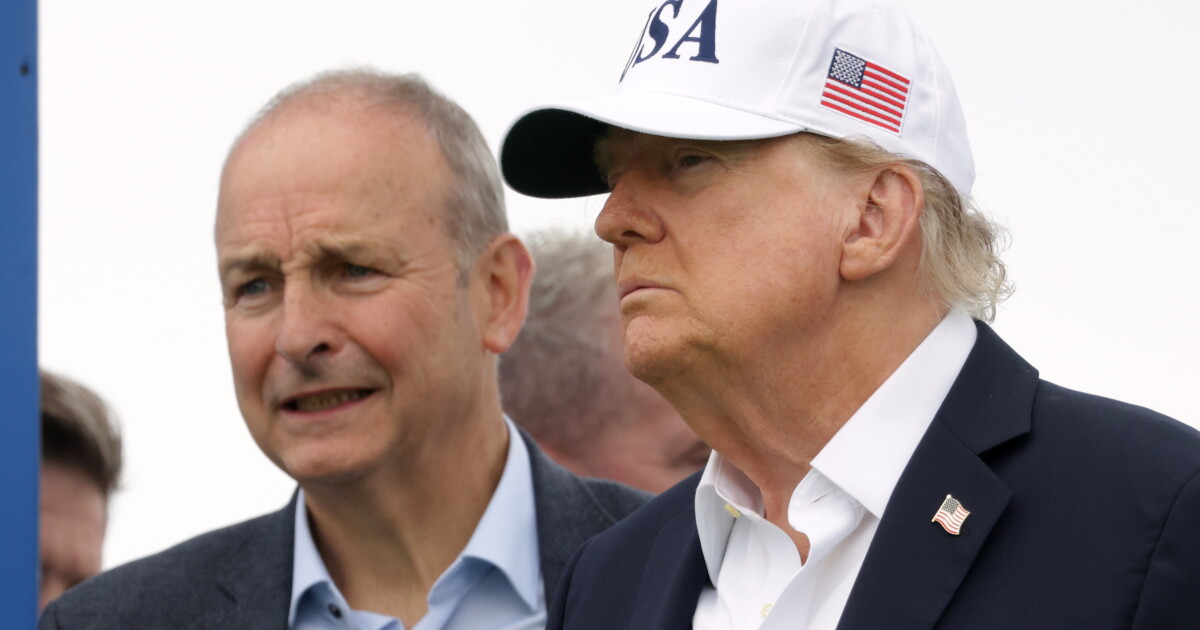
U.S. President Donald Trump doubled down Sunday on his support for a united Ireland, saying it makes sense to merge the Republic of Ireland with the United Kingdom’s Northern Ireland.
“It just seems to me that you have Northern Ireland and you have Ireland, and it would seem to me that one of the naturals of all time is put them together,” Trump said as he attended the Irish Open at his golf course in Doonbeg, western Ireland.
It’s not that simple.
RELATED STORY | Trump calls Irish unity ‘fantastic’ while visiting golf resort
Trump’s statement Saturday that Irish unification would be “fantastic” touched a live rail in the histories of Britain and Ireland that lies behind a century of division and decades of violence. Reaction, for and against, was swift.
Irish Prime Minister Micheál Martin urged politicians to “keep a calm perspective” on Trump’s comments, and called some of the responses an overreaction.
Northern Ireland’s status has been divisive for a century
When Ireland won independence from Britain a century ago and became a self-governing Roman Catholic-majority country, a six-county region in the north, which then had a Protestant majority, remained part of the United Kingdom.
Northern Ireland was split between two main communities: nationalists — most of them Catholic — who desired union with the rest of Ireland, and largely Protestant unionists, who wanted to stay British. In the late 1960s, tensions exploded into “The Troubles,” three decades of violence involving paramilitary groups on both sides and British troops left some 3,600 people dead in bombings, shootings and other attacks.
A 1998 peace accord that the U.S. was instrumental in striking largely ended the violence, but left Northern Ireland’s ultimate status unresolved by allowing people to identify as Irish, British or both. The Good Friday Agreement allows for a vote on unification if polls indicate it would likely pass, a threshold the U.K. government says has not been met. Ireland would also have to approve the change in a referendum.
Peace in Northern Ireland has largely endured, but divisions remain deep over the conflict’s legacy and the region’s competing identities. Despite Trump’s view, the issue of whether Northern Ireland’s future lies with the U.K. or Ireland remains unresolved.
The UK sought to downplay the remarks
Trump said Sunday that his comments were “only my opinion,” but also that he’d had “so much support.” The British government sought to downplay them.
Prime Minister Andy Burnham’s office pointed back to his statement last week that he was “100%” behind the Good Friday accord and that the U.K. would only consider allowing a referendum “when public opinion has changed to the point where the call has to be considered.”
Opposition U.K. Conservative Party leader Kemi Badenoch said Trump was “shooting from the hip as usual, just like he did with Greenland and Canada becoming the 51st state. This sort of loose talk about the future of democratic countries is deeply unhelpful and creates unnecessary tension.”
Trump’s remarks also were criticized by pro-British unionist politicians in Northern Ireland.
Gavin Robinson, leader of the Democratic Unionist Party, posted on X that “Northern Ireland’s constitutional future will be decided by the people of Northern Ireland, not by commentary in London, Dublin or Washington. Northern Ireland is part of the United Kingdom because that is the settled democratic will of its people.”
Irish nationalists welcomed Trump’s intervention
Trump’s remarks were striking because previous U.S. presidents – even those with Irish roots, like Joe Biden – have avoided commenting directly on the subject of unification.
Sinn Fein, a political party that seeks unification and was allied during the Troubles with the Irish Republican Army, said it approved of Trump’s comments, although the left-leaning party has little in common with him politically.
IN CASE YOU MISSED IT | Ireland touts record investments in US economy
Gerry Adams, who was Sinn Fein leader when the Good Friday accord was signed, said the “remarks by President Trump on the issue of Irish unity are welcome, even though we profoundly differ with him on many other matters.”
All the main Irish political parties support unification on paper, but Sinn Fein says Martin’s centrist Irish government has failed to prepare for it to happen.
Martin called some of the response to Trump’s comments “an overreaction,” noting the president had previously asked whether there would be a “merger” between Ireland and Northern Ireland.
“It shouldn’t be a surprise. He takes a different sort of perspective on things, we know that,” Martin said Sunday.
“I believe in Irish unity,” he added. “Many political parties in the Republic believe in our unity. But we also of course believe in the Good Friday Agreement.”


SEDC To Roll Out Community -Based Social Impact Programmes To Improve Livelihoods In Rural Communities

Evening Recap: Man stabs Sokoto Islamic cleric, FG pays ex-Nigeria Airways workers N18bn, other top stories

Morning recap: Again, Nigerians lose savings to Ponzi scheme, Dangote refinery raises petrol gantry price, other top stories

ALERT: Nigerian Army Warns of Possible Coordinated Terrorist Attacks on Churches, Schools and Youth Camps

Lagos Government Dismisses Viral Video Showing People Living Under Oja Oba Bridge » Apples Bite Int’l Magazine

Infinix Launches GT 50 Pro: The Ultimate Hardcore Gaming Flagship with Industry-First Cooling and Control

Evening recap: Bamanga Tukur dies at 90, Dangote projects N10,000 refinery shares, 54 countries offer eVisa, other top stories

“You cannot pin anything on him” – Gospel minister, Lawrence Oyor speaks on Peter Obi’s political record

EPL: Why I played Ola Aina as centre-back in 2-1 win over Aston Villa – Nottingham Forest boss, Glasner

Verydarkman shares first video of Poco Lee and Burna Boy following his alleged release from UK prison

One killed, others trapped in Enugu building collapse

Ogoni Liberation Initiatives Demands Answers on $300m, Bori State, Clean-Up Before Ogoni Oil Resumption Deal

2027: If You’re Dealing With APC, You Have To Be Ready For Anything – ADC

Mourners in Rome pay last respects to Italian activist Emma Bonino

Federal Character Commission must ensure fairness, merit in FG job recruitment — Ex-lawmaker

DLA Rep Candidate Withdraws From Race, Backs Governor Nwifuru

Ex-UK PM Boris Johnson, European officials escape Russian drone strike on train near Poland
Ex-UK PM Boris Johnson, European officials escape Russian drone strike on train near Poland
Ex-UK PM Boris Johnson, European officials escape Russian drone strike on train near Poland

LP chieftain sues WAEC, UNN, NYSC over Obi’s credentials

 Politics21 hours ago
ALERT: Nigerian Army Warns of Possible Coordinated Terrorist Attacks on Churches, Schools and Youth Camps
- News23 hours ago
Evening recap: Bamanga Tukur dies at 90, Dangote projects N10,000 refinery shares, 54 countries offer eVisa, other top stories
- Headlines12 hours ago
EPL: Why I played Ola Aina as centre-back in 2-1 win over Aston Villa – Nottingham Forest boss, Glasner
- Special Report24 hours ago
We Won’t Release You Until The Network Improves — Residents Tell Telecom Employee As They Tie Him To A Pole Over Poor Network
- Metro21 hours ago
“Is NELFUND Upkeep Meant To Feed The Student Or Her Family?” — APC Campaign Spokesman’s ₦10,000 Example Raises Questions
- Special Report23 hours ago
Foreign Minister, Hon Okudzeto Ablakwa Presents Chop Boxes, Beds And 100 Bicycles To North Tongu Students Ahead Of SHS Resumption
- News10 hours ago
Morning recap: Terrorists plot attacks on Osun worship centres, Lagos crackdown raises child protection concerns, other top stories
- Metro12 hours ago
“Governor Alia Is A Suspended Priest, Cannot Celebrate Mass” — Ortom Alleges, Explains Why He Lent Obi Vehicle During Benue Visit