News
Reps Begin Probe Into ₦432bn Debt Allegedly Owed by NNPC, Oil Firms

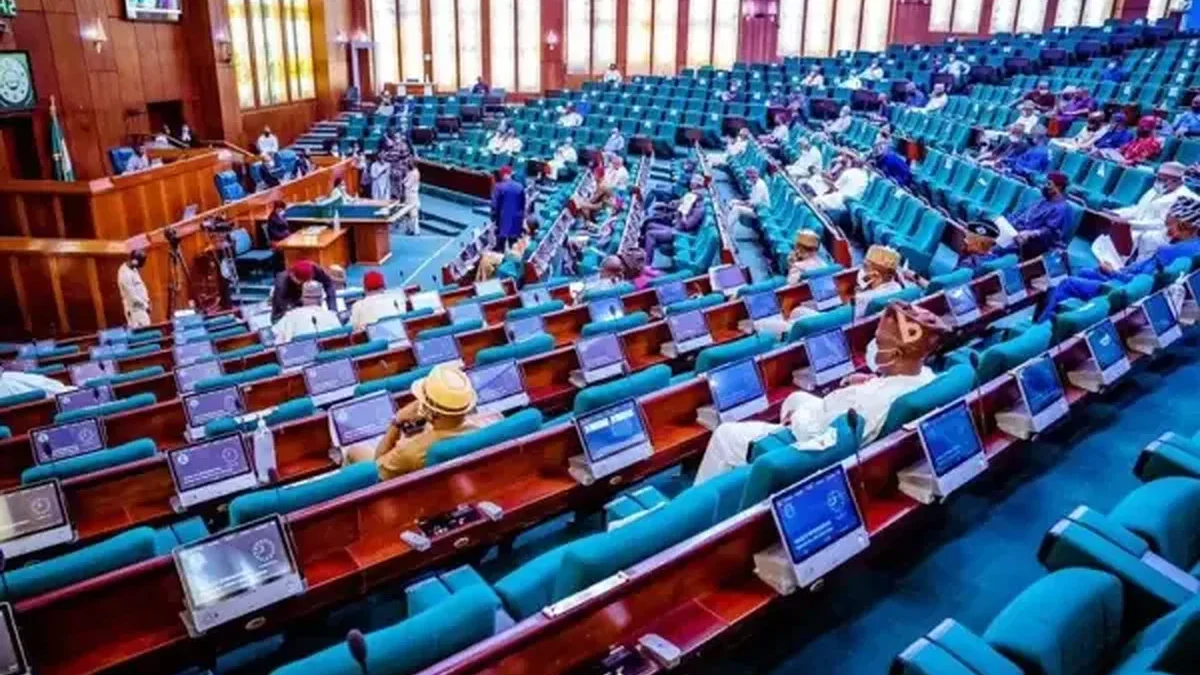
The House of Representatives has commenced an investigation into outstanding debts of more than ₦432 billion allegedly owed to the Nigerian Midstream and Downstream Petroleum Regulatory Authority (NMDPRA) by the Nigerian National Petroleum Company Limited (NNPCL) and several oil companies.
The probe is being conducted by the House Public Accounts Committee (PAC), following findings contained in the Auditor-General of the Federation’s reports on unpaid petroleum-related obligations.
According to the committee, chaired by Representative Bamidele Salam, it said they would examine the records behind the outstanding liabilities.
Also, they will determine how the debts accumulated, what payments have been made and the measures taken by the regulatory authority to recover the money.
The latest figure under review stands at ₦432,072,557,867.17.
The committee is also expected to summon affected companies and relevant government officials to provide documents explaining their obligations to the NMDPRA.
Salam, in a statement on Wednesday announcing the commencement of the committee’s sitting, warned companies invited before the panel not to disregard the summons.
“Chairman of the Committee, Representative Bamidele Salam, said the Committee would ensure that all relevant entities account for their obligations and provide the necessary records to enable Parliament to establish the circumstances surrounding the outstanding debts.
“Any company invited by this Committee must respect the people’s Parliament of the Federal Republic of Nigeria by honouring the summons with appropriate representation and all relevant documents. We are not here to witch-hunt anybody; our responsibility is to establish the facts, protect public revenue and ensure that every naira due to the government is properly accounted for,” he said.
The investigation stems from concerns raised in the Auditor-General’s annual audit reports over revenue that has remained outstanding within the petroleum sector.
The 2023 audit report had placed the combined indebtedness of NNPCL and affected oil companies at ₦392.73 billion.
From that figure, NNPCL was listed as owing ₦162,456,750,832.47. Other petroleum companies accounted for ₦230,268,790,205.77.
The companies involved include operators under the Depot and Petroleum Products Marketers Association of Nigeria (DAPPMAN), the Major Marketers Association of Nigeria (MOMAN) and the Major Energy Marketers Association of Nigeria (MEMAN).
The liabilities are linked to several regulatory and petroleum-sector obligations. These include Balancing Allowance, National Transport Average and the one per cent Midstream and Downstream Gas Infrastructure Fund.
Some of the outstanding amounts are also connected to legacy transactions involving petroleum imports, coastal transactions and credit arrangements.
The 2024 Auditor-General’s report subsequently put the outstanding liabilities at ₦432.07 billion, although the figure excludes NNPCL’s indebtedness.
This has prompted the lawmakers to seek further clarification on how the liability increased and why significant portions of the money have remained unpaid.
Additional information submitted by the NMDPRA to the Public Accounts Committee showed that 146 oil companies under DAPPMAN, MEMAN and MOMAN owed the authority ₦327,525,987,255.67 as of 2025.
The committee also noted that some of the outstanding obligations date back to 2017 and cover several years of unpaid liabilities.
As part of the investigation, lawmakers are expected to scrutinise the records used to determine the debts.
They will also examine the period covered by the liabilities, amounts already paid by the affected companies and balances that remain outstanding.
The recovery efforts of the NMDPRA will also come under review.
The committee wants to establish whether the regulatory authority took sufficient steps to collect the funds and whether any enforcement measures were applied to companies that failed to meet their obligations.
The PAC has in recent years examined several audit queries involving government agencies and public revenue.
Its current focus on the petroleum sector places particular attention on funds that should accrue to government through regulatory and statutory payments.
For the affected companies, the hearings are expected to provide an opportunity to present their records and explain the basis of any disputed liabilities.
The committee has made it clear that the investigation is not intended to target any particular company.
Instead, it wants to establish the facts surrounding the debts and determine what government revenue remains recoverable.
Salam said the panel would exercise its constitutional oversight responsibility by ensuring that public revenue is properly accounted for.






Oyo 2027: Civil servants wait for seven to 10 years before receiving entitlements – ADC guber candidate

Evening recap: FG to give Nigerian shipowners $25m, Drivers, cooks, traders can own refinery shares, other top stories

‘After Working With Peter Obi, You Risk Suffering Post-political Identity Crisis’ – Kenneth Okonkwo Defends Datti

CBN Deputy Governor Emem Usoro Who Was Side Chic To A Married Man Accused Of Watching Him Take His Last Breath, Buried Him Alone And Took His Death Certificate From His Wife – Secrets Reporters Nigeria

‘Peter Obi Is A Content Creator’ – Presidency Attacks Him For Attending Makinde’s Campaign Office Launch

Where Is The Money You Saved From Subsidies That Never Existed? – Adebayo Dares Tinubu To Public Debate

Exclusive: Niger Delta Suffers While MDGIF Director Oluwole Adama Hides N12.9 Billion Natural Gas Fund – Secrets Reporters Nigeria

Shettima Tasks Transporters on Peaceful Mobilisation for Tinubu’s 2027 Re-election Bid » Apples Bite Int’l Magazine

Tinubu Govt Bars Ministers, Service Chiefs, Agency Heads From Foreign Trips Without OSGF Approval » Apples Bite Int’l Magazine

Ibiyeomie Rejects Offerings From Internet Fraudsters, Tells Them To Leave » Apples Bite Int’l Magazine

UK awards Chevening, Commonwealth scholarships to 68 Nigerians

Brazilian Supreme Court judge annuls rival's decision, restores federal police chief to his post

Watch Moment Ebo Noah Nearly Got Drowned While Trying To Stop The Sea Wave Like Moses

NAICOM, NCAA Sign MoU to Strengthen Aviation Insurance Compliance, Protect Passengers

Mutfwang unveils N10bn education investment in Plateau

Married Woman Caught Chopping Husband’s Brother — See What Community Women Did To Her

INEC Challenges Parties to Take Action on Women’s Representation in Politics

UN nuclear watchdog board reports Iran to Security Council for first time in 20 years

ADC Governorship Candidates Unveil 10-Point Northwest Agenda

I Want To Enjoy Nigeria In Old Age – Remi Tinubu Reveals

 Politics23 hours ago
Where Is The Money You Saved From Subsidies That Never Existed? – Adebayo Dares Tinubu To Public Debate
- News20 hours ago
Tinubu Govt Bars Ministers, Service Chiefs, Agency Heads From Foreign Trips Without OSGF Approval » Apples Bite Int’l Magazine
 News17 hours ago
2027: Accord’s Hashim Targets 4 Million Barrels of Oil Daily Within 24 Months » Apples Bite Int’l Magazine
- Headlines12 hours ago
2027: I’ll put solar panels on every Nigerian’s roof within 11 months of my presidency – SDP’s Adebayo
- Headlines11 hours ago
Yobe tertiary institutions’ unions issue fresh 15-day ultimatum over unpaid allowances, welfare packages
- Headlines10 hours ago
Super Falcons: ‘Nigeria keep recycling leaders’ – Mixed reactions trail Eguavoen’s appointment as coach
- Entertainment22 hours ago
“I had already planned to appoint Ogogo” – Yayi reveals late actor’s cabinet role if elected governor
- News21 hours ago
Special Report: How Charles Odii, Appointed SMEDAN DG At 35 Years on Seyi Tinubu’s Recommendation, Presided Over ₦9.75 Billion in Questionable Spending in His First Ten Weeks – Secrets Reporters Nigeria