News
Osun alert: Terrorism must not gain ground in S/West

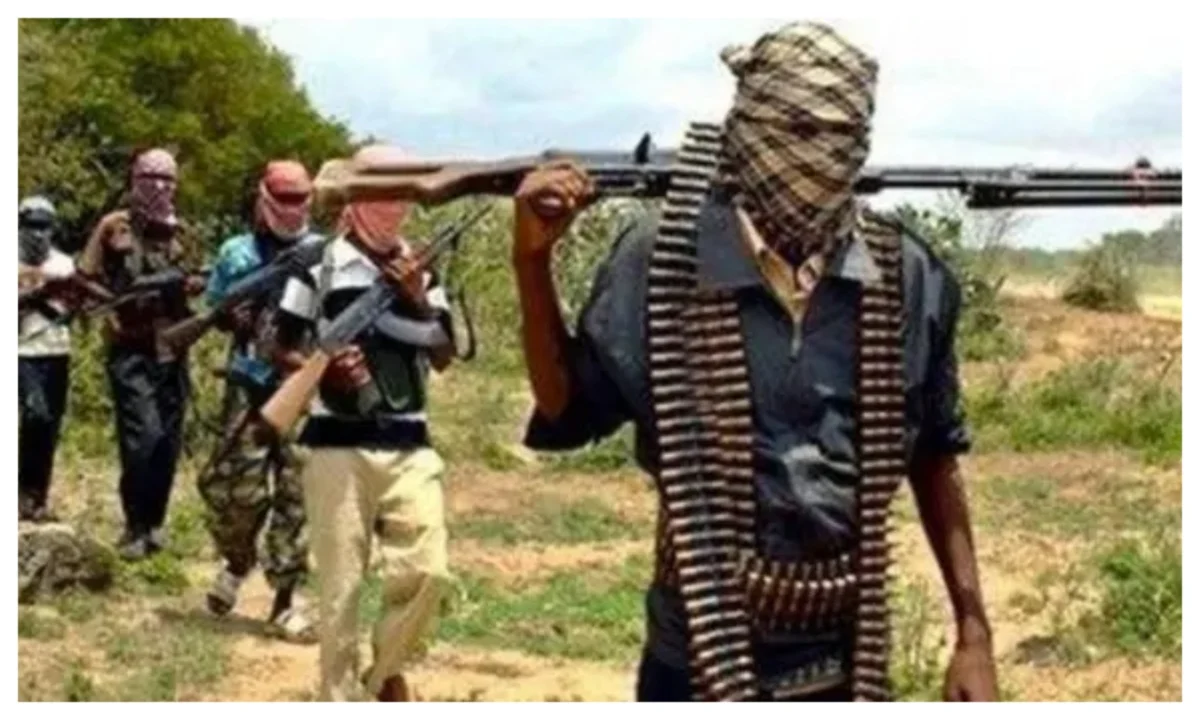
TERRORISTS do not normally wake up one morning and decide to attack. Terrorism is preceded by reconnaissance, intelligence gathering, recruitment, logistics and painstaking planning. By the time the explosives go off, or the gunmen appear, the groundwork may have been laid for weeks, months or even years.
The September 11, 2001 attacks on the World Trade Center in New York, for instance, were the culmination of extensive planning and intelligence gathering by al-Qaeda operatives.
That is why the May 15 invasion of three schools in Oriire Local Government Area of Oyo State, where about 39 pupils and seven teachers were abducted, should not be treated as an isolated criminal incident.
There were warning signs.
On January 6, terrorists attacked the National Park Service office at Oloka Village in the same Oriire LGA, killing five forest guards. The subsequent abduction of pupils and teachers suggests that criminal elements had already identified the vulnerabilities of the area and were testing the security environment.
Against this background, the latest security alert issued by the Department of State Services must be treated with the seriousness it deserves.
The DSS reportedly warned during closed-door meetings with Christian and Muslim leaders in Osogbo that terrorists were advancing plans to attack public places in Osun State and other parts of the South-West. Places of worship, markets, schools, clubs and viewing centres were reportedly identified as possible targets.
More disturbing is the reported assessment that the objective is to create fear and instability ahead of the 2027 general elections.
That warning must not be dismissed as another routine security advisory. If the intelligence is credible, the window for preventive action is now, not after another community has been attacked, another school invaded, or another group of Nigerians abducted.
The reported influx of suspicious persons into Osun should also concern the authorities. The President of the Osun State Muslim Community, Mustapha Olawuyi, reportedly said the community had earlier raised concerns about 200 herders who entered the state through the Ikirun axis and were subsequently sent away. Unknown persons arriving on motorcycles were also reportedly turned back.
Afenifere has also recalled the recent bandit attack on the Igbeti-Igboho Road and kidnapping incidents in Ondo, Kwara and Kogi states, while urging South-West governors to translate their repeated security pronouncements into concrete action.
That is an important warning.
The governors cannot continue to behave as though security is exclusively a Federal Government responsibility. Constitutionally and operationally, the Federal Government has primary responsibility for national security, but state governments cannot afford to sit back and wait for Abuja whenever danger emerges in their communities.
The South-West must build a security architecture that is capable of detecting threats before they mature into attacks.
That means funding intelligence, communications, surveillance and rapid-response capabilities. It means strengthening cooperation among the police, military, DSS, civil defence authorities, state security networks and community-based intelligence structures.
It also means making meaningful use of local knowledge. Communities often know who is new, which routes are being used, where suspicious activity is occurring and when unfamiliar movements begin to look abnormal. But such information is useful only when residents trust the security agencies enough to report it, and when the agencies respond promptly.
The South-West governors should therefore convene an emergency regional security meeting and treat the DSS alert as a collective threat rather than an Osun problem.
Surveillance must be intensified around forests, border communities, isolated settlements, major highways and transit corridors. Oyo State should deploy its recently acquired surveillance aircraft effectively for intelligence and monitoring if this has not already been done.
Osun, in particular, must immediately strengthen the operational capacity of the South-West security outfit, Amotekun, while ensuring that properly trained local hunters and other community-based intelligence networks are integrated into lawful security operations.
But vigilance must not become vigilantism. Community security structures should gather and transmit intelligence; apprehension, investigation and prosecution must remain subject to the law.
Religious institutions also have a responsibility. Churches and mosques, particularly those organising large gatherings and overnight programmes, should review their security arrangements. Markets, schools, clubs, viewing centres and other crowded venues should do the same.
Public gatherings cannot remain soft targets.
Residents, too, must be encouraged to report suspicious movements, abandoned vehicles, unfamiliar persons conducting unusual surveillance and other warning signs. If you see something suspicious, report it.
Security agencies should also pay greater attention to vehicles and motorcycles entering vulnerable communities, without turning legitimate movement into harassment. Security checks must be intelligence-led, professional and lawful.
Most importantly, arrests must lead to investigations and, where evidence supports it, prosecution. Allowing terrorism suspects to languish indefinitely in detention, or permitting serious cases to collapse through weak investigations and poor prosecution, does little to deter future attacks. The justice system must become part of the security response.
The DSS deserves credit for issuing the alert. But an alert is only useful if it triggers action.
The other security agencies must now demonstrate that they are capable of working together. The Chief of Army Staff, Waidi Shaibu, should also move swiftly on his earlier commitment to using modern surveillance and operational technologies to improve proactive security.
The police, meanwhile, must concentrate on policing. Road security checkpoints should be used intelligently to detect suspicious movements rather than becoming opportunities for routine extortion of motorists and truck drivers.
Above all, the South-West must not wait for terrorism to establish a foothold before acting.
Nigeria has seen too many security warnings followed by attacks that could have been prevented. The region cannot afford another cycle in which intelligence arrives first, government action comes later, and funerals follow.
The South-West is not helpless. But security requires anticipation, coordination and political will.
For now, night-time activities and large gatherings in vulnerable locations deserve heightened security attention. Schools and religious centres must review their protective arrangements. Forests and border communities require sustained surveillance.
The objective should not be to create panic. It should be to prevent it.





Uzodimma Wants To Become Senate President But Wike Is Not Supporting Anyone From Southeast – APC Chieftain, Olesin

UK: NIS extends passport intervention exercise to Oct 3

EPL: ‘So disappointing’ – Morrison surprised by David Raya’s errors in Arsenal 3-0 defeat to Brighton

“Charly Boy is so jagajaga, I wish he resembled his father” – Obasanjo reveals what changed his perception of the entertainer

Evening recap: Shettima to lead UNGA delegation, OK movement demands apology from NDC, ex-Kogi gov dies, other top stories

“On top my money?” – Lady recounts harassment by tout after refusing to give him ₦200 at Apata Market
“On top my money?” – Lady recounts harassment by tout after refusing to give him ₦200 at Apapa Market

“I find it humiliating, it’s giving, ‘I’m a nanny’” – Tomike questions practice of nannies wearing uniforms

Ambassador Chiedu Osakwe’s NOTN Flagged for Hundreds of Millions in Extra-Budgetary Spending, Unapproved Travel and Diverted Capital Funds

How PPPRA Under Abdulkadir Umar Carried Out Irregular Payments, Failure to Submit Audited Financial Statements, and Other Issues
AI manipulation could undermine 2027 elections, INEC warns

Marafa vows to end Zamfara banditry in first tenure or resign

Yobe graduates fault employment process, allege political patronage

UK confirms PM Burnham’s former fiefdom of Manchester to host G20 summit

Abia PDP candidate promises microfinance bank, industries

Playing Under Zidane Is ‘Like A Film’ – Mbappe
SEC moves to tighten online forex trading rules
NSCDC busts fake juice factory in Lagos, arrests two

The US-China tech war has evolved since the last Xi-Trump summit. Who has the edge now?

Decomposing body of Rivers woman found in stream

 Special Report20 hours ago
UK: NIS extends passport intervention exercise to Oct 3
- Headlines19 hours ago
EPL: ‘So disappointing’ – Morrison surprised by David Raya’s errors in Arsenal 3-0 defeat to Brighton
- News17 hours ago
Morning recap: CNG: States race to cut transport fares, 8,000 communities, 4,500 schools at risk over flood, other top stories
- News14 hours ago
EXCLUSIVE: HOW NSCDC COMMANDANT TURNED COMMAND INTO FIEFDOM – ILLEGAL MASS TRANSFERS, VICTIMISATION OF AKWA IBOM INDIGENES, PERMANENT SITE CONVERTED TO PRIVATE FARM
 News12 hours ago
Delta Judiciary Budget Performance Records 100% Expenditure of N50m for Abraka Magistrate Court, Chief Registrar Says Project Was Never Awarded
- News14 hours ago
Chief Mrs Folake Marcus-Bello Challenges YAYI to Produce Employment, Electoral Records and source of income
- Metro7 hours ago
“NSCDC Detains Suspended Niger Commandant, 23 Others Over Deaths Of 37 Miners” — Officers Face Interrogation, Possible Prosecution
- Entertainment13 hours ago
“He should be ready to fight if I get into a serious fight” — Speed Darlington announces ₦100,000 PA/cleaner job