Metro
Oil’s GDP Share Falls, But Nigeria Still Relies Heavily On Petroleum Revenue – BudgIT

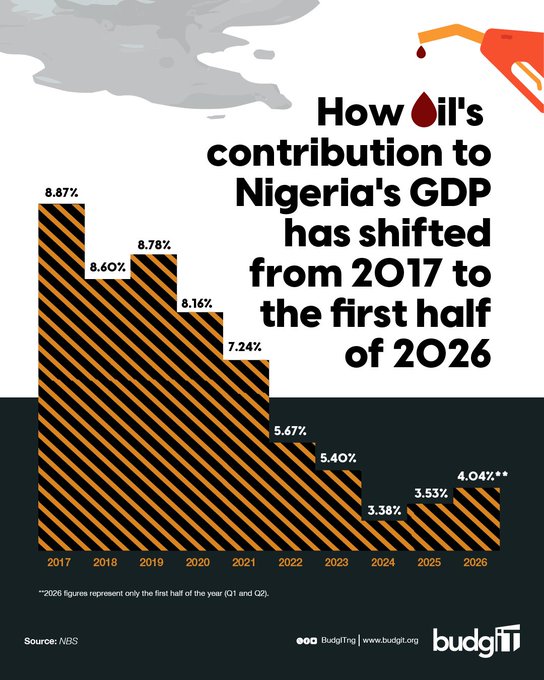
Oil contributed just 4.04 per cent to Nigeria’s GDP in the first half of 2026, down sharply from 8.87 per cent in 2017, according to data released by BudgIT Nigeria….
Oil contributed just 4.04 per cent to Nigeria’s GDP in the first half of 2026, down sharply from 8.87 per cent in 2017, according to data released by BudgIT Nigeria.
The civic organisation said the figures suggest that Nigeria’s economy is gradually becoming less dependent on oil for overall economic output, even though petroleum remains critical to government finances.
BudgIT said oil’s contribution to GDP stood at 8.87 per cent in 2017, 8.16 per cent in 2020, 7.24 per cent in 2021, 5.67 per cent in 2022, 5.40 per cent in 2023 and 3.38 per cent in 2024, before rising to 4.04 per cent in the first half of 2026.
It noted that the 2020 figure came amid the COVID-19 pandemic and the global collapse in oil prices, while production challenges from 2021, including oil theft, production shortfalls and crude output below Nigeria’s OPEC quotas, further weakened the sector.
According to BudgIT, the first-half 2026 figure represents the first meaningful recovery in oil’s GDP contribution since 2019, although it cautioned that two quarters were insufficient to determine whether the improvement would be sustained.
The organisation said a declining oil share of GDP could indicate that non-oil sectors are growing faster and the economy is becoming more diversified.
However, it highlighted a major contradiction in Nigeria’s economic structure: oil may account for a relatively small share of economic output, but it continues to dominate government revenue.
BudgIT’s Beyond Extraction report found that oil and gas account for nearly 60 per cent of Nigeria’s total government revenue on average.
This, it said, means that while Nigeria may be reducing its economic dependence on oil in terms of GDP, the government remains substantially exposed to fluctuations in petroleum earnings.
The data therefore points to a widening gap between the structure of Nigeria’s economy and the structure of its public finances — with the non-oil economy becoming increasingly important to GDP while oil continues to have an outsized influence on what government can spend.


‘Akpabio’s wife visited Senate Chamber to inspect faulty equipment’ – Aide refutes ‘unholy access’ reports

Fulani Militia Seize 6 from Kaduna Village, Leave 2 for Dead as Kidnapping Expands in Nigeria’s Middle Belt

Politics 27 seconds ago Insecurity: APM Accuses Tinubu Govt Of Downplaying Killings, Kidnappings The Allied Peoples Movement (APM) has accused the Federal Government of living in denial over its claim that insecurity has improved across…

Kano APC rally: Ahmed Bala hails TSG, Faleke, says four years not enough to consolidate Tinubu’s reforms

’15 Northern States Will Collapse Within Three Months’ – Ogunyemi Hits Atiku Over Subsidy Return Promise

Pindaa Health Workers Share Video Of Huge River They Risk Their Lives To Cross Everyday Before Going To Work

“He married three wives so they wouldn’t conspire against him” – Pete Edochie shares uncle’s unusual strategy

Exclusive: No National Population Census Since 2006, Yet Agency Chairman Nasir Isa Kwarra Said He Spent ₦240 Billion To Count Nigerians – Secrets Reporters Nigeria

“I feel like my life is under threat” – Sarah Martins calls out dispatch rider she once helped over alleged harassment

Fed Min Of Industry, Trade & Investment Records N3.07bn in Questioned Transactions as Funds Are Misapplied, Payments Bypass Controls – Secrets Reporters Nigeria

One more person to love, US singer Ciara announces fifth pregnancy
Chinese theater, promoter fined for altered patriotic song in a comedy show

APC challenges Adeleke’s August win as Osun tribunal posts petitions

China-Nepal Glacial Collapse Death Toll Hits 1,398, Over 5,500 Missing

Niger 2027: Information Minister Declares Support For Bago

Police arrest two over burglary as stolen iPhone sells for N25,000

FG Begins Disbursement of $25m CVFF to Nigerian Shipowners, Says Gboyega Oyetola

Armed man arrested after charging towards Ohio governor candidate

2027: If You Had The Guts To Challenge Sitting President, Why Didn’t You Come Out? – Sambo Fires Datti

Nigeria Facilitates President Ernest Koroma’s Return to Sierra Leone

 Headlines18 hours ago
Kano APC rally: Ahmed Bala hails TSG, Faleke, says four years not enough to consolidate Tinubu’s reforms
- News23 hours ago
Fed Min Of Industry, Trade & Investment Records N3.07bn in Questioned Transactions as Funds Are Misapplied, Payments Bypass Controls – Secrets Reporters Nigeria
- Entertainment15 hours ago
“If Peter Obi becomes President, insecurity will become a thing of the past” – Ex-military officer declares
- News19 hours ago
Under NEPAD Nigeria, DG Princess Gloria Akobundu Hid N12 Billion By Not Keeping Proper Accounting Records At All – Secrets Reporters Nigeria
- Entertainment21 hours ago
“Now una make me look like fool” – Stanley Ontop fumes over Regina Daniels’ visit to Ned Nwoko’s house
- Politics21 hours ago
‘Tinubu Will Be Judged By Nigerians’ – Diaspora Group Blasts Atiku, Lobbyist, Over Washington Lobbying Campaign
- News10 hours ago
How Ahmed Bolaji Nagode’s Led NAPTIN Swallowed ₦2.77 Billion in Public Fees That Never Reached Nigeria’s Treasury – Secrets Reporters Nigeria
- Special Report13 hours ago
Popular Ghanaian Media Personality Says He Would Reject $100,000 Monthly Salary to To Live In US or UK