Metro
J.P. Morgan Adds Nigeria to New Bond Index With 7.4% Weight

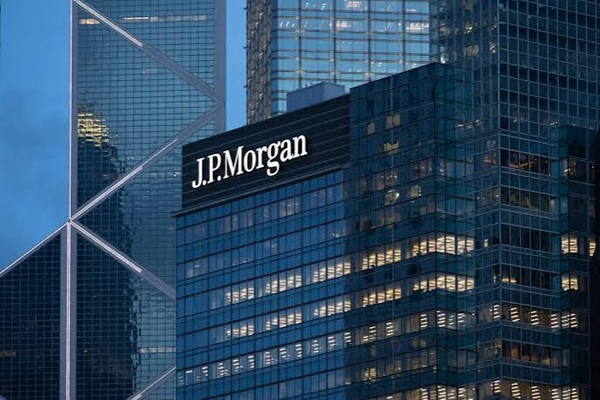
J.P. Morgan has included Nigeria in its newly introduced Government Bond Index–Emerging Markets Edge (GBI-EM Edge), assigning the country a 7.4% weighting in the benchmark tracking local-currency government debt across frontier emerging markets. According to a J.P. Morgan Global Index Research report dated September 14, 2026, seen and reported by……
J.P. Morgan has included Nigeria in its newly introduced Government Bond Index–Emerging Markets Edge (GBI-EM Edge), assigning the country a 7.4% weighting in the benchmark tracking local-currency government debt across frontier emerging markets.
According to a J.P. Morgan Global Index Research report dated September 14, 2026, seen and reported by Nairametrics, Nigeria has $17.47 billion worth of eligible government bonds represented across 16 instruments in the index.
The inclusion returns naira-denominated Nigerian government bonds to a J.P. Morgan emerging-market benchmark more than a decade after the country was removed from the bank’s flagship government bond index in 2015.
However, the development does not amount to Nigeria’s reinstatement in the GBI-EM Global Diversified (GBI-EM GD), as the GBI-EM Edge is a separate benchmark designed to cover frontier markets whose domestic government bonds are generally not represented in the flagship index.
Nigeria’s 7.40% weighting is close to J.P. Morgan’s maximum country allocation of 8%. The Nigerian securities included in the benchmark have an average yield to maturity of 17.1%, a duration of 3.38 years and a B- sovereign credit rating.
Vietnam, Egypt, Morocco, Pakistan, Bangladesh and Kazakhstan each have the maximum 8% weighting, while Sri Lanka has 7.50%. Kenya has a 6.91% weighting, followed by Tunisia at 5.32% and Uganda at 4.84%.
Frontier Africa accounts for 44.5% of the index, compared with 31.5% for Asia. Overall, the GBI-EM Edge tracks approximately $328 billion in local-currency government debt across 425 instruments, 26 markets and 24 currencies.
Nigeria was first admitted into J.P. Morgan’s Government Bond Index in October 2012 after developing an active domestic Federal Government of Nigeria bond market supported by market makers, a two-way quote system and a broad investor base.
Read Also: JP Morgan Forecasts Naira At ₦1,450/$ By Year-End
However, J.P. Morgan placed Nigeria on its Index Watch list in January 2015 over concerns about foreign exchange market illiquidity, difficulties repatriating capital, a lack of transparency in exchange-rate determination and the absence of a functional two-way FX market.
Nigeria was eventually removed from the index in September 2015 after failing to address the concerns raised by the bank.
In 2022, J.P. Morgan separately removed Nigeria from its “overweight” emerging-market sovereign debt recommendation, citing macroeconomic risks.
By April 2025, Nigeria had reopened discussions with J.P. Morgan over a possible return to its Government Bond Index, with Debt Management Office Director-General Patience Oniha pointing to reforms in the foreign exchange market.
The discussions followed reforms aimed at improving transparency, liquidity and functionality in Nigeria’s FX market.
The GBI-EM Edge is designed to capture emerging and frontier economies whose domestic government bond markets are not represented in the GBI-EM Global Diversified index.
To qualify, a country must be classified as an emerging market under J.P. Morgan’s sovereign classification framework, while its three-year average gross national income per capita must fall within the lower two-thirds of the relevant global distribution.
Individual bonds must generally be fixed-rate or zero-coupon sovereign securities, have more than 2.5 years remaining to maturity at entry and meet a minimum outstanding size equivalent to $250 million.
Nigeria’s inclusion could increase the visibility of FGN bonds among international fixed-income investors, particularly because the securities offer yields substantially above the benchmark average.
J.P. Morgan’s data shows that Nigerian securities in the index have an average yield of 17.1%, compared with the benchmark average of 10.39%.
The report also shows that the naira depreciated by 48.7% in 2023 and another 41.9% in 2024 following Nigeria’s foreign exchange reforms. The trend subsequently reversed, with the naira recording an FX return of 6.7% in 2025 and 8.1% in 2026 based on the period covered by the report.
Currency movements remain important to foreign investors because returns from naira-denominated government bonds depend on both domestic yields and the exchange rate when proceeds are converted back into dollars.
J.P. Morgan said the GBI-EM Edge initially comprised 11 markets and 76 bonds worth about $56 billion based on its 2017 inception. By August 31, 2026, coverage had expanded to 26 markets, 425 instruments and approximately $328 billion in debt.
The bank said the expansion reflects the growing importance of frontier local-currency debt markets, many of which have improved benchmark bond issuance, auction processes, post-trade infrastructure and accessibility to foreign investors.
For Nigeria, the 7.4% allocation makes it one of the largest exposures in J.P. Morgan’s new frontier local-currency debt benchmark, potentially putting naira-denominated FGN bonds back on the radar of global investors that track or benchmark their portfolios against J.P. Morgan indices.


ALERT: Nigerian Army Warns of Possible Coordinated Terrorist Attacks on Churches, Schools and Youth Camps

EPL: Why I played Ola Aina as centre-back in 2-1 win over Aston Villa – Nottingham Forest boss, Glasner

Verydarkman shares first video of Poco Lee and Burna Boy following his alleged release from UK prison

Evening recap: Bamanga Tukur dies at 90, Dangote projects N10,000 refinery shares, 54 countries offer eVisa, other top stories

Nigeria Offers ₦30 Million Bounty for Separatist Commander ‘Gentle the Yahoo,’ Sparking Sharp Regional Divide

Morning recap: Terrorists plot attacks on Osun worship centres, Lagos crackdown raises child protection concerns, other top stories

Foreign Minister, Hon Okudzeto Ablakwa Presents Chop Boxes, Beds And 100 Bicycles To North Tongu Students Ahead Of SHS Resumption

We Won’t Release You Until The Network Improves — Residents Tell Telecom Employee As They Tie Him To A Pole Over Poor Network

“Is NELFUND Upkeep Meant To Feed The Student Or Her Family?” — APC Campaign Spokesman’s ₦10,000 Example Raises Questions

“I bookmarked it” – Simi Sanya recalls X user’s prediction about her relationship with Femi Dapson before marriage

Terrorist Attacks Surge Across Nigeria as Army Issues Red Alert for Coordinated Strikes

Team Delta Sweeps South-South Qualifiers For National

Nigeria Has No Reason To Be Poor – Obasanjo

Reno Omokri Explains Tinubu’s Missing Primary, Secondary School Certificates » Apples Bite Int’l Magazine

Burutu Port – The Trumpet Newspaper Nigeria

NAFDAC alerts Nigerians over suspected counterfeit toothpaste
NAFDAC alerts Nigerians over suspected counterfeit toothpaste
NAFDAC alerts Nigerians over suspected counterfeit toothpaste

Yamal backs himself for 2026 Ballon d’Or after World Cup, La Liga wins

ADC Warns INEC Over Lecturers’ Appointment for 2027 Polls

 News19 hours ago
Five Islamic Clerics Abducted After Prayer Meeting At Yari’s Zamfara Residence » Apples Bite Int’l Magazine
 Politics10 hours ago
They Abuse Tinubu On Social Media Like Kindergarten Fighting Over Groundnuts – APC Chieftain Mocks Opposition
- News8 hours ago
Ex-USCIS Officer Made $1.7m Bribes Approving Fake Green Cards for Nigerians, Others — FBI » Apples Bite Int’l Magazine
- Metro19 hours ago
BTO4PBAT27 at One: How A Grassroots Political Movement Built A Statewide Structure For Tinubu’s 2027 Re-election
- Entertainment23 hours ago
“I already paid ₦7m” – Lady breaks down in tears over alleged nude blackmail by Germany-based Nigerian lover
- Viral22 hours ago
Ogoni Liberation Initiatives Demands Answers on $300m, Bori State, Clean-Up Before Ogoni Oil Resumption Deal
- News9 hours ago
GRA-1 Residents Applaud Senator Abiru for Transformative Solar Street-Light Project » Apples Bite Int’l Magazine
- News9 hours ago
Morning recap: INEC unveils list of Senate race, banks shut 476 branches in three years, other top stories