Metro
“Citizens Have A Right To Record Police, But Don’t Turn Officers Into Skit Content” — IGP Disu Seeks Restraint

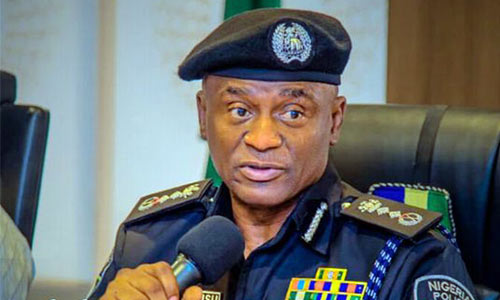
*As NBA President Backs Transparency, Privacy Limits
Inspector-General of Police, Tunji Disu, has urged Nigerians to exercise restraint when recording police officers in public, warning that the growing practice of turning officers into content for social media skits is demoralising personnel and can trivialise the difficult conditions under which they work.
Disu spoke in Abuja during a meeting with the President of the Nigerian Bar Association, Oyinkansola Badejo-Okusanya, SAN, and members of the NBA executive committee, as part of broader discussions aimed at reducing recurring friction between lawyers and police officers.
The police chief said a recent court judgment concerning the recording of police officers had heightened concern within the Force because citizens subsequently began recording officers wherever they encountered them.
“The recent judgement on recording of police officers, that one really jolted our officers. And it became something of concern to us because the citizens started coming out with their phones to record police officers everywhere they saw them,” Disu said.
He said the practice had extended beyond encounters involving active police operations, with some people allegedly recording officers while they were eating or otherwise engaged in private moments.
“Everywhere you see a policeman, start recording a policeman. So this is something that was very, very demoralising to us,” he said.
Disu, however, acknowledged that citizens have the right to record police officers carrying out their duties in public places and did not call for a blanket ban on such recordings.
“We are not saying they cannot exercise their rights of recording officers in public places while doing their jobs,” he said.
“But they should put restraints and not turn our police officers to content for their skits or anything,” the IGP added.
He said the concern of the Police was particularly about situations where officers were recorded for entertainment, ridicule or social media content unrelated to accountability.
Disu also drew attention to the difficult and sometimes dangerous conditions under which police personnel operate, particularly officers deployed to checkpoints, highways, forests and isolated locations.
“If you look at where we have our officers on checking points, there are dangerous areas, thick in the forest, thick in the bushes, on the highways, middle of nowhere,” he said.
According to him, many officers remain at such locations during the day and night in the course of protecting the public.
Responding, NBA President Badejo-Okusanya said the issue required a distinction between legitimate recording of police activities in the interest of accountability and intrusion into the personal privacy of officers.
“Policemen sitting down somewhere eating and people are recording them and intruding on their privacy,” she said, urging members of the public to also consider the issue from the perspective of the officers.
She, however, stressed that the need to respect privacy should not be used to undermine transparency when police officers are performing official duties.
“We should not be afraid of being transparent in the lawful execution of our duties,” Badejo-Okusanya said.
The NBA President cited the use of body cameras by police officers in the United States as an example of how recording can be incorporated into policing to strengthen accountability rather than treated solely as a threat to officers.
“When the US introduced body cams for police officers, it was in order to promote that so that you yourself, you have a check, you know that whatever you’re doing, you have a body camera that is recording it,” she said.
According to her, such systems can help establish what actually transpired during encounters between the Police and members of the public and make it easier to identify and sanction misconduct where it occurs.
Badejo-Okusanya said the answer was therefore not to eliminate recording but to clearly define the boundaries between legitimate documentation of official police conduct and conduct that becomes an unjustified invasion of privacy or abuse of the right to record.
“We just need to understand the limits,” she said.
She added that existing legal provisions could be clarified, strengthened or appropriately interpreted to prevent abuse while preserving transparency and accountability in policing.
The exchange formed part of wider talks between the leadership of the Police and the NBA on improving professional relations, reducing confrontations and strengthening cooperation between the two institutions.


Oyo 2027: Civil servants wait for seven to 10 years before receiving entitlements – ADC guber candidate

Evening recap: FG to give Nigerian shipowners $25m, Drivers, cooks, traders can own refinery shares, other top stories

CBN Deputy Governor Emem Usoro Who Was Side Chic To A Married Man Accused Of Watching Him Take His Last Breath, Buried Him Alone And Took His Death Certificate From His Wife – Secrets Reporters Nigeria

‘After Working With Peter Obi, You Risk Suffering Post-political Identity Crisis’ – Kenneth Okonkwo Defends Datti

‘Peter Obi Is A Content Creator’ – Presidency Attacks Him For Attending Makinde’s Campaign Office Launch

Where Is The Money You Saved From Subsidies That Never Existed? – Adebayo Dares Tinubu To Public Debate

Exclusive: Niger Delta Suffers While MDGIF Director Oluwole Adama Hides N12.9 Billion Natural Gas Fund – Secrets Reporters Nigeria

Shettima Tasks Transporters on Peaceful Mobilisation for Tinubu’s 2027 Re-election Bid » Apples Bite Int’l Magazine

Tinubu Govt Bars Ministers, Service Chiefs, Agency Heads From Foreign Trips Without OSGF Approval » Apples Bite Int’l Magazine

Ibiyeomie Rejects Offerings From Internet Fraudsters, Tells Them To Leave » Apples Bite Int’l Magazine

Breaking: Uproar as Government-Party (APC) Thugs Attack Presidential Candidate Peter Obi

Zidane Nominates Messi For Ballon d’Or, Declares “I’d Vote For Him 100 Times”

Benue APC faction condemns Obi convoy blockade

Ogun CP orders manhunt following sexual molestation of 17-year-old boy
Ogun CP orders manhunt following sexual molestation of 17-year-old boy

Actor Yemi Solade says he was paid to fake disability in church

FG Releases CATA Payments To Academic Staff In Universities, Polytechnics, Colleges of Education

Israel will not ‘expel or deport’ anyone from Gaza – Minister

Kenyan Woman Breaks Down Over Never Being Approached by a Man

Abuja woman remanded for allegedly pouring boiling water on neighbour

 Politics22 hours ago
Where Is The Money You Saved From Subsidies That Never Existed? – Adebayo Dares Tinubu To Public Debate
- News19 hours ago
Tinubu Govt Bars Ministers, Service Chiefs, Agency Heads From Foreign Trips Without OSGF Approval » Apples Bite Int’l Magazine
 News17 hours ago
2027: Accord’s Hashim Targets 4 Million Barrels of Oil Daily Within 24 Months » Apples Bite Int’l Magazine
- Headlines12 hours ago
2027: I’ll put solar panels on every Nigerian’s roof within 11 months of my presidency – SDP’s Adebayo
- Headlines10 hours ago
Yobe tertiary institutions’ unions issue fresh 15-day ultimatum over unpaid allowances, welfare packages
- Headlines10 hours ago
Super Falcons: ‘Nigeria keep recycling leaders’ – Mixed reactions trail Eguavoen’s appointment as coach
- News21 hours ago
Special Report: How Charles Odii, Appointed SMEDAN DG At 35 Years on Seyi Tinubu’s Recommendation, Presided Over ₦9.75 Billion in Questionable Spending in His First Ten Weeks – Secrets Reporters Nigeria
- Entertainment22 hours ago
“I had already planned to appoint Ogogo” – Yayi reveals late actor’s cabinet role if elected governor