News
2027: Ireti Kingibe will lose FCT senate seat — Wike

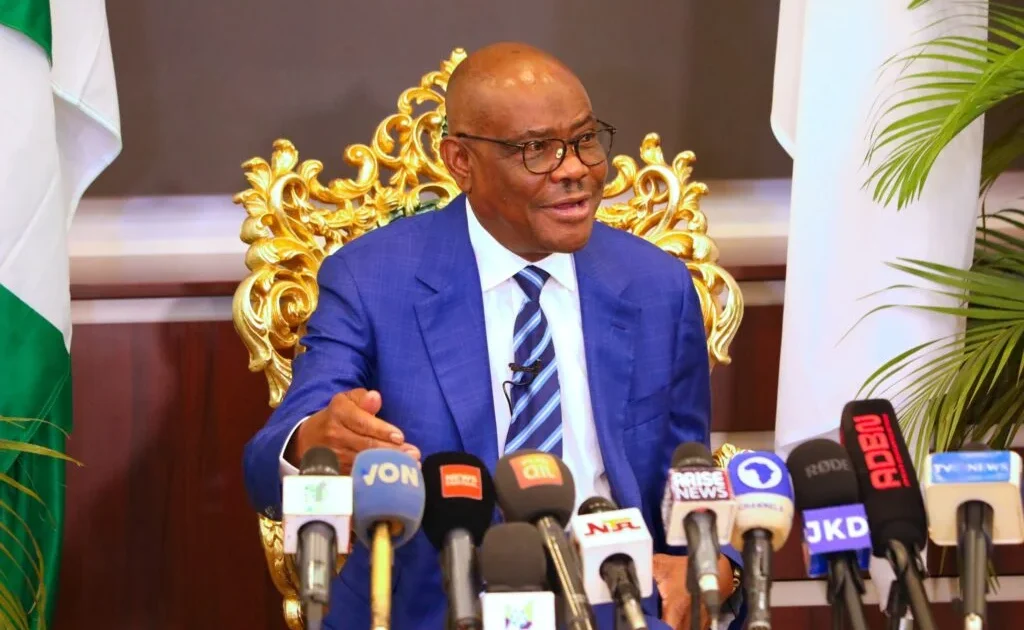
Minister of the Federal Capital Territory, Nyesom Wike, has told the senator representing the FCT, Ireti Kingibe, that she will not return to the Senate in 2027, as he defended the FCT Administration’s borrowing for infrastructure projects.
According to Vanguard, Wike made the remarks on Tuesday while responding to questions from journalists during an inspection of ongoing road projects in the FCT.
Kingibe had accused the FCT Administration of obtaining loans without the approval of the National Assembly, a claim the minister rejected. The dispute comes amid an ongoing political disagreement between the two officials over the management and development of the nation’s capital.
Wike said Kingibe’s claim showed a lack of understanding of the process for obtaining government loans.
“She is an illiterate, with all due respect, and that is why she is not going back to the Senate. She has nothing to offer to the people of the FCT. There is no way you can go and take a loan without the approval of the National Assembly. Anyone take a loan, you will include it in the budget; this aspect of the budget, the government is going to collect loan,” the minister said.
He said he would not spend more time responding to the senator, insisting that residents had already made their political choice ahead of the 2027 election.
“I don’t want to comment about her. When the time is right, let her pack her bags out, the people have made their choice by agreeing to support President Tinubu, and then will support Philip Aduda for Senate. So, let us not waste our time reacting to inferiors who failed in all ramifications. I don’t want to react to it, I am above that,” he said.
Wike, who has previously backed former senator Philip Aduda for the FCT Senate seat, said the focus should be on whether borrowed funds were being used to execute projects for residents rather than on the fact that the administration had borrowed money.
“I thought she would criticise that I am doing nothing. So if her problem is that I took a loan, if I took a loan, I am using it to work. I thought her concern would have been: are we applying the loan to work for the interest of residents? She believes that we can’t run infrastructure without loans, and that we must have taken a loan, that is her problem,” he said.
Kingibe had earlier alleged that Wike was obtaining loans for the FCT without the required approval of the National Assembly. She said her position was based on information from the Debt Management Office covering the period between August 2023 and March 2026.
The House of Representatives had subsequently dismissed the allegation, with its Deputy Spokesman, Philip Agbese, saying there was no evidence that Wike had violated the required procedures in financing FCT infrastructure projects. Agbese said borrowing for infrastructure was not unlawful where the prescribed approvals and procedures were followed.
Wike also linked Kingibe’s criticism to the commencement of the campaign period for the 2027 presidential and National Assembly elections.
“When is the time to campaign? Look at what we are doing. That is the campaign. The ban on campaigning has been lifted for the President and National Assembly, am I not right? As I finish now, then she knows what we are doing, and they are seeing every road, and telling everyone that this is what President Tinubu is doing. Who will see what Mr President is doing and will say that he will vote for another person? That is not correct. So, I am doing my job. While we are doing an inspection of the project, we are also doing a campaign,” he said.
The minister said the ongoing projects in the FCT demonstrated the Federal Government’s commitment to infrastructure development.
Speaking on the projects inspected, Wike expressed satisfaction with the progress of work on the N1 road and other stretches covering Tunga Madaki to Zuba and Kagini.
He said the projects, when completed, would have a direct economic impact on residents of the affected rural communities.
According to him, improving roads and other infrastructure would also improve economic activity and the quality of life of residents, adding that the happiness of the people remained the essence of governance.



UK: NIS extends passport intervention exercise to Oct 3

EPL: ‘So disappointing’ – Morrison surprised by David Raya’s errors in Arsenal 3-0 defeat to Brighton

I can’s see this quote on your report – ‘I left billions, not debt’ – Peter Obi releases further evidence [PHOTO]

“NSCDC Detains Suspended Niger Commandant, 23 Others Over Deaths Of 37 Miners” — Officers Face Interrogation, Possible Prosecution

Tinubu Hands Key Agencies to Northern Power Families While Spending Millions to Shape U.S. Perceptions of Christian Killings

White House launches ‘Trump TV’ after CNN, MS NOW, Politico halt presidential coverage – The Witness Nigeria

“Our goal is to build our father’s company to $100 B” — Halima Dangote speaks on life away from the spotlight

“He should be ready to fight if I get into a serious fight” — Speed Darlington announces ₦100,000 PA/cleaner job

Morning recap: CNG: States race to cut transport fares, 8,000 communities, 4,500 schools at risk over flood, other top stories

Constitution doesn’t recognise ‘working’ vacation – ADC challenges National Assembly over Tinubu’s absence

Cuba slams Trump’s claims after US leader says island ‘will fall’

Peter Mbah Appoints Actress Rachael Okonkwo, 100 Others As Aides

Anti-corruption fight must combine punishment, prevention- Russian envoy

At U.N., Trump vows to settle Iran conflict by striking a deal or annihilating the Middle East power

Oyo Releases 2026 BECE, Schools Of Science Results

Evening recap: Anambra dares Obi to quit presidential race, Babachir Lawal joins NDC, other top stories

Zelensky meets Trump, says Ukraine ready for energy truce with Russia

Trump signs security deal with Greenland, Denmark at UN

2027: Ireti Kingibe will lose FCT senate seat — Wike

FG Meets Refiners, Marketers Over Rising Petrol Price as Pump Price Hits ₦1,450

 Headlines17 hours ago
I can’s see this quote on your report – ‘I left billions, not debt’ – Peter Obi releases further evidence [PHOTO]
- Politics19 hours ago
Tinubu Hands Key Agencies to Northern Power Families While Spending Millions to Shape U.S. Perceptions of Christian Killings
- Special Report12 hours ago
White House launches ‘Trump TV’ after CNN, MS NOW, Politico halt presidential coverage – The Witness Nigeria
- Headlines6 hours ago
Constitution doesn’t recognise ‘working’ vacation – ADC challenges National Assembly over Tinubu’s absence
- Special Report15 hours ago
Dangote Refinery IPO reflects our long-term commitment to Africa’s industrial, economic transformation – Aliko Dangote – The Witness Nigeria
- News8 hours ago
Morning recap: Wike draws fresh battle lines with APC governors, Trump TV goes live, FG seals deal for 12 US helicopters, other top stories
- Special Report6 hours ago
“My Daughter’s Body Is Not For The Poor, It’s For The Big Men, If You’re Poor, Don’t Come Near Her ” – Mother Faces Backlash After Sɛxual!sing Her Young Daughter
- Metro7 hours ago
“Chieftaincy Title Cannot Be Accepted While I’m In Office” — Justice Alogba Tells SPI-LAW, Says Palace Accepted His Position