Metro
10 Things To Know About FG-CBN Fiscal-Monetary Policy Coordination MoU

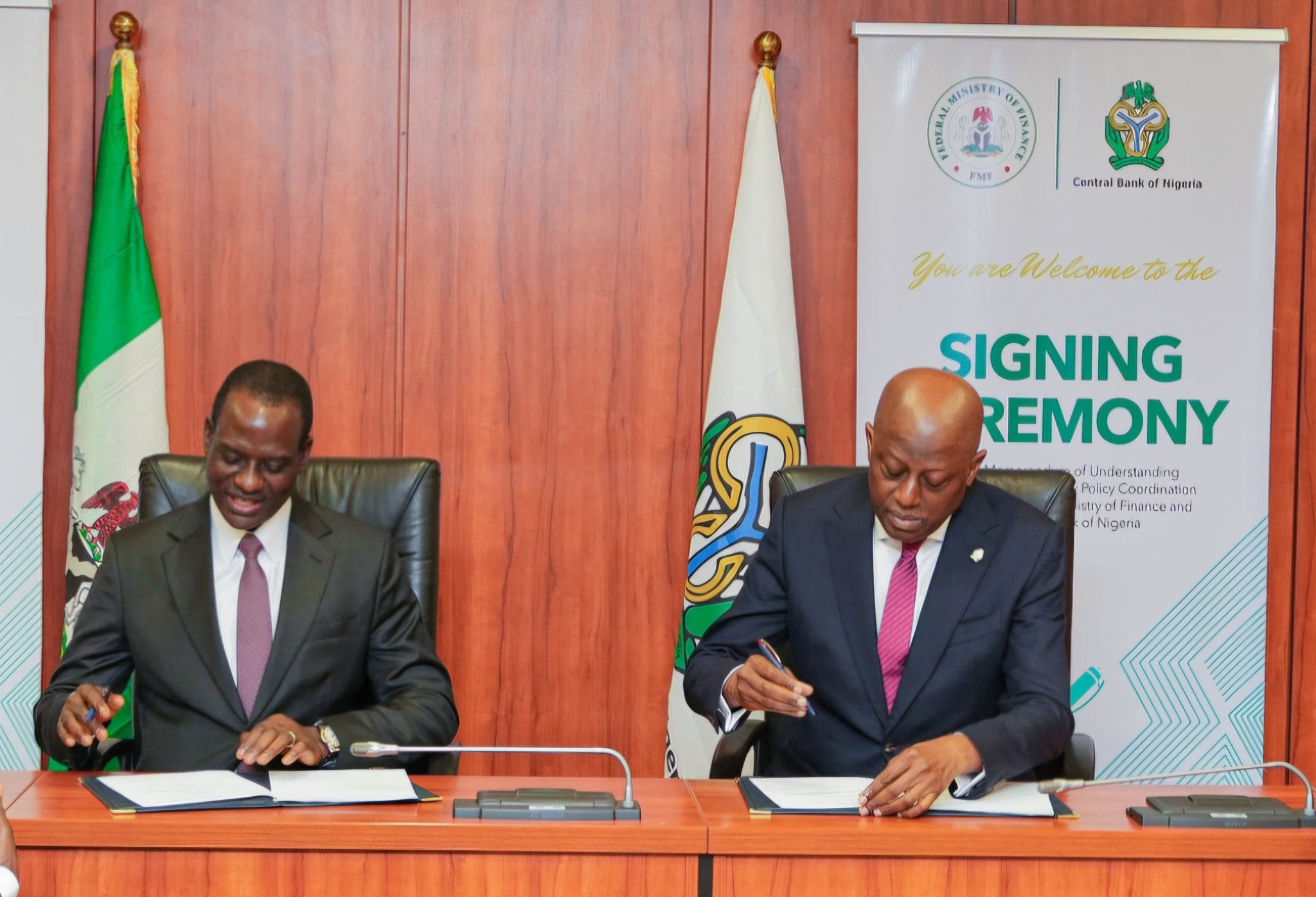
The Federal Government and the Central Bank of Nigeria (CBN) have signed a Memorandum of Understanding (MoU) aimed at improving coordination between fiscal and monetary policies and strengthening Nigeria’s macroeconomic stability….
The Federal Government and the Central Bank of Nigeria (CBN) have signed a Memorandum of Understanding (MoU) aimed at improving coordination between fiscal and monetary policies and strengthening Nigeria’s macroeconomic stability.
Here are 10 key things to know about the agreement:
1. It brings fiscal and monetary authorities closer together
The MoU creates a more structured framework for coordination between the Federal Ministry of Finance and the CBN, with the aim of ensuring that government spending and monetary policy work towards common economic objectives.
2. Economic forecasts will be better aligned
Both institutions will work with more consistent assumptions and forecasts on key indicators including inflation, GDP growth, government revenue, liquidity, financing requirements and the external sector.
3. Information-sharing will be strengthened
The agreement provides for more structured information-sharing between the two institutions and clearer mechanisms for resolving policy differences that could undermine economic stability.
4. Tackling inflation becomes a whole-of-government effort
The MoU provides for coordinated measures to address inflation, combining disciplined fiscal spending with interventions targeting food, energy and logistics costs.
5. Food costs will be addressed through several measures
The government plans to use measures including strategic grain reserves, farmer support, rural road investment and engagement with state governments on road levies and infrastructure linking farmers to markets.
6. Fuel price stability will remain a priority
The government says it will continue measures to support stability in fuel prices without reintroducing consumption subsidies described as distortionary. Tax exemptions and exchange-rate stability are among the measures being used to moderate pump prices.
7. More economic data will be generated
The government and the CBN, working with the National Bureau of Statistics, plan to expand and increase the frequency of economic data, including a Producer Price Index as well as employment and productivity statistics.
8. The framework supports inflation targeting
The additional economic data is expected to strengthen the CBN’s ability to operate an inflation-targeting framework by providing a broader and more timely picture of price pressures and economic activity.
9. Government borrowing and cash management will be better coordinated
The two institutions will coordinate government financing and cash management more closely to reduce the risk of public-sector borrowing crowding out credit available to businesses and other private-sector borrowers.
10. It reinforces fiscal governance and investor confidence
The framework also provides for continued strengthening of institutions including the Fiscal Responsibility Commission, Bureau of Public Procurement, NEITI and the Office of the Auditor-General.
The agreement comes as Nigeria’s external position strengthens, with the country recording a balance-of-payments surplus of more than $5 billion in 2025 and foreign-exchange reserves above $55 billion in 2026.
Finance Minister and Coordinating Minister of the Economy, Taiwo Oyedele, said the objective was to build greater certainty around economic policymaking.
“Capital follows trust before returns,” Oyedele said. “That is why policy consistency, certainty and clarity remain central to everything both institutions do.”


Police invite late singer, Toluwanisings’s wife, father, as parties sign peace deal – The Witness Nigeria

Fatal Bayelsa clash: Monarch clears Nembe E&P, questions link to land acquisition – The Witness Nigeria

After four years in detention, DSS clears four IPOB suspects, pays N20m compensation – The Witness Nigeria

US elections: Same cabal ousted Jonathan, installed Buhari, unleashed Boko Haram in Nigeria – Ex-Mayor

“Renting Your Property To A Terrorist Is Also An Offence” — FG Warns Landlords, Says Terrorism Support Attracts Minimum 20-Year Jail Term

Lafia Presidential Rally: RELAX DG Ahmed Bala leads members to campaign flag-off, highlights Tinubu’s North-Central projects

“No Degree Of Rigging Can Silence The Will Of The People” — Obi’s Camp Warns Governors Against Manipulating 2027 Elections

Namibia President hails Dangote’s $2.5bn investment as historic milestone for African industrialisation – The Witness Nigeria

They Want To Persecute Me – Karimi Reacts To Court Judgement Sacking Him As Kogi West Senatorial Candidate

“INEC Cannot Investigate INEC” — Ezekwesili Demands Independent Voter Register Audit, Warns Against Compromised 2027 Elections

Bandits attack Kebbi community, kill one, abduct several residents

Kogi West: Karimi rejects court judgement, vows to go on with campaigns

Och’Idoma seeks stronger action against hunger, malnutrition in Benue

From illegal detention to courtroom abuse: NJC punishes three judges

Daniel leads Senate Joint Committee meeting on insecurity in Nigerian waterways

Benue former Chief Judge, Justice Adam Onum is dead

2027: ‘Peter Obi’s Logic Is Short-Term Turnover Unlike Tinubu Who Thinks Of Next Generation’ – Oshiomhole

NPFL: Rivers United responds to sanction over broadcast blockage

Kano seizes 5,964 bottles of expired soft drinks in Singer Market

Makinde, Ajadi, Adekanmbi celebrate NBHA at 2026 Hair and Body Care Exhibition in Ibadan

 Politics5 days ago
Over 200 Boko Haram Terrorists Are Moving To Attack Military Camp In Buni Yadi As Rockets Target Troops; IED Threat Raises Travel Concerns
- Metro5 days ago
“Publishing His Name Is Subject To The Final Outcome Of A Court Order” — INEC Leaves Gwarzo Off Updated Kano Governorship List
- Metro5 days ago
“The Election Must Hold As Scheduled” — INEC Chairman Rules Out Postponement Of 2027 General Elections
- Metro5 days ago
“Ebola Outbreak Is Not Yet Under Control” — Africa CDC Warns As Confirmed Cases Exceed 10,200, Death Toll Surpasses 5,000
- Metro6 days ago
“Death Benefits Will Be Fully Paid To Next Of Kin” — NAF Pledges Continued Salaries For Personnel Killed In October 5 Aircraft Crash
- Metro5 days ago
“Sowore’s Whereabouts Remain Unknown” — Armed Men Allegedly Abduct AAC Presidential Candidate In Ado-Ekiti, Damage Vehicles And Restaurant
- Metro5 days ago
“They Beat Me Like A Criminal” — Sowore Recounts Ekiti Attack As Govt Denies Involvement, Calls For Police Investigation
- Metro5 days ago
“We Know What They Did And How They Did It, But I Don’t Know Why” — INEC Reveals Findings On AI-Generated Photos In Voters’ Register