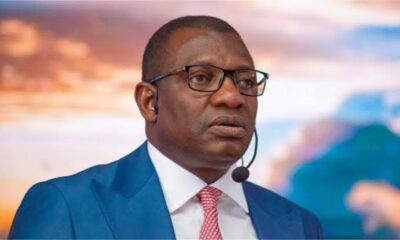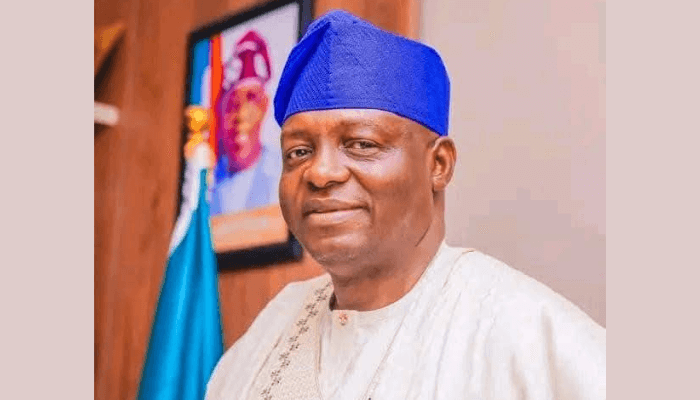
The National Chairman of the All Progressives Congress (APC), Nentawe Yilwatda, has recounted his experience as a displaced person during the Bauchi crisis.
He stated that the experience made him realise that violence does not discriminate between Christians and Muslims, as everyone suffered.
NEWSNGR reports the APC chair made the remark on Tuesday at the International Conference on Security and National Unity, organised by Jama’atu Izalatil Bid’ah Wa Iqamatus Sunnah in collaboration with the Muslim World League.
He warned political leaders against exploiting religion and ethnicity for political advantage, saying such actions could deepen divisions and leave lasting damage on the country.
He asserted that Nigeria’s diversity should be a source of strength rather than division, stressing that religious and ethnic differences should not undermine Nigerians’ shared humanity and common destiny.
“When violence comes, it does not ask whether you are a Christian or a Muslim before it destroys either your home, or your humanity, or your dignity,” he said.
He said his experience of living in an internally displaced persons’ camp had taught him that Nigerians could worship differently but still share the same fears, aspirations and destiny.
“We may worship differently. Or we may suffer together. We dream together. We can build together. And ultimately, we can rise and fall together,” Yilwatda said.
The APC chairman urged politicians to resist the temptation to weaponise religion and ethnicity, warning that temporary political gains could result in permanent damage to the nation.
“To our political leaders, let us resist the temptation to exploit religion or ethnicity for sentiments, and sentiments for temporary political advantage.
“No political victory is worth the permanent damage inflicted on our nation, and we’ve been seeing it every day,” he said.
Yilwatda also urged religious leaders to use their influence to promote peace and reconciliation, rather than hatred and division.
“You as religious leaders, let our mosques and our churches become centres of peace, of reconciliation, and responsible citizenship,” he said.
He called on religious leaders to “preach faith without hatred, conviction without contempt, and truth without incitement,” while urging traditional rulers to make dialogue and reconciliation stronger than retaliation.
Yilwatda further called for a collective commitment by religious leaders, political leaders, traditional institutions and citizens to reject hate speech and protect vulnerable communities.
“We will not use religion to justify violence, and we will reject hate speeches where it comes from a pulpit, or a mosque, or the palace, or a political platform, or the keyboard of our social media,” he said.