World
US-Israel meeting produces optimism but no firm commitment to plan for Gaza

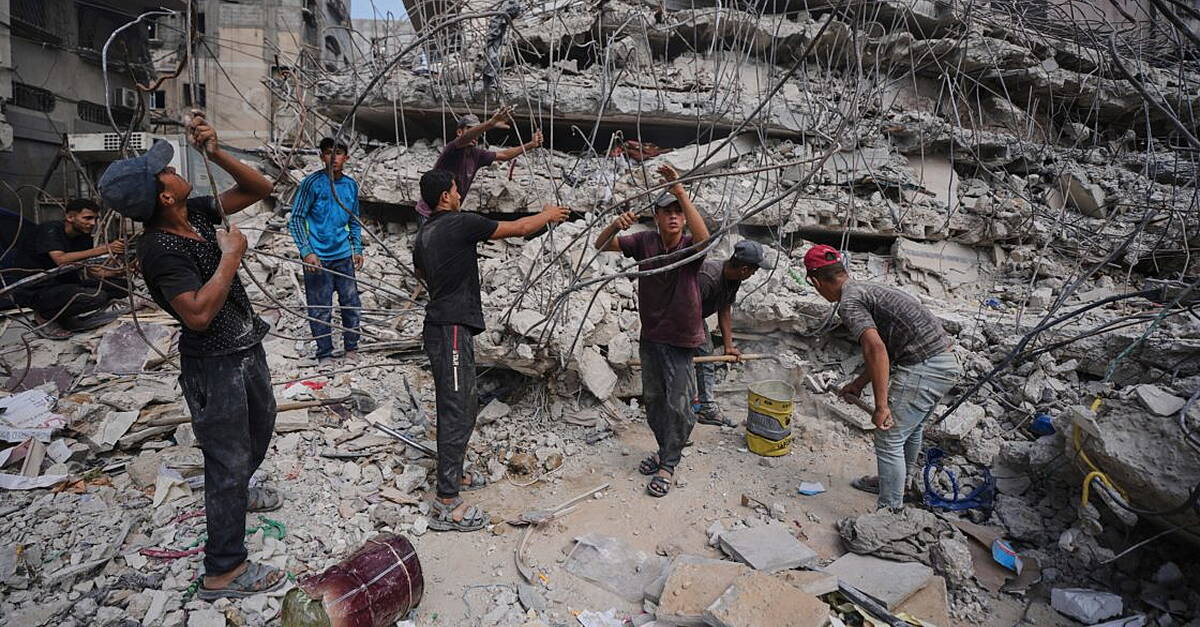
A marathon meeting on Monday between US negotiator Jared Kushner and Israeli Prime Minister Benjamin Netanyahu left the fate of the Gaza ceasefire unclear, with officials signalling moderate optimism but offering no concrete commitment by Israel to the latest US-proposed plan.
Mr Kushner, US President Donald Trump’s son-in-law, held an hours-long meeting with Mr Netanyahu, days after the premier rejected the 15-point, US-backed road map to move the ceasefire deal forward in Gaza.
The meeting comes a day after Mr Kushner met for two hours with the Hamas leader in Egypt, as the US presses for Israel’s approval of the road map.
There is a lot at stake, including the lives of some two million Palestinians in Gaza, reconstruction of the war-demolished enclave and future control over it.
Hamas says it has agreed to the road map, which includes disarmament, and the group is urging mediators and the US-created Board of Peace to “compel” Israel to sign on.
But Israel, which under the road map must gradually withdraw from Gaza, says Hamas must fully disarm before any withdrawal.
Israeli troops occupy about 60% of the strip, and Mr Netanyahu has previously threatened to control more.
Former British prime minister Sir Tony Blair and Board of Peace director Nickolay Mladenov were also in the meeting with Mr Netanyahu, according to a source familiar with the plans and a diplomatic source.
Mr Netanyahu’s office said in a statement that he and the board had agreed to establish two working groups – one on the disarmament and demilitarisation of Gaza and another focused on public health issues for Gaza.
Israel and the board agreed that the demilitarisation “should be prompt and completed before any reconstruction”, the statement said.
Mr Kushner met on Sunday with Hamas chief Khalil al-Hayya in Cairo on disarmament, according to a regional official and a Hamas official.
Officials from mediating countries Egypt, Qatar and Turkey were also there.
The Hamas official also said the Hamas leader demanded Israel halt its attacks on Gaza and withdraw to the so-called “yellow line” dividing the territory before beginning implementation.
The yellow line was never precisely defined. Israeli forces have moved beyond it and now control about 60% of Gaza.
In May, Mr Netanyahu said the next step was to move to 70% control, with Israel “tightening the grip” on Hamas “from every direction”.
Several regional powers including Saudi Arabia and the United Arab Emirates issued a statement on Sunday condemning Israel’s rejection of the road map, saying: “Israel now bears responsibility for obstructing the efforts to bring peace in Gaza.”
Other signers included Jordan, Pakistan, Indonesia and the ceasefire mediators.
The foreign ministers’ statement called on the Board of Peace and the US to take “immediate and concrete measures” to keep any party from obstructing the plan’s implementation.
Israel had no immediate response.
The White House referred questions about Mr Kushner’s meetings to the Board of Peace, which did not immediately comment. The Tony Blair Institute also did not comment.
Under the road map, Hamas would hand over weapons to the Palestinian technocratic committee meant to oversee daily operations in the territory. The committee has not yet entered Gaza.
But Hamas has linked the surrender of its heaviest weapons to the creation of a Palestinian state and the road map entails the creation of a “credible pathway toward achieving Palestinian self-determination and statehood,” something Israel’s current government rejects.
Until the road map is agreed to, other elements of the ceasefire are on hold, including reconstruction and the deployment of international forces to separate Israeli forces from committee-controlled areas.
Mr Netanyahu faces a challenging election on October 27 as he tries to hold onto power with a coalition that includes ministers taking a harsh line on Gaza and it is not clear whether he will take decisive steps on the ceasefire before then.
Also coming up is the anniversary of the October 7, 2023, Hamas-led attack on southern Israel that sparked the war.


Women leaders seek more govt support for farming, action on child trafficking, early marriage in Niger

Matured Criminals: FAAN Depreciates N60 Billion, Wastes N446 Million As Gifts, N12 Billion As Operating Surplus As Audit Scream Blue Murder – Secrets Reporters Nigeria

“Now you can see my tears” – US soldier breaks down over sick daughter in Nigeria, cries out to Trump

Morning recap: INEC declares Adeleke winner of Osun poll, Islamic leaders caution against anti-Christian rhetoric, other top stories

“My flight was cancelled…” – Woman recounts painful betrayal after finding husband in bed with childhood friend

“Adeleke’s Victory Shows Our Votes Can End Economic Hardship” — Peter Obi Urges Nigerians To Defend Ballots In 2027

Federal Energy Research Centre at UNN Ran Up Nearly ₦686 Million in Unauthorised Spending, Doubtful Payments and Audit Bypasses – Secrets Reporters Nigeria

Scammers Hijack Car Dealer’s Identity, Forge CAC Certificate Photo, and Open Fraudulent Moniepoint Account, Exposing Deep Flaws in Fintech KYC – Secrets Reporters Nigeria

“The most powerful person in a house is the housemaid” — Man questions billionaire’s maid’s ₦180K salary

JUST IN: Adeleke polls 511,067 votes to win re-election as Osun governor

Marathon US-Israel meeting produces optimism but no firm commitment to American plan for Gaza
Marathon US-Israel meeting produces optimism but no firm commitment to American plan for Gaza

Trump says North Korea's Kim has responded to his overtures
Trump says North Korea's Kim has responded to his overtures

The ripple effects of the Iran war could threaten education for millions of kids around the world

Trump Hosts 16-Year-Old Lifeguard Who Rescued Boy From California Waves

US-Israel meeting produces optimism but no firm commitment to plan for Gaza

Mafia link feared in theft of grand master paintings from Sicily museum

LaLiga: Why I snubbed Real Madrid for Barcelona – Rodri

FULL LIST: FIFA lists over 60 players with four, more World Cup appearances

 News21 hours ago
Federal Energy Research Centre at UNN Ran Up Nearly ₦686 Million in Unauthorised Spending, Doubtful Payments and Audit Bypasses – Secrets Reporters Nigeria
- News17 hours ago
Scammers Hijack Car Dealer’s Identity, Forge CAC Certificate Photo, and Open Fraudulent Moniepoint Account, Exposing Deep Flaws in Fintech KYC – Secrets Reporters Nigeria
- Entertainment13 hours ago
“The most powerful person in a house is the housemaid” — Man questions billionaire’s maid’s ₦180K salary
- News5 hours ago
FAAN Spent N158.59bn against N98.39bn Limit, Audit Demands N60.2bn Refund – Secrets Reporters Nigeria
- Entertainment8 hours ago
“I paid for his visa, flight, hotel, rent, but he broke up with me 4 months after arriving UK” — Woman reveals
- News4 hours ago
Investigation Reveals NOTAP Channelled ₦138.8 Million Public Revenue into Staff Welfare, Sponsored Non-Staff Weddings and Approved Unauthorised Foreign Trips in Questionable Transactions – Secrets Reporters Nigeria
- Politics4 hours ago
Osun 2026: INEC Under Scrutiny As Money Politics, Violence, Security Threats Test Nigeria’s Road To 2027
- News3 hours ago
₦367.99m in Financial Irregularities Uncovered in FCT Social Development Secretariat Under the Leadership of Hajiya Safiya Umar – Secrets Reporters Nigeria