Metro
UEFA, AFC, Concacaf Leaders Demand FIFA Accountability, Independent Review

The presidents and general secretaries of the Asian Football Confederation (AFC), Concacaf and UEFA have jointly called for greater accountability and an independent review of recent FIFA decisions, warning that football’s leadership must serve the game rather than seek to control it. The statement was signed by AFC President Salman……
The presidents and general secretaries of the Asian Football Confederation (AFC), Concacaf and UEFA have jointly called for greater accountability and an independent review of recent FIFA decisions, warning that football’s leadership must serve the game rather than seek to control it.
The statement was signed by AFC President Salman Bin Ibrahim Al Khalifa, Concacaf President Victor Montagliani, UEFA President Aleksander Čeferin, AFC General Secretary Datuk Seri Windsor John, Concacaf General Secretary Philippe Moggio and UEFA General Secretary Theodore Theodoridis.
“Football is the world’s greatest shared passion. It belongs to no individual and no institution,” the football leaders said, stressing that the game belongs collectively to players, fans, clubs, Member Associations and institutions responsible for safeguarding its future.
They acknowledged the growth of football over the past decade but rejected the suggestion that the progress was the work of a single individual.
“The growth over the past decade has been real. But that progress was never the work of one individual. It was the product of FIFA, the Confederations, the Member Associations, and the thousands of people who dedicate their lives to the game,” they said.
Read Also: UEFA Champions League Final: Havertz Gives Arsenal Early Lead Against PSG
The confederation leaders described the expansion of tournaments, the awarding of the 2030 and 2034 FIFA World Cups and the distribution of resources to Member Associations as shared achievements that were “agreed together, delivered together.”
They also stressed that their concerns were not motivated by financial considerations or opposition to existing FIFA competition decisions.
“This is not about money,” they said, adding that the Confederations had already called for the responsible distribution of FIFA’s existing reserves to strengthen investment in the development of Member Associations.
They further rejected concerns that Member Associations could lose support, as well as suggestions that they intended to revisit decisions on competition expansion, World Cup allocations or other collectively agreed measures.
Instead, they said the dispute was centred on “something more fundamental: the integrity of the game, and the integrity of those elected to lead it.”
“Leadership in football is not a possession. It is not about holding – or demanding – power to be held. It is a duty of service to the football family that entrusts it,” the statement said.
The leaders accused FIFA of failing to adequately address concerns surrounding a recent proposal and criticised a letter sent by FIFA to its Vice-Presidents and 211 Member Associations for treating the matter as a communication failure rather than a failure of judgment.
“FIFA’s recent letter to its Vice-Presidents and 211 Member Associations acknowledges that mistakes were made in the process. It treats this as a failure of communication, when what football witnessed was a failure of judgment,” they said.
They argued that the proposal was advanced on a compressed timeline without meaningful consultation and was pushed towards a deadline before Member Associations could properly examine its terms.
“A proposal advanced on a compressed timeline, without meaningful consultation, and pushed toward a deadline before Member Associations could properly review its terms is not the product of an oversight — it is the product of a design intended to limit scrutiny,” they said.
The leaders also criticised what they described as FIFA’s failure to acknowledge the fundamental problem with the proposal, particularly what they called an attempt to “sell an interest in the FIFA World Cup.”
They said such an attempt represented “a profound failure of judgment” and “a fundamental breach of trust” with the institutions FIFA was created to serve.
The confederations also rejected FIFA’s plan to present a full report on the events to the FIFA Council, arguing that the review should instead be conducted by a fully independent third party.
“Proper governance in the face of such a profound lack of judgment would require that such a review be conducted by a fully independent third party, not by FIFA itself, its staff, or by any stakeholder within football,” they said.
“The FIFA administration should play no role in conducting the review,” they added.
The leaders also called for the preservation of all relevant documents and records in line with UEFA’s previous communication on the matter.
According to the statement, FIFA’s own letter confirmed that only one elected official was present at a leadership meeting in Morocco, while no FIFA Council members or Member Associations were invited.
“Only the management committee, composed of FIFA-employed senior staff, was present,” they said.
They further questioned a subsequent meeting in which only a select number of members of the FIFA Management Committee were summoned abroad, rather than FIFA leadership travelling to Zurich.
The leaders said the development reinforced their concerns and represented a continuation of the conduct that had led to the current dispute.
“It is not the conduct of a custodian of the game, but of one who believes the game is answerable to him,” they said.
“There is silence where there should be accountability, distance where there should be openness.”
The confederations said they had taken their position collectively and out of a sense of responsibility to football.
“These are not the qualities football deserves in its leadership. That is why we have taken this stance: not lightly and not alone, but together, and out of duty to the game we serve,” they said.
They concluded by calling for unity within football and leadership that prioritises service to the sport.
“Football’s strength has always been its unity. We call for that unity to be honoured now, for leadership that serves football, not seeks to command it,” the statement said.


“The child I lost might have transformed our family’s life” — Woman’s response after losing 12th baby leaves people speechless

JUST IN: Senators Complain Akpabio Collects A Bill And Approves It Without Even Debating In The House’ -Sani

“Why We Initially Denied Ayra Starr South African Visa” — Envoy Says Team Submitted Wrong Yellow Fever Certificate

Abiodun Hails APC National Chairman At 58, Says His Leadership Will Consolidate Party’s Electoral Fortunes

Osun Election: Adeleke Campaign Council Demands Redeployment of Police Commissioner, Alleges Partisanship

“Osun Guber: Police Arrest Commissioner Adejoorin Over Alleged Gun Attack On APC Rally” — APC, Accord Trade Accusations As Pre-Election Violence Claims 18 Lives

“Loan I Took For Girlfriend Almost Destroyed My Life” — Skit Maker Baami Says ₦30,000 Debt Grew To Over ₦300,000 After She Dumped Him

Years of Promises, Budgets and an Abandoned Bridge: How Russau Residents Continue to Risk Their Lives Crossing A River – Secrets Reporters Nigeria
“Tinubu’s VIP Police Withdrawal Order Faces Uneven Compliance” — Politicians, Businessmen Still Seen With Escorts Across States

Peter PSquare: “Jude called your son a bastard and you didn’t break his teeth; I’m disappointed” — Ovie Success

Five-Time NBA Champion, Coaching Legend Don Nelson Dies At 86

Ogun: Police recover gun, live ammunition hidden inside wardrobe

Why we planned coup against Tinubu – Colonel Ma’aji
Ogun: Police recover gun, live ammunition hidden inside wardrobe

I Have Never Been Intimate With Another Woman Since Marrying My Wife – Aregbesola

Transfer: Okereke set to join Serie B club Benevento
Transfer: Okereke set to join Serie B club Benevento

230 Migrants Cross English Channel In Single Boat

Gusau celebrates Umar Bature’s birthday…

Oil Prices Climb As Iranian Demands Cloud Outlook For Strait Of Hormuz

 News13 hours ago
Years of Promises, Budgets and an Abandoned Bridge: How Russau Residents Continue to Risk Their Lives Crossing A River – Secrets Reporters Nigeria
- Entertainment16 hours ago
Peter PSquare: “Jude called your son a bastard and you didn’t break his teeth; I’m disappointed” — Ovie Success
- Politics7 hours ago
Politics 29 seconds ago Raise Your Voice Consistently – Tinubu Sends Message To Clerics President Bola Tinubu has urged religious and spiritual leaders to consistently speak out against terrorism, kidnapping and banditry. NEWSNGR reports that…
- News13 hours ago
Four Years, Three Budgets, One Abandoned Promise: Inside Plateau’s Unfinished Mangu Bye Pass – Secrets Reporters Nigeria
- Entertainment19 hours ago
“I was in court when Peter…” – Lady reveals what she witnessed during Okoye brothers’ case amid his recent revelations

 World10 hours ago
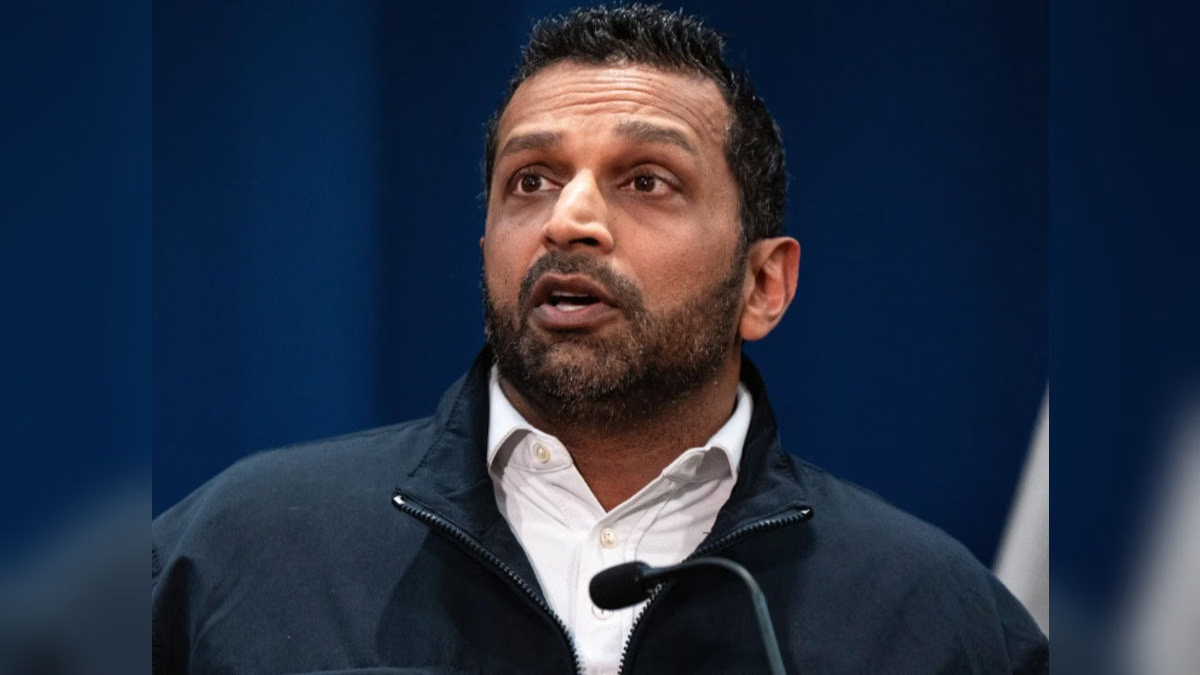
FBI Chief Kash Patel Plans Russia Trip In October Amid Ukraine Tensions, Agenda And Kremlin Meetings Unclear
- Metro9 hours ago
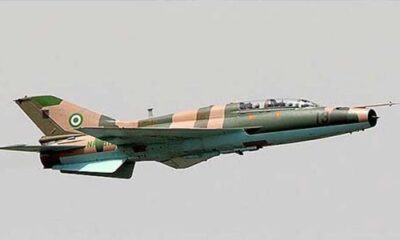
“NAF Airstrike Kills Nine ISWAP Fighters In Sambisa Forest” — Says Key Commander Abu Khalid Al Muhajir Neutralised In Precision Operation
- Metro6 hours ago
“Anambra Billionaire Joseph Ezeokafor Reportedly Kidnapped While Praying In Awka” — Community Said To Have Postponed New Yam Festival Over Abduction