Metro
Tinubu Has Delivered on Almost 100% of Campaign Promises, Says Tunji Alausa

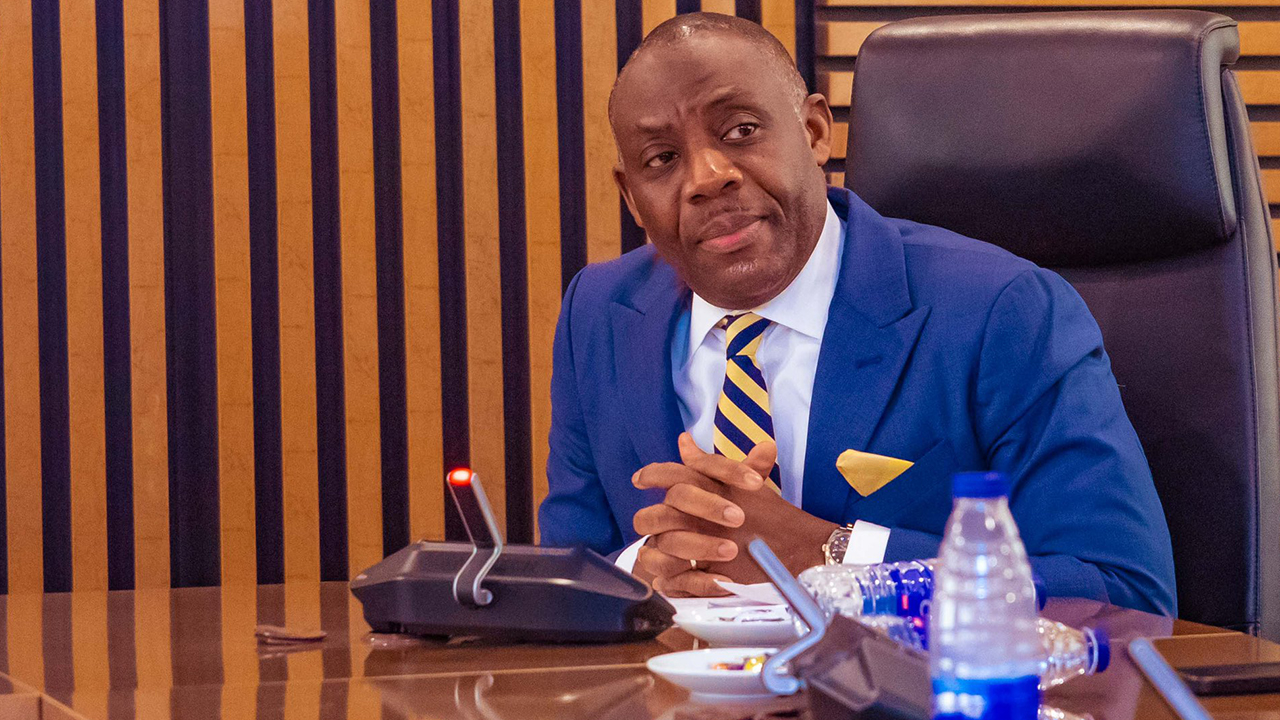
Minister of Education, Maruf Tunji Alausa, has declared that President Bola Ahmed Tinubu has delivered on almost 100 per cent of the promises he made during the 2023 presidential campaign, saying the country is witnessing tangible changes under the administration. Contained in a statement signed by the Special adviser on……
Minister of Education, Maruf Tunji Alausa, has declared that President Bola Ahmed Tinubu has delivered on almost 100 per cent of the promises he made during the 2023 presidential campaign, saying the country is witnessing tangible changes under the administration.
Contained in a statement signed by the Special adviser on Media and Communications, Ikharo Attah, Alausa made the assertion in Abuja while receiving the outcomes of the 2025 Nigeria 2050: Child Foresight Analysis for Futures Literacy and Intergenerational Equity, a flagship initiative of the Office of the Vice President’s Anticipatory Governance and Foresight Capacity Programme, implemented with technical support from UNICEF.
The minister noted that the findings were particularly important given Nigeria’s youthful population, with about 70 per cent of the estimated 220 million population below the age of 30.
He said the demographic profile presented both an opportunity and responsibility for government to turn the youthful population into a demographic dividend through quality education, relevant skills, productive opportunities and long-term planning.
Alausa said the reforms under Tinubu were not merely political rhetoric, but were already producing tangible outcomes, particularly in the education sector.
“I can assure you of that one fact because today we have a President who is leading the country, managing this country from the front, with the highest level of integrity, commitment, patriotism and determination to change the face of this country,” he said.
Read Also: FG To Establish Six Regional Autism Centres from 2027 – Alausa
“And these are not just rhetorics we are hearing now. These are things we are seeing, with a lot of tangible benefits and tangible change in the country.”
The minister said Nigeria had moved beyond the uncertainty that previously characterised national development, adding that the government was now focused on consolidating its gains and addressing areas where the country still had substantial ground to cover.
“The country is not at a crossroads again. We have a lot of catching up to do,” he said.
Alausa said education remained central to the administration’s ambition of moving Nigeria towards a $1 trillion economy, noting that the Federal Ministry of Education had received support to implement reforms under the Renewed Hope Agenda.
He said the Nigerian Education Sector Renewal Initiative (NESRI) was driving reforms across the education system, with focus on Technical and Vocational Education and Training (TVET), STEM education, teacher quality, quality assurance, reducing the number of out-of-school children, and strengthening education data and digitalisation.
“Skills are the present and the future,” the minister said, stressing that Nigeria could no longer afford an education system that failed to adequately prepare young people for the modern economy.
He said the Federal Government was also expanding access to nursing education and increasing training capacity in teaching hospitals, federal medical centres and specialist hospitals to address skills shortages and reduce pressures contributing to the migration of Nigerian professionals.
Alausa also highlighted the administration’s emphasis on data-driven education planning, particularly efforts to establish more accurate figures for out-of-school children.
He questioned long-standing estimates of between 15 million and 17 million out-of-school children, saying they had often been cited without comprehensive household-level assessments.
The minister cited Kaduna State, where household surveys reportedly produced figures significantly lower than previous estimates, while Jigawa State had also recorded differences between existing estimates and the findings of its own assessment.
He said reliable data would enable government to identify where children were out of school, understand the reasons for their exclusion and better target infrastructure and interventions.
“Even if there’s significant reduction, any child out of school is still too many,” Alausa said.
He disclosed that more than one million children had been moved from the streets into schools nationally over the past two and a half years, while Jigawa State alone had reportedly moved more than 180,000 children into school over the last two years.
According to him, the next challenge was to sustain enrolment, keep children in school and prevent new cases of exclusion.
The minister said digital education data was increasingly being used for this purpose, with more than 56 per cent of public schools and 41 per cent of private schools having entered their 2026 Annual School Census information on the digitised Nigerian Education Management Information System (NEMIS).
“Without data, you’re flying blind. Data will tell you everything,” he said.
Alausa said the ministry had also conducted a national assessment to establish a baseline for literacy, numeracy and cognitive development among learners at primary, junior secondary and senior secondary levels.
He said the assessment would provide a clearer picture of learning outcomes and allow the government to measure the effectiveness of interventions over time.
The minister said the reforms aligned with the Child Foresight Analysis, which he described as an opportunity to embed long-term thinking, systems thinking, adaptive innovation and youth participation into national planning.
He commended the Office of the Vice President, the Office for Strategic Preparedness and Resilience (OSPRE) and UNICEF for supporting the initiative, describing it as an important tool for moving Nigeria from reactive governance towards anticipatory action.
Alausa said the ministry would work to align the findings with NESRI, particularly in future literacy, long-term education planning, skills development, data systems and intergenerational equity.
“Nigeria has changed, and it has changed for good,” the minister said.


“The child I lost might have transformed our family’s life” — Woman’s response after losing 12th baby leaves people speechless

JUST IN: Senators Complain Akpabio Collects A Bill And Approves It Without Even Debating In The House’ -Sani

“Why We Initially Denied Ayra Starr South African Visa” — Envoy Says Team Submitted Wrong Yellow Fever Certificate

Abiodun Hails APC National Chairman At 58, Says His Leadership Will Consolidate Party’s Electoral Fortunes

Osun Election: Adeleke Campaign Council Demands Redeployment of Police Commissioner, Alleges Partisanship

Years of Promises, Budgets and an Abandoned Bridge: How Russau Residents Continue to Risk Their Lives Crossing A River – Secrets Reporters Nigeria

Politics 29 seconds ago Raise Your Voice Consistently – Tinubu Sends Message To Clerics President Bola Tinubu has urged religious and spiritual leaders to consistently speak out against terrorism, kidnapping and banditry. NEWSNGR reports that…

“Osun Guber: Police Arrest Commissioner Adejoorin Over Alleged Gun Attack On APC Rally” — APC, Accord Trade Accusations As Pre-Election Violence Claims 18 Lives
Four Years, Three Budgets, One Abandoned Promise: Inside Plateau’s Unfinished Mangu Bye Pass – Secrets Reporters Nigeria
“Tinubu’s VIP Police Withdrawal Order Faces Uneven Compliance” — Politicians, Businessmen Still Seen With Escorts Across States

At least 20 dead after powerful 7.4-magnitude earthquake strikes Colombia

WAFCON 2026: ‘Ugly win’ – Cameroon’s Eto reacts to victory over Nigeria
WAFCON 2026: ‘Ugly win’ – Cameroon’s Eto reacts to victory over Nigeria
WAFCON 2026: ‘Ugly win’ – Cameroon’s Eto reacts to victory over Nigeria

Police ‘made some mistakes’ in firebomb inquiry – Nigel Farage

N1.5bn Kano Mass Wedding Expenditure Triggers Debate

BREAKING: NERC dissolves Kaduna Electricity Distribution Company board, names interim directors

Police assure Osun women of peaceful governorship election

I’m not lobbying for APC campaign DG position

WHO says DR of Congo’s Ebola outbreak began months before it was declared

 News18 hours ago
Years of Promises, Budgets and an Abandoned Bridge: How Russau Residents Continue to Risk Their Lives Crossing A River – Secrets Reporters Nigeria
- Politics11 hours ago
Politics 29 seconds ago Raise Your Voice Consistently – Tinubu Sends Message To Clerics President Bola Tinubu has urged religious and spiritual leaders to consistently speak out against terrorism, kidnapping and banditry. NEWSNGR reports that…
- News17 hours ago
Four Years, Three Budgets, One Abandoned Promise: Inside Plateau’s Unfinished Mangu Bye Pass – Secrets Reporters Nigeria
- Entertainment20 hours ago
Peter PSquare: “Jude called your son a bastard and you didn’t break his teeth; I’m disappointed” — Ovie Success
- Entertainment23 hours ago
“I was in court when Peter…” – Lady reveals what she witnessed during Okoye brothers’ case amid his recent revelations
- News10 hours ago
Captain Idahosa Wells Living Museum Unveiled as Children Cement Legacy of Late Icon on Fifth Anniversary

 World15 hours ago
FBI Chief Kash Patel Plans Russia Trip In October Amid Ukraine Tensions, Agenda And Kremlin Meetings Unclear
- Metro13 hours ago
“NAF Airstrike Kills Nine ISWAP Fighters In Sambisa Forest” — Says Key Commander Abu Khalid Al Muhajir Neutralised In Precision Operation