Metro
NIMASA Introduces New Standards For Seafarers’ Education, Training

The Nigerian Maritime Administration and Safety Agency (NIMASA) has introduced new standards governing the education, training, assessment, certification and medical fitness of Nigerian seafarers….
The Nigerian Maritime Administration and Safety Agency (NIMASA) has introduced new standards governing the education, training, assessment, certification and medical fitness of Nigerian seafarers.
The reforms, issued under the Merchant Shipping (STCW) Regulations 2025, are designed to align Nigeria’s seafarer development framework with the International Convention on Standards of Training, Certification and Watchkeeping for Seafarers (STCW), 1978, as amended.
NIMASA said the new standards are aimed at strengthening safety, professional competence and the global recognition of Nigerian seafarers.
Under the reforms, updated National Diploma (ND) and Higher National Diploma (HND) curricula in Nautical Science and Marine Engineering Technology have been developed in collaboration with the National Board for Technical Education (NBTE).
The agency also introduced mandatory academic programmes at NIMASA-approved Maritime Education and Training Institutions (METIs), alongside qualifying sea service, for officers seeking operational and management-level Certificates of Competency.
Holders of ND and HND certificates issued on or before 3 July 2026 will be required to complete mandatory bridging courses before the December 2028 transition deadline.
NIMASA also announced a compulsory 15-week Ratings Education and Training Programme for candidates seeking relevant Certificates of Proficiency.

In addition, cadets and ratings undergoing approved training will be required to use approved Training Record Books (TRBs), while requirements for the recognition and endorsement of foreign Certificates of Competency have been strengthened.
NIMASA Director-General, Dr Dayo Mobereola, said the reforms would improve the quality of maritime education and training while equipping Nigerian seafarers with the skills needed to compete in the international maritime labour market.
He said the agency remained committed to developing a highly skilled, competent and globally competitive Nigerian maritime workforce.


Politics 29 seconds ago Raise Your Voice Consistently – Tinubu Sends Message To Clerics President Bola Tinubu has urged religious and spiritual leaders to consistently speak out against terrorism, kidnapping and banditry. NEWSNGR reports that…

Captain Idahosa Wells Living Museum Unveiled as Children Cement Legacy of Late Icon on Fifth Anniversary

Subsidy removal: Give account of revenue Nigerians lost to inflation – Rufai Oseni blasts NRS boss Adedeji

‘Stop Abusing Me, Tell Oyo People What You Want To Do Differently’ – Makinde Fires Governorship Contestants

Imo State University ASUU Embarks On Indefinite Strike Over Non- Implementation Of 2025 ASUU- FG Agreement.

“Why are you telling me?”- Lady cries out, displays amount mistakenly transferred to her Opay account

Transfer: ‘He’s indispensable’ – Michael Owen warns Man United against letting most important player leave

Exclusive: N750m Special Intervention Money Missing Under Arts Minister Hannatu Musawa, Permanent Secretary And Finance Director – Secrets Reporters Nigeria
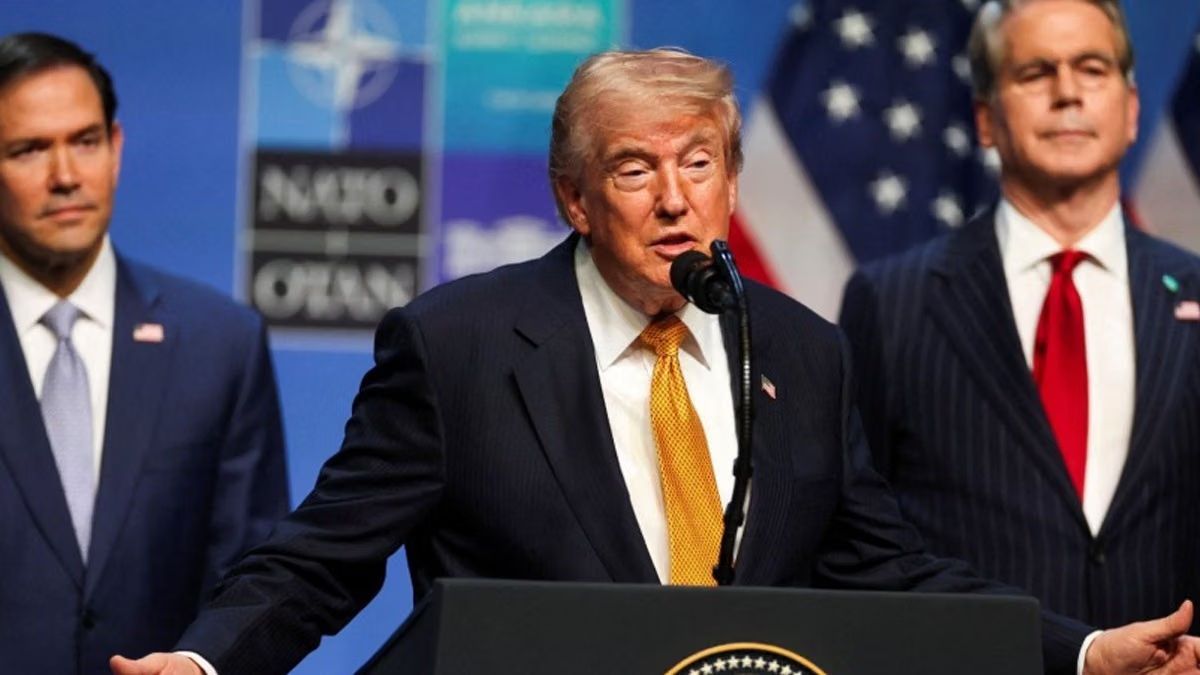
‘I Am Likewise Demanding Compensation’: Trump Rejects Iran’s Payback Demand, Puts Counter-Claim On Future Talks

Peller’s mum dragged for asking her son to gift her ‘lover’ money at his wedding, Daddy Freeze reacts

Extreme heat is reshaping Italy's sparkling wine industry with early harvests and nighttime picking

State Department condemns new Chinese claim to disputed South China Sea shoal as 'destabilizing'

Katsina United Defender Chinedu Ozor Reportedly Shows Signs of Movement After Death Pronouncement

Houthis' Red Sea attacks pressure Saudis to back ground war Riyadh has spent 3 years trying to avoid

Massie Warns: US Should Avoid War with Iran Before It Becomes Overpowered.

Iran sends Trump a stern warning about starting war

Tiffany Haddish avoids more jail time by admitting drink-driving

A Few Minutes Saved Disaster! Trump Reveals What Happened in Iran Attack

Trump: Iran should also pay us compensation

Trump grapples with cycle of violence, diplomacy and economic pressure as Iran war nears sixth month

 World21 hours ago
‘I Am Likewise Demanding Compensation’: Trump Rejects Iran’s Payback Demand, Puts Counter-Claim On Future Talks

 Special Report16 hours ago
DSS releases, pays N3m compensation to carpenter cleared of Oyo school kidnap link – The Witness Nigeria
- Metro21 hours ago
“EFCC Arrests Fake Operative In Maiduguri Over Alleged ₦3m Fraud” — Recovers Money, Says Suspect Paraded Himself As Commission Officer
- Entertainment11 hours ago
“What’s wrong with me?” — Lady breaks up with boyfriend after he stopped her from closing window in Safari
- News15 hours ago
Despite Over ₦625 Million Monthly Allocation & Rich in Coal, Ankpa LGA in Kogi State Battles Darkness, Abandoned Hospital, Deadly Erosion, Daily Hardship Whie Council Chair Focuses on Arresting Citizens – Secrets Reporters Nigeria
- Entertainment16 hours ago
“The groom was a bus driver…” — Friends drag bride after travelling from Lagos to Calabar for wedding
- Viral14 hours ago
“I cannot wait…” — Man shares how female colleague spent ₦7,000 on shawarma despite having only ₦8,000
- Entertainment9 hours ago
“I almost had myself killed” – Lady recounts terrifying encounter during first meeting with man she met online