Politics
Nigeria’s Security Claims Collide With New Wave of Priest Murder and Church Attacks

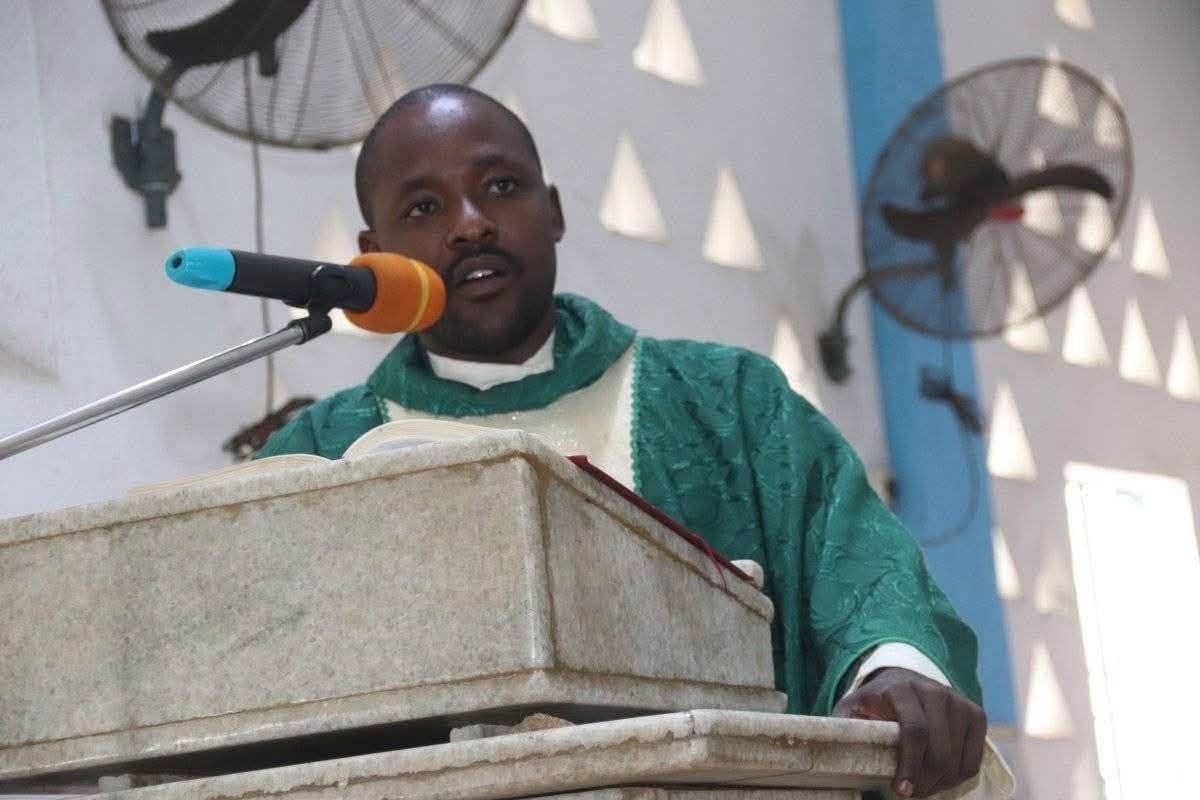
30 Christians killed in Kaduna, priest murdered in Kogi and worshippers abducted in Enugu, raising fresh questions about Nigeria’s ability to protect Christian communities
By Mary Kiara
(Lagos) – Top Nigerian executive officials are scheduled to huddle with White House security experts on Wednesday, (Aug. 12) to defend Nigeria’s track record on defeating terror, according to media reports. Yet, by all accounts, the Nigerians have a lot of recent bad news to explain: including the recent targeted murder of a Catholic priest in Kogi State, and expanding terror corridors across central Nigeria.
In one week, terrorist groups struck Christian communities in Kaduna, Kogi and Enugu, killing 30 Christians, murdering a Catholic priest and abducting worshippers during Mass.
Executive Spin Versus Ground Atrocities
The sudden escalation coincides with high-level diplomatic outreach by the State House aimed at insulating the Nigerian Administration from foreign policy backlash.
Speaking to Qatari Ambassador Yousef Bin Hassan Al-Hail during an official briefing in Abuja, First Lady Oluremi Tinubu assured foreign envoys that President Bola Tinubu and military commanders are successfully defeating terror networks nationwide.
The administration’s public relations campaign follows similar messaging delivered during Mrs. Tinubu’s official visit to Washington, where she explicitly denied that ongoing massacres in Africa’s most populous nation constitute targeted religious persecution or genocide.
Yet, on July 26, 2026, armed Fulani militants launched a late-night assault on Naridon village in Kaduna state. They went house-to-house shooting residents, killing 30 Christians, including 11 children.
The Catholic Diocese of Kafanchan later conducted a collective mass funeral for 27 Catholic victims killed in the attack.
Days later, on July 29, 2026, assailants’ ambushed Rev. Fr. Samuel Opeyemi Oyetoro along a desolate highway in Ajaokuta, central Kogi State.
The priest, who had stepped in to celebrate Mass at St. Peter the Apostle Catholic Church, was repeatedly stabbed and mutilated before his body was abandoned along Church Road.
“I was at the mortuary alongside some other parishioners and everyone was sad and gloomy,” St. Peter Parish Chairman Louis Izugwu told TruthNigeria. “You could tell that what had happened was unbelievable.”
Four days later, on August 2, armed Fulani terrorists invaded St. Joseph’s Catholic Church in Inoyi Affa, Enugu State, during morning Mass, abducting a seminarian (trainee) and 2 congregants at gunpoint.
“It’s not enough to only announce investigations,” a Nigerian security analyst told TruthNigeria under condition of anonymity. “This is now a pattern: terrorists carry out gruesome acts, police announce investigations, and it all ends at that.”
Institutional Collapse and Clerical Outrage
The latest atrocities follow years of documented systemic targeting.
Comprehensive data compiled by the Catholic Secretariat of Nigeria reveals that over 200 Catholic priests were kidnapped between 2015 and 2025, with 11 murdered and four remaining permanently missing.
Faith leaders warn that official silence and routine presidential condolences have pushed public frustration to a breaking point.
“This killing of priests has become one event too hard to think about,” Bishop Hyacinth Oroko Egbebo of the Catholic Diocese of Bomadi told TruthNigeria.
“Nigeria has become a bloodbath, and we are so helpless in looking at the situation.”
Egbebo emphasized that unchecked terror directly suppresses basic civil liberties and religious operations.
In a joint declaration issued to TruthNigeria, CSN Secretary-General Fr. Michael Banjo and Social Communications Director Fr. Michael Nsikak Umoh condemned official denial.
“After years of repeated complaints and unfulfilled promises, violence persists unchecked, leaving more communities devastated,” the Catholic Secretariat officials told TruthNigeria.
“This is not ‘instability’ but a massacre allowed by silence and a betrayal of every Nigerian’s right to live in peace.”
Policy Reform and Legislative Accountability
Legal experts stress that narrative management and military deployments will fail without aggressive legislative reform.
Former Edo State Attorney General Samson Osagie urged the National Assembly to overhaul existing criminal statutes to block convicted terrorists from receiving political protection.
“It has become pertinent to recommend that the Terrorism Prohibition and Prevention Act be further amended to exclude persons convicted of terrorism or anti-terrorism offences from benefiting from presidential clemency,” Osagie told TruthNigeria.
“The justification stems from the need to tighten the noose around perpetrators of terrorism against the nation and its citizens,” Osagie said.
The mounting violence continues to draw sharp responses from Capitol Hill and international human rights monitors.
The U.S. Commission on International Religious Freedom (USCIRF) highlighted Nigeria as a major global crisis point in its 2026 annual report, criticizing government negligence.
“The Nigerian government has for far too long been negligent in seriously and directly tackling the violence,” former USCIRF Chair Vicky Hartzler stated in the commission’s official assessment.
With vital transit corridors left unprotected, policy analysts warn that Abuja’s reliance on foreign charm offensives will fail to shield the administration from diplomatic accountability as regional stability continues to fracture.
Mary Kiara reports on counterterrorism and religious freedom for TruthNigeria.
Related


Politics 29 seconds ago Raise Your Voice Consistently – Tinubu Sends Message To Clerics President Bola Tinubu has urged religious and spiritual leaders to consistently speak out against terrorism, kidnapping and banditry. NEWSNGR reports that…

Captain Idahosa Wells Living Museum Unveiled as Children Cement Legacy of Late Icon on Fifth Anniversary

Subsidy removal: Give account of revenue Nigerians lost to inflation – Rufai Oseni blasts NRS boss Adedeji

‘Stop Abusing Me, Tell Oyo People What You Want To Do Differently’ – Makinde Fires Governorship Contestants

Imo State University ASUU Embarks On Indefinite Strike Over Non- Implementation Of 2025 ASUU- FG Agreement.

“Why are you telling me?”- Lady cries out, displays amount mistakenly transferred to her Opay account

Transfer: ‘He’s indispensable’ – Michael Owen warns Man United against letting most important player leave

Exclusive: N750m Special Intervention Money Missing Under Arts Minister Hannatu Musawa, Permanent Secretary And Finance Director – Secrets Reporters Nigeria

Peller’s mum dragged for asking her son to gift her ‘lover’ money at his wedding, Daddy Freeze reacts

DSS releases, pays N3m compensation to carpenter cleared of Oyo school kidnap link – The Witness Nigeria

Four Crew, Two Rescuers Killed in Houthi 'Double-Tap' Strike on Ship in Red Sea's Bab Al-Mandeb Strait

Nigeria’s Security Claims Collide With New Wave of Priest Murder and Church Attacks
PM Modi and President Trump Will Work Out Russian-Oil Related 100% Tariff Issue: Senior US official
Missile Hits Container Ship in Gulf of Oman near Pakistan: Report
Syrian Leader Bashar al-Assad And Cousin Atef Najib Sentenced to Death in Landmark Syrian Trial

Iran Threat Looms Over Trump: Secret Plane Swap, Decoy Truck Used For Turkey Exit

Sahel Jihad Closing in on Nigeria

U.S. conducts secret Golden Dome tests, but funding for cutting-edge missile shield is uncertain

North Korea has launched a suspected ballistic missile, Japan's Defense Ministry says

Extreme heat is reshaping Italy's sparkling wine industry with early harvests and nighttime picking

 Special Report19 hours ago
DSS releases, pays N3m compensation to carpenter cleared of Oyo school kidnap link – The Witness Nigeria

 World23 hours ago
‘I Am Likewise Demanding Compensation’: Trump Rejects Iran’s Payback Demand, Puts Counter-Claim On Future Talks
- Metro23 hours ago
“EFCC Arrests Fake Operative In Maiduguri Over Alleged ₦3m Fraud” — Recovers Money, Says Suspect Paraded Himself As Commission Officer
- News18 hours ago
Despite Over ₦625 Million Monthly Allocation & Rich in Coal, Ankpa LGA in Kogi State Battles Darkness, Abandoned Hospital, Deadly Erosion, Daily Hardship Whie Council Chair Focuses on Arresting Citizens – Secrets Reporters Nigeria
- Entertainment14 hours ago
“What’s wrong with me?” — Lady breaks up with boyfriend after he stopped her from closing window in Safari
- Entertainment19 hours ago
“The groom was a bus driver…” — Friends drag bride after travelling from Lagos to Calabar for wedding
- Viral17 hours ago
“I cannot wait…” — Man shares how female colleague spent ₦7,000 on shawarma despite having only ₦8,000
- News8 hours ago
₦144m Fraud: Kano Federal Agricultural College Flagged Over Unvouched Payments, Unremitted Revenue, Cash Advances, Procurement Breaches – Secrets Reporters Nigeria