Politics
Fulani Militias Accused of Targeting Christian Communities in Northeastern Nigeria

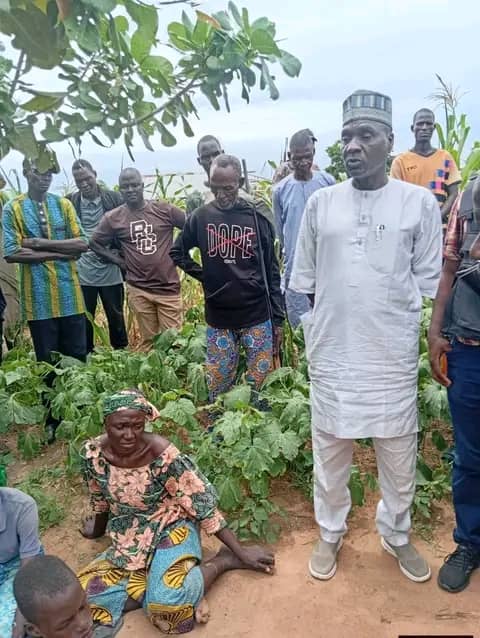
Witnesses say the Zah attack was part of a broader push to seize Hoba ancestral land, despite claims blaming Boko Haram.
By Suleman Ayuba
HONG, Adamawa State, Nigeria–Fulani Islamic militias are systematically targeting Christian communities in Hong Local Government Area in Adamawa State, TruthNigeria has learned.
On July 28, a violent raid shattered the peaceful community of Zah, a rural farming settlement covering approximately 2,588 square kilometers in Hong Local Government Area of Adamawa State, leaving four dead—including a forest guard—and homes reduced to smoldering ash across predominantly Christian agrarian settlements.
Behind the rising flames lies a growing web of tension as armed Fulani militias threaten further destruction, leaving indigenous Hoba tribe residents trapped in an environment of fear.
Yet, there is lingering uncertainty about the identity of the perpetrators of the attack.
Other media accounts attributed the attack to the ISIS-linked insurgency, Boko Haram (Western Learning Forbidden).
Though the report said it was Boko Haram terrorists, the eyewitness testimonies gathered by TruthNigeria reveal that they are Fulani Islamic militias.
For the people of Zah’s rural hinterlands in Hong Local Government Area of Adamawa State and surrounding Hoba communities, the recent violence represents a calculated escalation in a long-standing struggle over religious freedom, tribal sovereignty under Fulani hegemony.
Samuel Ishaya, a local farmer and resident of the community, told TruthNigeria that the roots of the crisis trace back to the influx of nomadic groups seeking to lay permanent claim to ancestral lands claimed by the Hoba tribe. According to Ishaya, the situation worsened when local traditional authorities refused to cede community territory, prompting explicit threats of retaliation by Fulani tribe leaders that have now materialized into bloodshed, arson and destruction of churches.
In a separate exclusive account provided to TruthNigeria, Ngati Godwin laid bare the events that sparked the current wave of violence and exposed what he described as false narratives on social media surrounding the conflict. He said Fulanis are not natives, they are Muslim settlers who want everyone to be under Islamic Sokoto Caliphate. In contrast, Boko Haram terrorists seek to establish a new Caliphate that would supplant the caliphate in Sokoto.
But the fact is, organized Fulani settlement and political control in the Adamawa region began around 1809, following the land conquest jihad led by Modibo Adama under the authority of Fulani Sheik Usman dan Fodio. Source:
According to Godwin, the influx of Fulanis to Hoba land in the Hong Local Government Area of Adamawa State started early in February 2025. Some unrecognized Fulani people came and settled in Hong and started claiming ownership of the land. It was then that the Tol Hoba (traditional ruler) raised objections, according to Ngati; they were sent away to look for another place to settle. These Fulani then started threatening people and promising to attack.
Godwin’s testimony highlights deep-seated frustration within the Hoba community over media narratives and public claims suggesting indigenous farmers initiated hostilities. According to local elder Haruna Bitrus, a trader from the village who spoke to TruthNigeria, the decision by the Tol Hoba—the traditional paramount ruler of the Hoba people—to reject the illegal settlement was a peaceful, administrative measure meant to preserve community sovereignty and address security concerns following earlier attacks on nearby villages such as Kwapre and Mubbang.
Rather than complying peacefully, militia factions responded with open threats, ultimately returning under cover of darkness to launch coordinated assaults against undefended agrarian households, Godwin told TruthNigeria.
U.S. analysts and Western policy circles long have diagnosed Nigeria’s violence as primarily a “farmer-herder clash” driven by climate change, desertification, and competition over scarce resources. This framing—echoed in past State Department approaches and some think-tank reporting—treats radicalized Fulani militias’ coordinated raids on Christian farming communities as environmental inevitability rather than deliberate ethnic and religious aggression aimed at land seizure and demographic change.
Local eyewitnesses, traditional rulers, and clergy in places such as Adamawa reject that diagnosis. They describe organized threats, nighttime assaults, arson, and explicit claims on ancestral territory that fit a pattern of territorial conquest far more than weather-driven scarcity.
For Christian farming families in Hong LGA, the loss of homes and agricultural stores right in the middle of the farming season threatens both immediate physical safety and long-term economic survival.
As rumors of follow-up attacks circulate through surrounding villages, community members described to TruthNigeria that they are living under constant siege. Farmers fear tending to their crops, knowing that remote fields leave them vulnerable to sudden violence. Community leaders continue to appeal to state authorities and federal security agencies for sustained military presence and permanent outposts along vulnerable corridor routes to prevent further displacement.
Yakubu Joseph, a retired Department of State Security Service (DSS) official from Adamawa State, told TruthNigeria that the geographical isolation of border enclaves such as Madagali Local Government Area of Adamawa State makes prompt military response challenging, leaving these agrarian communities exposed to repeated assaults. He said beyond the immediate loss of life, the violence has disrupted local agriculture, displaced entire villages, and strained the region’s social fabric. He said local leaders and civil rights organizations need to continue to advocate for increased military protection, humanitarian assistance for victims, and targeted interventions to secure vulnerable communities along the state’s borders.
Suleman Ayuba is a TruthNigeria conflict reporter.
Related


Politics 29 seconds ago Raise Your Voice Consistently – Tinubu Sends Message To Clerics President Bola Tinubu has urged religious and spiritual leaders to consistently speak out against terrorism, kidnapping and banditry. NEWSNGR reports that…

Captain Idahosa Wells Living Museum Unveiled as Children Cement Legacy of Late Icon on Fifth Anniversary

Four Years, Three Budgets, One Abandoned Promise: Inside Plateau’s Unfinished Mangu Bye Pass – Secrets Reporters Nigeria

Subsidy removal: Give account of revenue Nigerians lost to inflation – Rufai Oseni blasts NRS boss Adedeji

‘Stop Abusing Me, Tell Oyo People What You Want To Do Differently’ – Makinde Fires Governorship Contestants

Imo State University ASUU Embarks On Indefinite Strike Over Non- Implementation Of 2025 ASUU- FG Agreement.

“Why are you telling me?”- Lady cries out, displays amount mistakenly transferred to her Opay account

Transfer: ‘He’s indispensable’ – Michael Owen warns Man United against letting most important player leave

Exclusive: N750m Special Intervention Money Missing Under Arts Minister Hannatu Musawa, Permanent Secretary And Finance Director – Secrets Reporters Nigeria

Peller’s mum dragged for asking her son to gift her ‘lover’ money at his wedding, Daddy Freeze reacts

Tiffany Haddish avoids more jail time by admitting drink-driving

A Few Minutes Saved Disaster! Trump Reveals What Happened in Iran Attack
A Few Minutes Saved Disaster! Trump Reveals What Happened in Iran Attack

Trump: Iran should also pay us compensation

Trump grapples with cycle of violence, diplomacy and economic pressure as Iran war nears sixth month

Sheikh Jingir: Rev Dachomo said worse things – Bashir Ahmad to Rufai Oseni

FG Moves to Strengthen Health Security in South-East

“I’ve no regrets”- Lady who borrowed her friend ₦50K in 2022 speaks out

NDPC Probes UNILAG, Lotus Bank, Hackerbella Over Alleged Data Breaches

FERMA Begins One-Month Maintenance of Zuba-Abaji-Kogi Border Road

 World20 hours ago
‘I Am Likewise Demanding Compensation’: Trump Rejects Iran’s Payback Demand, Puts Counter-Claim On Future Talks

 Special Report15 hours ago
DSS releases, pays N3m compensation to carpenter cleared of Oyo school kidnap link – The Witness Nigeria
- Metro20 hours ago
“EFCC Arrests Fake Operative In Maiduguri Over Alleged ₦3m Fraud” — Recovers Money, Says Suspect Paraded Himself As Commission Officer
- News14 hours ago
Despite Over ₦625 Million Monthly Allocation & Rich in Coal, Ankpa LGA in Kogi State Battles Darkness, Abandoned Hospital, Deadly Erosion, Daily Hardship Whie Council Chair Focuses on Arresting Citizens – Secrets Reporters Nigeria
- Entertainment10 hours ago
“What’s wrong with me?” — Lady breaks up with boyfriend after he stopped her from closing window in Safari
- Entertainment15 hours ago
“The groom was a bus driver…” — Friends drag bride after travelling from Lagos to Calabar for wedding
- Viral13 hours ago
“I cannot wait…” — Man shares how female colleague spent ₦7,000 on shawarma despite having only ₦8,000
- World20 hours ago
Deadliest 7.4 Magnitude Earthquake Of The 21st Century Strikes Colombia; Kills At Least 111, Hundreds Trapped