News
Fuel subsidy proposal may scare investors, IMPI warns

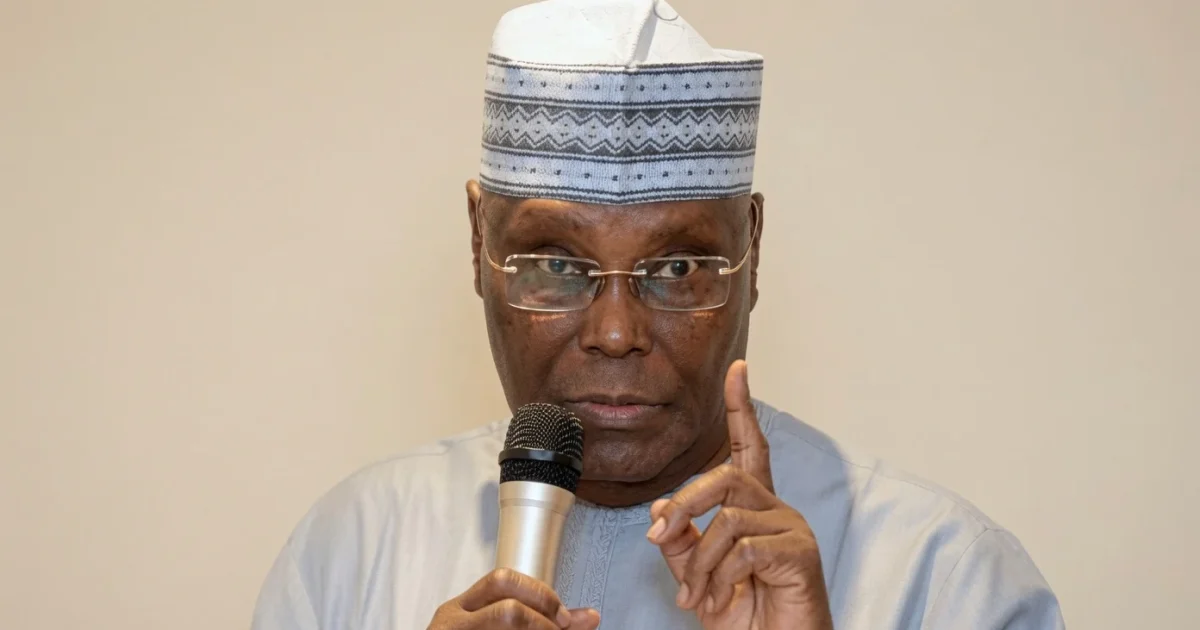
As debates over the return of fuel subsidy intensify, the Independent Media and Policy Initiative has warned that former Vice President Atiku Abubakar’s proposal to restore subsidy could discourage foreign investment and undermine regulatory confidence in Nigeria.
The policy think-tank said the proposal could send a negative signal to international investors by suggesting that Nigeria was returning to regulated petrol pricing after the Federal Government had spent more than three years pursuing deregulation of the downstream oil sector.
The group made its position known in a policy statement issued in Abuja yesterday by its Chairman, Omoniyi Akinsiju.
Atiku, in his proposed economic recovery plan, had advocated a shift from consumption subsidy to production subsidy, with local refineries receiving crude at a discounted price to enable them to sell refined petroleum products at lower prices to consumers.
However, IMPI argued that the proposed model could create uncertainty for investors if commercial operators were required to comply with politically determined pricing arrangements.
Akinsiju said the proposal would require eligible public and private refineries to receive domestic crude allocations at discounted prices on the condition that the savings were passed on to consumers.
He, however, described the arrangement as convoluted, arguing that it could compel operators, including the Nigerian National Petroleum Company Limited and private refineries, to work within politically mandated pricing formulas.
“Atiku’s proposal also sends signals to global markets that Nigeria lacks regulatory predictability. This policy shift would scare away international capital and freeze modern Public-Private Partnerships, with repercussions for funding critical legacy infrastructure projects and a damning effect on production and productivity,” he said.
The group further argued that re-regulating petrol prices would undermine the Petroleum Industry Act, which established a framework for a commercially driven downstream petroleum sector.
According to Akinsiju, the proposed intervention could create an “illusion of price reduction” while transferring the cost of the subsidy from direct government payments to discounted crude oil allocations.
“Atiku’s proposal to re-regulate prices not only directly undermines the Petroleum Industry Act 2021, but also creates an illusion of price reduction. Fixed price caps remove commercial incentives for marketers to distribute fuel to remote areas; consequently, fuel supplies would shift to high-volume urban markets like Lagos, Abuja, Kano, and Port Harcourt,” he said.
The renewed argument over subsidy comes as Nigerians continue to grapple with the impact of the policy introduced by President Bola Tinubu in May 2023.
Tinubu announced the removal of petrol subsidy in his inaugural address on May 29, 2023, arguing that the policy had become unsustainable. The decision immediately triggered a sharp increase in petrol prices and transportation costs. The PUNCH reported that petrol prices rose from N175 per litre in May 2023 to about N1,300 by May 2026, representing a 643 per cent increase.
The controversy has since centred on whether the fiscal gains from subsidy removal have sufficiently translated into improved living conditions for Nigerians.
The Federal Government has maintained that the policy freed significant resources for the three tiers of government. According to figures presented by the Finance Minister, Taiwo Oyedele, subsidy and foreign exchange reforms mobilised N15.8tn for the Federation between June 2023 and December 2025.
Of the amount, N5.43tn accrued to the Federal Government, N6.52tn went to states and N3.88tn to local governments. The government, however, clarified that the N15.8tn was not money sitting in a dedicated account, but additional resources mobilised within the wider fiscal system.
Backing the current model, IMPI argued that returning to a subsidised pricing model could recreate the fiscal problems associated with the old regime.
Akinsiju said Nigeria had historically suffered from deductions from oil revenues to fund subsidy before resources reached the Federation Account, thereby limiting funds available to states and local governments.
“Atiku’s model repeats this exact pattern. By giving discounted crude oil directly to local refineries, the government creates a massive hidden deduction.
“This directly reduces the revenue flowing into the Federation Account, stripping state and local government leaders of the liquid capital needed to build rural feeder roads, primary healthcare centres, and community water infrastructure,” he said.
The group also warned that price controls could result in shortages in remote areas and encourage the emergence of black markets. It said such a development could push transport costs higher and worsen food inflation, particularly for rural communities.
It maintained that the government should instead focus on investments capable of increasing productivity and reducing the structural cost of doing business. “We reiterate that Nigeria’s historical infrastructure deficit cannot be solved by returning to the fiscal policies that created it,” Akinsiju said.
He added that Atiku’s proposed model could amount to replacing a direct cash subsidy with a discount on crude oil revenue.
“Atiku Abubakar’s ‘Follow-the-Barrel’ model replaces a cash subsidy with a crude oil revenue discount. This policy choice risks locking Nigeria back into the same historical cycle: prioritising temporary, popular relief at the pump, while sacrificing the high-quality roads, hospitals, schools, and energy networks required to build a productive national economy,” he said.
However, the concerns raised by IMPI come amid a broader debate among economists and energy experts over whether the complete removal of subsidy has been properly managed.
The Chief Executive Officer of Petroleumprice.ng, Olatide Jeremiah, recently described Atiku’s production-focused proposal as “workable” and “viable”, although he stressed that implementation would be critical.
Jeremiah argued that with petrol prices around N1,300 per litre, government intervention was necessary to reduce the burden on consumers.
He also criticised the effectiveness of the Federal Government’s CNG intervention, saying the availability of CNG stations remained inadequate and that cheaper CNG had not translated sufficiently into lower transport fares. “So I believe an alternative vision or policy by Atiku can work…” he said.
Energy expert Dan Kunle, however, offered a more cautious position, saying the removal of subsidy was the right decision but that the consequences had not been adequately managed.
Kunle argued that Nigeria would need to substantially increase crude oil production before it could sustainably dedicate hundreds of thousands of barrels daily to local refineries at discounted prices.
Kunle, therefore, argued that increasing investment in crude production should precede any attempt to redesign the subsidy regime.
Prof Akpan Ekpo also rejected a complete reversal of subsidy removal but supported targeted intervention to protect vulnerable Nigerians.
He argued that the government could use vouchers to enable vulnerable households and commercial transport operators to purchase petrol at reduced prices, with the government redeeming the vouchers.
Ekpo also suggested that part of the resources generated through subsidy removal could be transferred directly to households rather than distributed entirely through government budgets.
Similarly, economist Prof Adeola Adenikinju said production subsidy was preferable in principle to consumption subsidy but warned that Nigeria’s history of vested interests could undermine such an arrangement.
He said special interests could hijack a production subsidy programme and make it difficult for the government to terminate the intervention once it became entrenched.
Adenikinju also argued that Nigerians needed to see clearer evidence of how the gains from subsidy removal were being used. He advocated putting the savings into a specialised fund for clearly identifiable projects in areas such as roads, railways, education and healthcare.






“A governor once gave Wizkid a bag full of dollars” – Kizz Daniel’s bouncer reveals what singer allegedly did next

‘It Is A Disgrace Tinubu Doesn’t Trust Anyone’ – Melaye Slams President’s Self-Appointment As Campaign Chairman

“I spent months praying for God to take my husband’s money away” — Woman opens up on painful marriage

Economic Impact of Extracted Precious Metals from Electronic Waste in South Western, Nigeria; Review of Extraction Methods

Morning recap: KWAM1 breaks down in tears over Ogogo’s death, govs face questions as FAAC payouts hit N47tn, other top stories

Hon Ereyitomi Congratulates Chief Ayiri Emami, Stella Okotete on APC Presidential Campaign Council Appointments

BAECC Reaffirms Commitment to the Timely Delivery of the Benin-Asaba Expressway Project Following Recent Protest

23 years of operation: Globacom as the architecture of value and the audacity to never settle for less

₦394.86m Financial Irregularities: Nigeria’s Bata Consulate Paid Unapproved Subsidy, Retained Public Funds – Secrets Reporters Nigeria

Late actor Ogogo’s remains arrive hometown for burial

Hospital fire kills 14 newborns in Pakistani capital

Fresh Crisis Hits Katsina APC as Gov Radda, Masari Clash
Hospital fire kills 14 newborns in Pakistani capital

Taiwo Awoniyi Scores, Assists As Coventry Beat Plymouth 4-2

Police Arrest 10 Suspects, Recover Weapons, Stolen Vehicles In Nationwide Operations

Taylor Swift says a world without Dolly Parton ‘doesn’t feel possible’

‘Devastated’ Jane Fonda leads tributes after death of Dolly Parton at 80

Bruno Fernandes, Khadija Shaw Win PFA Players of the Year Awards

Tinubu, APC Afraid Of Makinde’s Popularity – APM

58 Arrested As INTERPOL Target Black Axe, Other Groups In West Africa

 News19 hours ago
BAECC Reaffirms Commitment to the Timely Delivery of the Benin-Asaba Expressway Project Following Recent Protest
- Headlines14 hours ago
Ogun community raises alarm over alleged destruction of farmlands by land grabbers, begs Gov Abiodun to intervene
- News9 hours ago
Evening recap: Falana faults NBA over George Weah invitation, Poco Lee’s management clears drink-spiking claims, other top stories
- Politics13 hours ago
Fuel Subsidy: They Don’t Have Patience To Study What Atiku Is Proposing – Ologbondiyan Knocks Tinubu’s Govt
- Headlines11 hours ago
‘He didn’t speak on my authority’ – Atiku counters aide, insists on total restoration of fuel subsidy
- Viral19 hours ago
“And this guy collected my 1k” — Man discovers ‘young boy’ he gave transport money was actually the groom
- News6 hours ago
Exclusive: NFIU Places Tinubu’s Campaign DG Abdulaziz Yari Under Secret Investigation For Laundering $500,200 Through New Bank Account In 7 Days – Secrets Reporters Nigeria
- Viral18 hours ago
“Something no clear here” — Lady recounts how friend ended relationship with millionaire ex after strange setbacks