Politics
Alagbabiri Community: Where Oil, Gas Flows But Development

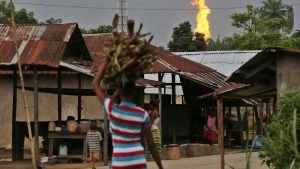
In Alagbabiri, a community in Ughelli South Local Government Area of Delta State, the journey to basic healthcare can become a battle against time, distance and the elements. When the rains come, the community’s already difficult access becomes worse. There is no motorable road linking residents conveniently to other parts of the state, leaving speedboats and canoes as the major means of movement.
For pregnant women, the situation can be particularly frightening. There is no health centre in the community. When residents require medical attention, they have to travel outside Agbalabiri, with childbirth and other treatments often taking place in Bomadi Local Government Area. For a community that hosts oil wells and a viable gas field operated by Shell Petroleum Development Company, SPDC, residents say the situation represents a painful contradiction: the land contributes to Nigeria’s oil and gas wealth, but the people struggle to access basic amenities.
During a recent visit by journalists to the community, residents narrated what they described as decades of neglect, pointing to the absence of roads, healthcare, electricity and adequate educational facilities. For Sarah Edih, the situation is most painful when women go into labour. She said the absence of a health facility within the community has left pregnant women and their families at the mercy of difficult transportation arrangements, particularly during the rainy season.
“We are suffering, especially during delivery. Many newborns and mothers have passed away due to delayed medical attention because there is no health facility here,” she bemoaned. According to her, the problem is not simply the absence of a building called a health centre; it is the consequence of having no immediate medical intervention when lives are at risk.
Another resident, Ese Oraka, echoed Edih’s concerns, describing the situation as a reflection of the broader hardship confronting the community. For residents, the healthcare crisis is only one part of a much larger development deficit. Perhaps the most visible symbol of Alagbabiri’s isolation is its road network—or the lack of one.
Residents said movement becomes particularly difficult during the rainy season, when waterways become the principal means of transportation. Speedboats and canoes effectively replace roads, making transportation not only more difficult but also more expensive and potentially dangerous, especially when residents need urgent medical attention. The absence of a motorable road also affects economic activities, movement of goods and access to government services.
For a community hosting petroleum infrastructure, residents find the contrast difficult to understand. Community elder, Mr Monday Ighoyota, said oil exploration had been taking place in the area for decades, yet the people had continued to wait for basic infrastructure. His frustration is centred on what he described as the failure of government to provide even necessities such as potable water.
“Oil exploration has been going on in the community for decades and yet the government has refused to provide the basic needs of the people. We are suffering. We don’t even have potable water,” he said. Ighoyota also raised concerns about the environmental impact of oil activities, saying residents have had to contend with environmental hazards associated with petroleum operations while receiving little corresponding development.
His argument goes to the heart of the Niger Delta question: what should communities that host the resources powering the national economy receive in return? For decades, that question has remained one of the region’s most persistent sources of grievance. Education presents another dimension of the community’s predicament.
Residents said the only primary school in Agbalabiri was constructed years ago by SPDC, rather than the government. Today, they said, the school has become dilapidated and lacks basic learning furniture, including desks for pupils. The condition of the school, according to residents, is another indication of the absence of sustained investment in the community. For parents, the concern is not merely about the condition of a building. It is about what happens to children growing up in an environment where access to quality education is already constrained by the absence of basic infrastructure.
Read also:
At night, another reality becomes apparent. Agbalabiri has no electricity, according to the residents. The absence of power affects virtually every aspect of life—from education and healthcare to communication and small businesses. It also makes the community’s isolation more pronounced, particularly when considered alongside the absence of a motorable road and healthcare facility. The community’s Secretary, Comrade Lucky Ughwubetine, believes the situation requires urgent attention from all levels of government.
He appealed to the federal government, Delta State government and Ughelli South Local Government Council to intervene in the community’s plight. Ughwubetine called for the provision of a motorable road, healthcare facility, electricity, potable water and improved educational infrastructure. His appeal is essentially a demand for visibility—for Agbalabiri to be recognised not merely as a location where natural resources are extracted, but as a community inhabited by people entitled to basic public services.
Alagbabiri story is bigger than one community. Across the Niger Delta, communities that host oil and gas operations have for decades raised questions about infrastructure, environmental degradation, development and the distribution of the benefits of natural resources. But Alagbabiri presents the issue in stark terms. Here is a community where residents say oil exploration has continued for decades, yet there is no motorable road, no health centre, no electricity and no adequate public infrastructure.
Here, a pregnant woman may have to leave her community before she can access professional medical care. Here, children attend a primary school residents say was built years ago by an oil company, but which is now reportedly dilapidated and without sufficient desks. And here, residents say they still struggle to access potable water.
The irony is difficult to miss, the wealth is beneath the soil, the hardship is above it. Alagbabiri’s residents are not asking for the oil to stop flowing. They are asking for the people to matter as much as the resources beneath their land. Their appeal now goes beyond SPDC and the petroleum industry. It is directed at the three tiers of government: provide the road, build the health centre, restore the school, provide electricity and water, and give the community the infrastructure needed to participate meaningfully in modern economic life.
Until then, Alagbabiri remains an unsettling symbol of a familiar Niger Delta paradox—a place contributing to the nation’s resource wealth while its people continue to wait for the most basic dividends of development.


“The child I lost might have transformed our family’s life” — Woman’s response after losing 12th baby leaves people speechless

JUST IN: Senators Complain Akpabio Collects A Bill And Approves It Without Even Debating In The House’ -Sani

“Why We Initially Denied Ayra Starr South African Visa” — Envoy Says Team Submitted Wrong Yellow Fever Certificate

Abiodun Hails APC National Chairman At 58, Says His Leadership Will Consolidate Party’s Electoral Fortunes

Osun Election: Adeleke Campaign Council Demands Redeployment of Police Commissioner, Alleges Partisanship

Years of Promises, Budgets and an Abandoned Bridge: How Russau Residents Continue to Risk Their Lives Crossing A River – Secrets Reporters Nigeria

Politics 29 seconds ago Raise Your Voice Consistently – Tinubu Sends Message To Clerics President Bola Tinubu has urged religious and spiritual leaders to consistently speak out against terrorism, kidnapping and banditry. NEWSNGR reports that…

“Osun Guber: Police Arrest Commissioner Adejoorin Over Alleged Gun Attack On APC Rally” — APC, Accord Trade Accusations As Pre-Election Violence Claims 18 Lives
“Tinubu’s VIP Police Withdrawal Order Faces Uneven Compliance” — Politicians, Businessmen Still Seen With Escorts Across States
Four Years, Three Budgets, One Abandoned Promise: Inside Plateau’s Unfinished Mangu Bye Pass – Secrets Reporters Nigeria

From Annie to Natasha: Why 2Baba’s Love Life Keeps Making…

Cross River deputy governor, Odey, survives auto crash, vehicles damaged
Cross River deputy governor, Odey, survives auto crash, vehicles damaged
Cross River deputy governor, Odey, survives auto crash, vehicles damaged

Tinubu Has Delivered on Almost 100% of Campaign Promises, Says Tunji Alausa

Police Bust Alleged Ponzi, Visa Scam Ring, Arrest 23 Foreigners

EPL: Jeremie Aliadiere names three players Arsenal can’t do without this season

Colombia, Ecuador hit by 7.4-magnitude earthquake

ASUU shuts down Imo State University, begins indefinite strike

Cynthia Morgan Calls Out VeryDarkMan Over P-Square Feud

 News17 hours ago
Years of Promises, Budgets and an Abandoned Bridge: How Russau Residents Continue to Risk Their Lives Crossing A River – Secrets Reporters Nigeria
- Politics10 hours ago
Politics 29 seconds ago Raise Your Voice Consistently – Tinubu Sends Message To Clerics President Bola Tinubu has urged religious and spiritual leaders to consistently speak out against terrorism, kidnapping and banditry. NEWSNGR reports that…
- News16 hours ago
Four Years, Three Budgets, One Abandoned Promise: Inside Plateau’s Unfinished Mangu Bye Pass – Secrets Reporters Nigeria
- Entertainment19 hours ago
Peter PSquare: “Jude called your son a bastard and you didn’t break his teeth; I’m disappointed” — Ovie Success
- Entertainment22 hours ago
“I was in court when Peter…” – Lady reveals what she witnessed during Okoye brothers’ case amid his recent revelations
- News9 hours ago
Captain Idahosa Wells Living Museum Unveiled as Children Cement Legacy of Late Icon on Fifth Anniversary

 World14 hours ago
FBI Chief Kash Patel Plans Russia Trip In October Amid Ukraine Tensions, Agenda And Kremlin Meetings Unclear
- Metro12 hours ago
“NAF Airstrike Kills Nine ISWAP Fighters In Sambisa Forest” — Says Key Commander Abu Khalid Al Muhajir Neutralised In Precision Operation