News
315 Abducted Nigerians Rescued in Kwara, Niger, Ogun

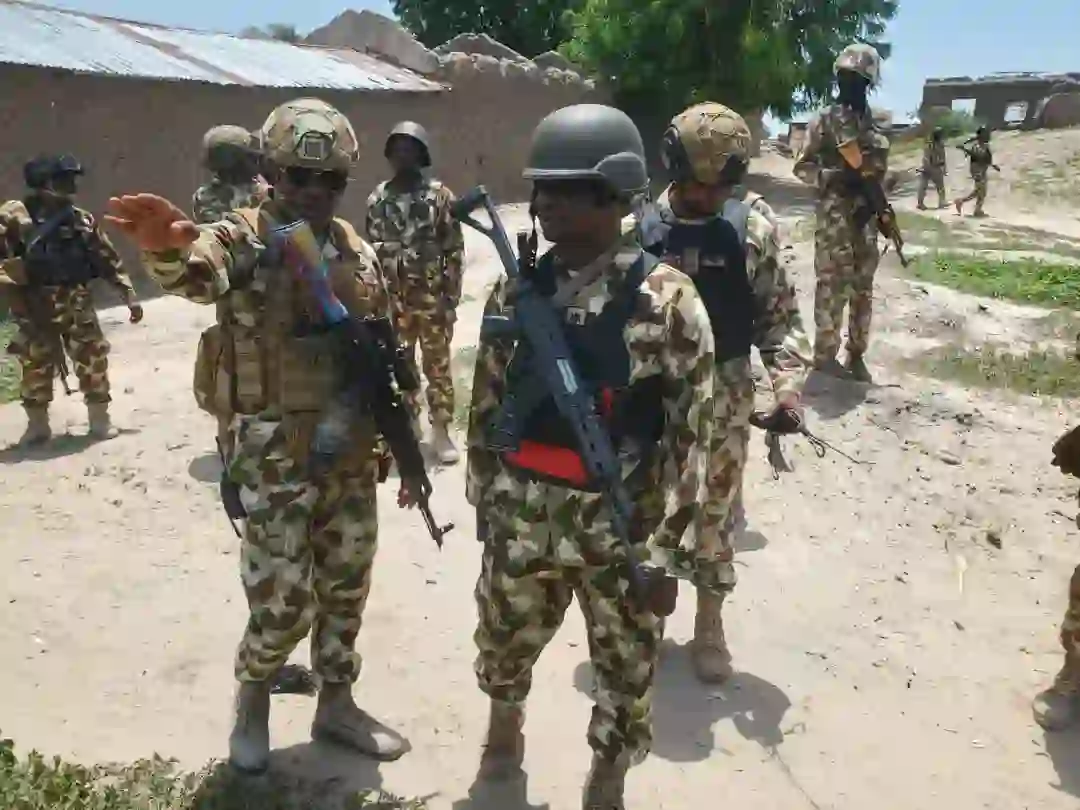
No fewer than 315 Nigerians abducted by terrorists and kidnappers have been rescued in separate security operations across Kwara, Niger and Ogun states within 24 hours.
The rescued victims include 308 people recovered from terrorist captivity in forests bordering Kwara and Niger states, as well as seven students of Gateway ICT Polytechnic, Saapade, in Ogun State, who were abducted on July 29.
The 308 victims comprised 163 people from Kwara and 145 from Niger. Among them were women and children, including a breastfeeding baby.
The victims were rescued during a special operation in the Kainji Lake National Park after being abducted during attacks on Woro village in Kaiama Local Government Area of Kwara State and neighbouring communities in Niger State on February 3 and 4, 2026.
Following their rescue, the victims were taken to Wawa Cantonment in Borgu Local Government Area of Niger State, where they were undergoing screening and receiving medical attention. The Commander of 22 Brigade was said to be coordinating their feeding, treatment and temporary accommodation.
Plans had also been concluded for their return to their respective communities. Buses were reportedly stationed at Sobi Cantonment in Ilorin to evacuate the Kwara victims, while the state governments were coordinating their onward movement.
President Bola Tinubu welcomed the development and commended the security personnel involved in the operations.
The President also directed relevant authorities to strengthen early-warning systems, improve community intelligence gathering and enhance rapid-response capabilities to prevent further mass abductions.
Seven Ogun Poly Students Rescued Without Ransom
The development came as Ogun State Governor, Dapo Abiodun, announced the rescue of seven students of Gateway ICT Polytechnic, Saapade, who were abducted in Remo North Local Government Area of the state.
Abiodun, who disclosed this while briefing journalists at the Oke-Mosan Governor’s Office in Abeokuta, said no ransom was paid to secure the students’ release.
He praised security agencies, local hunters, vigilantes and other stakeholders for their coordinated efforts in locating and rescuing the victims.
According to the governor, he contacted the Inspector-General of Police, Olatunji Disu, following the abduction and requested aerial surveillance to support the ground operation.
The police subsequently deployed a helicopter to assist the search.
Five of the victims were rescued during the first phase of the operation and reunited with their families after receiving medical attention. The remaining two were later rescued through a coordinated operation involving the police helicopter and ground troops.
One of the rescued students sustained a gunshot injury but was promptly taken to a medical facility and has since been stabilised.
Two Suspects Arrested
Abiodun also disclosed that two suspected members of the kidnapping gang had been arrested, while security agencies continued efforts to apprehend other members of the group.
He said some operational details could not be made public because the operation was still ongoing.
The governor vowed that kidnappers, their collaborators, informants, logistics providers and sponsors would be identified and prosecuted.
He also assured residents that Ogun State would not become a safe haven for kidnappers, bandits, armed robbers, cultists or other violent criminals.
Abiodun further commended President Tinubu for strengthening the operational capacity of security agencies, saying federal support had contributed to recent successes in the fight against criminal groups.
Experts Call for Stronger Security Measures
Reacting to the rescue of the victims, UK-based Nigerian medical doctor, university lecturer and social affairs analyst, Dr Chinwike Oke-Nwosu, said the development should prompt authorities to examine gaps in the country’s security architecture.
He particularly called for stronger intelligence gathering and improved monitoring of criminal communications.
Oke-Nwosu questioned how terrorists and kidnappers could continue to operate communication devices while holding victims captive within Nigeria.
He also warned that the prolonged exposure to insecurity could make Nigerians increasingly desensitised to violence, stressing the need for stronger measures to protect citizens.
Rescue Operation Is Welcome — Olisemelogor
Retired Rear Admiral Dickson Olisemelogor described the rescue of the 308 victims as a welcome development.
He said the operation could indicate improved cooperation between affected communities and security agencies.
According to him, residents in affected communities may now be more willing to provide security agencies with information about terrorists and kidnappers.
He also suggested that the government’s position against paying ransom could be making kidnapping less attractive to criminal groups.
RULAAC Urges Government to Sustain Gains
The Executive Director of the Rule of Law and Accountability Advocacy Centre, Okechukwu Nwagunma, also welcomed the rescue operation.
He commended the security personnel involved, noting that every life saved was significant.
However, Nwagunma cautioned that rescue operations should not replace effective preventive measures.
He called for increased investment in intelligence-led policing, stronger inter-agency coordination and improved protection for vulnerable communities.
He also urged the government to investigate security lapses and provide rescued victims with adequate medical, psychological and socioeconomic support.
Nwagunma said the ultimate measure of success should not only be the number of victims rescued but also a sustained reduction in kidnappings and a restoration of public confidence.
Military Highlights Role of Intelligence
Senior serving military personnel, who spoke on condition of anonymity, said the operations demonstrated the importance of sustained intelligence gathering, cooperation among security agencies and support from local communities.
They noted that locating victims in difficult forest terrain required coordinated efforts among various security and intelligence units.
The military personnel, however, stressed that preventing abductions remains the primary objective.
They said the latest successes showed that sustained intelligence operations and cooperation among security agencies and communities could disrupt criminal networks and help secure the release of abducted Nigerians.
READ ALSO:




Family raises alarm over ‘harassment’ of Nnamdi Kanu’s independent physicians by DSS, Medical Council

Kaduna govt charges KASU governing council to drive excellence, reaffirms commitment to quality education

Federal Government College Kaduna Class of 1986 Celebrates 40 Years of Friendship at Memorable Reunion

TETFUND Boss Sonny Echono Spends N841 Million On Solar Streetlights And Each Light Is N1 Million In Four Tertiary Institutions, Pays Consultancy For Them – Secrets Reporters Nigeria

A Terrorist Bureaucracy Is Running Northern Nigeria — And Civilians Must Buy “Clearance Passes” to Stay Alive

NAICOM withdraws Nigeria Reinsurance’s licence, appoints Muiz Banire as receiver – The Witness Nigeria

“Why should we contribute?”- Lady who received office donation reacts to support for security guard’s wife

U.S.-Based Equipping The Persecuted Supports Displaced Christians in Nigeria Amid Rising Religious Violence

“Hisbah Officers Must Obtain Court Orders Before Raiding Hotels, Homes” — Katsina Board Warns Defaulters Face Sanctions

Confusion Breaks As NPP Supporters Fight Among Themselves Outside Supreme Court Ahead of ‘Democracy Under Attack’ Demonstration

IGP Removes Six MOPOL Commanders Over Alleged ₦70,000 Monthly Extortion

Nigerian military pounds 9 terrorists in Borno, captures suspected kidnappers in Plateau
Nigerian military pounds 9 terrorists in Borno, captures suspected kidnappers in Plateau
Nigerian military pounds 9 terrorists in Borno, captures suspected kidnappers in Plateau

FUTATH Clarifies Salary Structure, Says Ondo Govt Still Pays Permanent Staff
Student gunman kills at least 7 people at a high school and a home outside Bangkok, officials say
Student gunman kills at least 7 people at a high school and a home outside Bangkok, officials say

“Why should a 21-year-old son speak for his mother?” – Lady questions tradition during daughter’s marriage process

As blackouts stretch for days, life in Cuba revolves around small bursts of electricity

2026 WAEC: Boy who scored 307 in JAMB shares his result online

 Headlines24 hours ago
Kaduna govt charges KASU governing council to drive excellence, reaffirms commitment to quality education
- Politics21 hours ago
U.S.-Based Equipping The Persecuted Supports Displaced Christians in Nigeria Amid Rising Religious Violence
- Viral16 hours ago
“Mazi Okeke, you never see anything” — Content creator Lenzi reveals untold story about Mazi’s relationship saga
- Entertainment15 hours ago
“It’s him that won’t be active for 6 years” – Jarvis replies after Peller announces her social media break
- News11 hours ago
Audio Billionaire? Ochacho Homes Gifts Content Creator Peller N400 Million House Yet Owes Debt That Leads To Death – Secrets Reporters Nigeria
- Viral18 hours ago
Viral video shows pastor telling members to transfer all their money to him and wait seven days for miracle
- Entertainment17 hours ago
“2027 will decide who owns Nigeria” – Pastor Odumeje urges youths to unite, tackles Tinubu’s supporters
- Entertainment10 hours ago
Mazi Okeke warns Slim Joe, Radio God, reveals why he stopped Lenzi from visiting his house amid relationship saga