World
Iran condemns U.S.-Saudi attacks on Iraq as war expands further

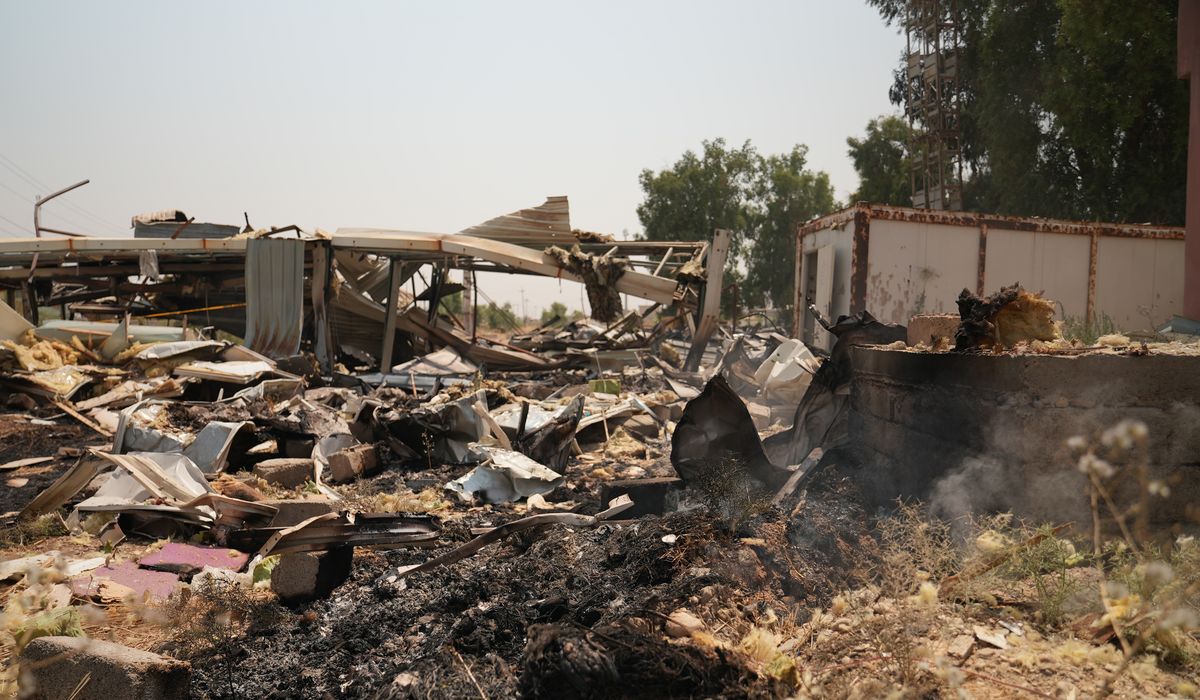
Iran on Wednesday sharply criticized the joint U.S.-Saudi airstrikes against its allied militias in Iraq, calling the attacks clear violations of international law as the Middle East threatens to pull in new players.
Iran’s Foreign Ministry said in a statement that the attacks violated Iraq’s territorial sovereignty and accused the U.S. and Israel of seeking to expand the war. The ministry said the strikes hit sites in the Iraqi city of Karbala, a Shiite pilgrimage destination.
Notably, Tehran refrained from naming Riyadh in its statement on the attacks, even after Saudi officials acknowledged a role in the operation — a sharp shift in the kingdom’s strategic approach.
Though Saudi Arabia has faced repeated strikes from Iran and its allied forces since hostilities began in February, the kingdom had avoided public military retaliation.
The Iranian statement follows U.S.-Saudi strikes Tuesday in eastern Iraq where Iran-backed militia groups are believed to have launched drone attacks.
The U.S.-Saudi strikes targeted seven provinces across Iraq, including near the capital city, Baghdad.
The attacks targeted Iraq’s Popular Mobilization Forces, a paramilitary organization of more than 60 armed Shiite groups that maintains extensive ties to Iran. The PMF announced Wednesday that the strikes had killed at least 20 fighters and wounded 32.
Iraqi officials also condemned the strikes as a major violation of the country’s territorial integrity. Iraq’s security council on Wednesday urged all parties to halt escalation and insisted that Baghdad would remain neutral in the regional conflict.
The U.S.-Saudi attacks came in retaliation for an Iranian ballistic missile attack on American forces in Jordan on Tuesday.
U.S. Central Command, which oversees American military operations in the Middle East, said all missiles had been intercepted and there were no casualties.
The strikes by Iran, the U.S. and Saudi Arabia came after a period of relative calm in the war, as both sides sought to determine the shape of the conflict’s next phase.
President Trump last week paused the U.S.-led bombing campaign on Iran following 13 consecutive days of attacks.
While some had hoped the pause would speed diplomatic efforts by Pakistan and Qatar, the renewed attacks underscore the deep divisions separating Tehran and Washington.
The war, which began as a fight over regime change and limits on Iran’s nuclear program, has since narrowed to focus almost entirely on restoring the free flow of commercial shipping through international waterways.
Iran has maintained for months that the Strait of Hormuz will remain under its authority indefinitely and that ships seeking to pass through will have to pay fees and coordinate directly with its military.
The U.S., along with several other world leaders, has rejected Iranian control over the strait and has floated escort missions for commercial vessels attempting to traverse the waterway.
At least 20% of the world’s oil passes through the strait each year, and its closure has driven energy prices higher. Brent crude rose from roughly $83 a barrel Tuesday evening to nearly $89 a barrel by Wednesday morning.
The strait’s closure is made all the more dire after Houthi rebels in Yemen declared a blockade of Saudi trade through the Bab el-Mandeb strait in the Red Sea earlier this month, closing off an essential alternative route.
The Houthis have admitted to conducting strikes on at least two tankers in surrounding waters, causing a noticeable decline in regional transit. Recent figures from shipping analyst Kpler show that just 11 commercial ships navigated the waterway this past Sunday, marking the most significant traffic slump observed in several months.
The blockade by Houthi forces and diplomatic and military assistance from Tehran appear to have driven Riyadh to assume a more assertive role in the conflict.
The Houthis, along with Iran-backed forces in Iraq, were likely responsible for the dozens of attacks on Saudi energy facilities this week. Satellite images released this week show large black smoke plumes rising from a Saudi Aramco oil processing facility in Abqaiq.


“Military Intelligence Officer Col. Abdussalam Ude Killed While Resisting Abduction At Abuja Home” — Wife, Driver, Guard Injured

“That Man Slapped Me Twice and Called Me Bad Names And Gave Me Naira 45M,” Sad as Abuja Woman Reveals How a Top Politician Allegedly Lured Her to a Lodging With an iPhone and Left Her Pregnant

Dollar to Naira Exchange Rate Today, July 29, 2026: Nigerian Naira records third consecutive depreciation

“I hope say dey never collect my glory” – Peller calls out man who allegedly promised him 10 cows at Soso Soberekon’s wedding

Is Tinubu Going For Boxing Or 100 Metres? – APC Chairman, Yilwatda Slams Peter Obi Over ‘Tired’ Remark

Taraba Lawmaker Calls On State Government To Accord Priority, Funding To Hepatitis Treatment As HIV/AIDS

“I opened an account”- Nigerian lady who relocated to Canada displays account balance, amount sparks buzz

EXCLUSIVE: Police Indict Unity Bank Cooperative Officials in ₦85 Million Fraud Investigation – Secrets Reporters Nigeria

NACAT Unveils ‘Breaking the Chains’ Initiative, Premieres Innocence for Sale Documentary to Strengthen Fight Against Human Trafficking – Secrets Reporters Nigeria

Odogwu Asaba: “She is hungry”- Late Favour’s twin explains why she brought bread, sardine to her grave

EFCC Arraigns 4 Suspects For Allegedly Laundering $5.29m In

Stolen PVCs Worthless, INEC Assures Osun Voters

INEC Warns Troublemakers, Unveil Enhanced Security Measures

Nigerian Army trains engineers to combat rising bomb threats

EFCC Arraigns Abuja Hotel CEO Over Alleged N15m Fraud
Nigerian Army trains engineers to combat rising bomb threats

There Is A Cabal In NBA’ — Lateef Akangbe

Akangbe Demands Fresh NBA Poll, Insists On Release Of Voting Logs

Suspected Thieves Forced to Dance With Allegedly Stolen Building Rods After Arrest

NITDA to License Tech Firms for Software Testing as New National Framework Takes Effect

 Headlines24 hours ago
“That Man Slapped Me Twice and Called Me Bad Names And Gave Me Naira 45M,” Sad as Abuja Woman Reveals How a Top Politician Allegedly Lured Her to a Lodging With an iPhone and Left Her Pregnant
- Headlines22 hours ago
Dollar to Naira Exchange Rate Today, July 29, 2026: Nigerian Naira records third consecutive depreciation
- Politics24 hours ago
You Can’t Hide Behind ‘Technocrat’ Titles To Avoid Political Responsibilities – Yilwatda Warns Political Appointees
- Special Report22 hours ago
He Made His Best Friend Nico Williams Chop Me And Later Blocked Me — Lamine Yamal’s Ex-Girlfriend Nicole Explains Reason Behind Her Breakup With The Barcelona Star
- Entertainment24 hours ago
Lawyer reveals 10 things that has happened between Peller and Jarvis immediately after their court wedding
- Special Report23 hours ago
Ghana’s Skyline Set For Major Transformation As 30-Storey Villagio Vista Echo Tower Emerges As Potential Tallest Building
 Special Report23 hours ago
President Mahama Allegedly Takes Charge Of Apostle Kantanka’s Body Amid Family Dispute, Hides It In A Secret Place
- Entertainment11 hours ago
Are lawyers buried face down because they tell many lies? — Lawyer Stella clarifies long-standing myth