Politics
Iranian Court Orders 74 Lashes For Singer Parastoo Ahmadi Over

Iranian singer Parastoo Ahmadi and eight members of her production team have reportedly been sentenced to 74 lashes, a two-year travel ban, and a two-year prohibition from engaging in artistic activities after a livestreamed performance in which she appeared without wearing the mandatory hijab.
Key Highlights:
- Parastoo Ahmadi and eight team members were reportedly sentenced to 74 lashes.
- They also received a two-year travel ban.
- The group was barred from artistic activities for two years.
- The case followed a viral livestream in which Ahmadi performed without a hijab.
- Human rights groups condemned the ruling as a violation of artistic freedom and women’s rights.
According to court documents cited by human rights groups and legal advocates, the verdict was delivered by a criminal court in Iran’s Qom Province. The defendants were convicted on charges linked to the production and publication of content authorities described as “vulgar and immoral” and offensive to public decency.
The case stems from a December 2024 performance streamed on YouTube, during which the 29-year-old singer performed the patriotic song Az Khoone Javanane Vatan (“From the Blood of the Youth of the Homeland”) without a hijab.
The livestream quickly went viral, attracting millions of views worldwide and reigniting international debate over artistic freedom, women’s rights, and government censorship in Iran.
Following the performance, Ahmadi and several members of her production team were reportedly detained before later being released. Authorities subsequently filed formal charges against them over the broadcast.
Read also:
Although Iranian officials have not publicly released the full judgment, human rights organisations and legal experts say the ruling reflects an ongoing pattern of legal action against artists accused of defying the country’s strict social and cultural regulations.
The sentence has drawn widespread condemnation from human rights advocates, who describe it as another example of the suppression of artistic expression and women’s rights in Iran.
Bahar Ghandehari, director at the US-based Center for Human Rights in Iran, said the punishment highlights the continued human rights violations faced by artists and women in the country.
Legal experts have also questioned the basis for the ruling, arguing that Iranian law does not explicitly criminalise women singing or producing music. They further contend that corporal punishment, including flogging, violates internationally recognised human rights standards and obligations.


Police invite late singer, Toluwanisings’s wife, father, as parties sign peace deal – The Witness Nigeria

Fatal Bayelsa clash: Monarch clears Nembe E&P, questions link to land acquisition – The Witness Nigeria

After four years in detention, DSS clears four IPOB suspects, pays N20m compensation – The Witness Nigeria

US elections: Same cabal ousted Jonathan, installed Buhari, unleashed Boko Haram in Nigeria – Ex-Mayor

“Renting Your Property To A Terrorist Is Also An Offence” — FG Warns Landlords, Says Terrorism Support Attracts Minimum 20-Year Jail Term

Lafia Presidential Rally: RELAX DG Ahmed Bala leads members to campaign flag-off, highlights Tinubu’s North-Central projects

“No Degree Of Rigging Can Silence The Will Of The People” — Obi’s Camp Warns Governors Against Manipulating 2027 Elections

Namibia President hails Dangote’s $2.5bn investment as historic milestone for African industrialisation – The Witness Nigeria

They Want To Persecute Me – Karimi Reacts To Court Judgement Sacking Him As Kogi West Senatorial Candidate

“INEC Cannot Investigate INEC” — Ezekwesili Demands Independent Voter Register Audit, Warns Against Compromised 2027 Elections

Bandits attack Kebbi community, kill one, abduct several residents

Kogi West: Karimi rejects court judgement, vows to go on with campaigns

Och’Idoma seeks stronger action against hunger, malnutrition in Benue

From illegal detention to courtroom abuse: NJC punishes three judges

Daniel leads Senate Joint Committee meeting on insecurity in Nigerian waterways

Benue former Chief Judge, Justice Adam Onum is dead

2027: ‘Peter Obi’s Logic Is Short-Term Turnover Unlike Tinubu Who Thinks Of Next Generation’ – Oshiomhole

NPFL: Rivers United responds to sanction over broadcast blockage

Kano seizes 5,964 bottles of expired soft drinks in Singer Market

Makinde, Ajadi, Adekanmbi celebrate NBHA at 2026 Hair and Body Care Exhibition in Ibadan

 Politics5 days ago
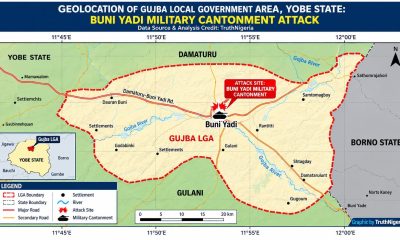
Over 200 Boko Haram Terrorists Are Moving To Attack Military Camp In Buni Yadi As Rockets Target Troops; IED Threat Raises Travel Concerns
- Metro5 days ago
“The Election Must Hold As Scheduled” — INEC Chairman Rules Out Postponement Of 2027 General Elections
- Metro5 days ago
“Publishing His Name Is Subject To The Final Outcome Of A Court Order” — INEC Leaves Gwarzo Off Updated Kano Governorship List
- Metro5 days ago
“Ebola Outbreak Is Not Yet Under Control” — Africa CDC Warns As Confirmed Cases Exceed 10,200, Death Toll Surpasses 5,000
- Metro6 days ago
“Death Benefits Will Be Fully Paid To Next Of Kin” — NAF Pledges Continued Salaries For Personnel Killed In October 5 Aircraft Crash
- Metro5 days ago
“Sowore’s Whereabouts Remain Unknown” — Armed Men Allegedly Abduct AAC Presidential Candidate In Ado-Ekiti, Damage Vehicles And Restaurant
- Metro5 days ago
“They Beat Me Like A Criminal” — Sowore Recounts Ekiti Attack As Govt Denies Involvement, Calls For Police Investigation
- Metro5 days ago
“We Know What They Did And How They Did It, But I Don’t Know Why” — INEC Reveals Findings On AI-Generated Photos In Voters’ Register