Politics
2027: Nigerians Will Suffer More Taxes If Tinubu Is Reelected – Kwankwaso

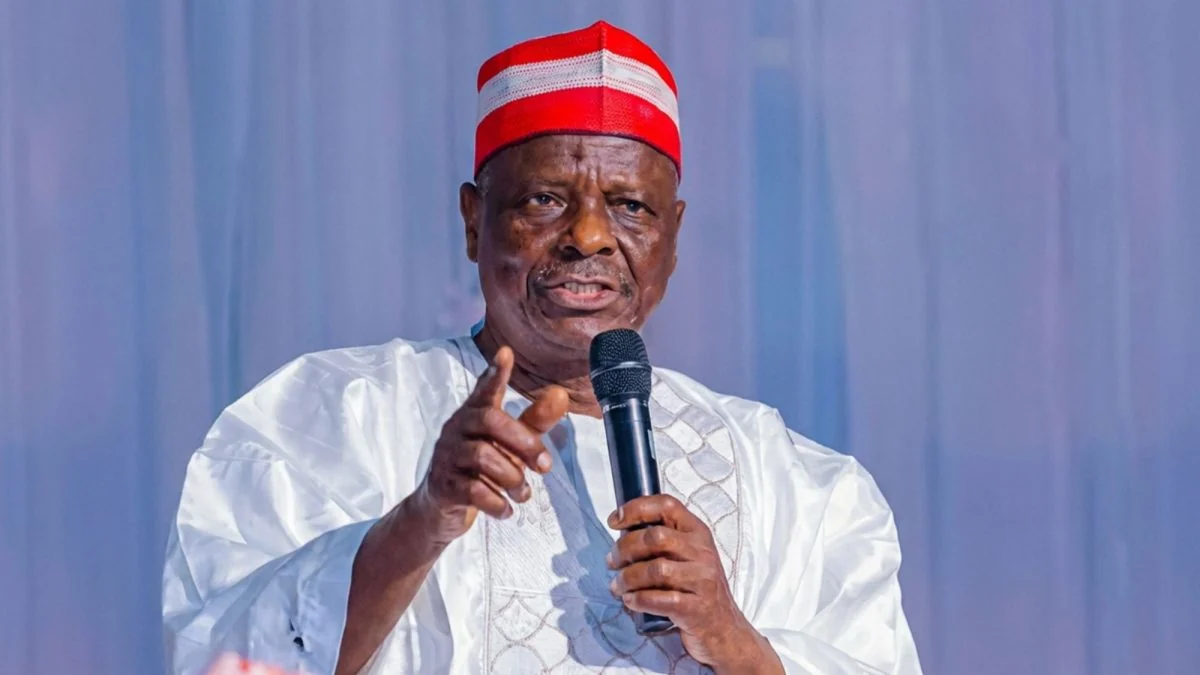
The Vice-Presidential candidate of the Nigeria Democratic Congress (NDC), Rabiu Musa Kwankwaso, has warned that Nigerians could face increased tax collection if President Bola Tinubu is re-elected in the 2027 general elections.
Kwankwaso alleged that the Federal Government had delayed implementing the newly enacted tax laws because of fears that doing so could affect the All Progressives Congress (APC)’s chances in the forthcoming elections.
He made the claim while speaking at the inauguration of the NDC campaign council in Dutse, Jigawa State.
According to him, although the tax reform bills had been passed into law, the government was reluctant to commence their implementation because of the possible political consequences ahead of the elections.
“The bill has been passed into law, but the Federal Government is now afraid of losing the election. That is why it has delayed the collection,” he said.
Kwankwaso warned that Nigerians would face more aggressive tax collection if the APC secured another mandate in 2027.
“As soon as they get a second chance, God forbid, Nigerians will suffer from different kinds of tax collection. They will start going from house to house, checking even under your bed to collect taxes,” he added.
He also alleged that the Senate President deliberately stayed away from the session during which the tax reform bills were approved to avoid being associated with the legislation.
“The worst part of it is that the session for the approval of the tax bill was chaired by one of us from Kano. Even the Senate President intentionally refused to attend because he did not want to be part of it,” Kwankwaso alleged.
The NDC vice-presidential candidate promised that the party would scrap what he described as unnecessary taxes if elected, while prioritising education.
“NDC is there for Nigerians. When you give us your mandate, we will cancel all such unnecessary taxes, provide quality education and sponsor your child’s education,” he said.
He urged Nigerians not to give the APC another chance, arguing that the party’s re-election would jeopardise the country’s future.
Meanwhile, the NDC has accused Tinubu’s administration of excessive borrowing and poor management of public resources, saying its presidential candidate, Peter Obi, and Kwankwaso are determined to reverse what it described as the depletion of Nigeria’s commonwealth.
The party made the remarks in a statement responding to Tinubu’s recent comments about Obi’s handling of erosion challenges in Anambra State during his tenure as governor.
Tinubu had, while addressing supporters at an APC rally in Akwa Ibom State on Friday, criticised the former Anambra governor, saying he could not control erosion in his state, whereas he had confronted the Atlantic Ocean during his tenure as governor of Lagos State.
However, in a statement issued on Saturday, the Spokesperson of the NDC National Presidential Campaign Council, Dr Chiogo Constance Ikokwu, said the Obi-Kwankwaso ticket was focused on addressing the country’s economic challenges beyond environmental issues.
Ikokwu questioned how the financial gains from the removal of petrol subsidy and increased government revenue were being utilised, particularly amid rising debt obligations and inadequate funding for critical sectors such as healthcare and education.
She said Nigerians deserved explanations on the use of the resources, arguing that citizens continued to grapple with poverty, unemployment, insecurity and declining purchasing power.
To support its position, the party compared the financial records of Obi and Tinubu during their respective tenures as governors of Anambra and Lagos states.
According to Ikokwu, Obi left investments valued at the equivalent of $500 million, alongside local and foreign currency holdings, including $156 million in dollar-denominated bonds, when he left office in Anambra State in 2014.
In contrast, she cited figures from the Debt Management Office which, according to her, put Lagos State’s external debt at approximately $190.43 million at the end of 2007, when Tinubu handed over to his successor.
The party also criticised the pension law enacted during Tinubu’s administration in Lagos, which it said provided lifetime benefits for former governors and their deputies.
It listed the benefits to include pensions equivalent to 100 per cent of the incumbent governor’s basic salary, houses in Lagos and Abuja, multiple vehicles, furniture and utility allowances, free medical care, house maintenance allowances and provisions for domestic staff.
Ikokwu described the package as excessive, adding that it was subsequently reviewed by a succeeding administration. She also noted that Obi did not establish a similar pension scheme for former governors in Anambra State.
The NDC maintained that the Obi-Kwankwaso ticket offered Nigerians an opportunity to move away from what it described as a borrowing-dependent economic model towards prudent management of public resources, accountability, productive investments and improved welfare.


“Every Item Has Been Recovered” — Viral CCTV Helps Trace Lagos Photographer’s Stolen Equipment As Wedding Files Remain At Risk

‘He’s closest to Lionel Messi’ – Rashford names player to win more Ballons d’Or than Cristiano Ronaldo

That’s How A Statesman Should Behave – Keyamo Praises Atiku For Not Disobeying Court Order Sacking Him As ADC Presidential Candidate

Explain What Your Administration Has Done With ₦15.8 Trillion Saved From Fuel Subsidy Removal – Peter Obi Dares Tinubu

Oyedepo, Adeboye own private jets, universities because Obasanjo allocated oil wells to them – Madugba

“We Will Resist Every Attempt To Turn Nigeria Into A One-Party State” — Atiku Rejects ADC Judgment, Vows To Stay In Presidential Race

“Personal Attacks On Judges Are Not A Substitute For Legal Argument” — C4G Tells Okonkwo, Odinkalu Over ADC Judgment

“No More Annual Leave As 2027 Elections Approach” — INEC Orders Staff To Remain On Duty, Announces New Salary Structure, Allowances

JUST IN: Nigeria beat Japan to become first African nation to win U-17 Women’s World Cup – The Witness Nigeria

“Ibom Deep Seaport Is Approved” — Tinubu Grants Eno’s Request, Attacks Atiku, Obi, Promises Better Future As He Stumbles During Akwa Ibom Visit

Popular Lagos church sealed over noise complaint

Flamingos’ feat: NAWOJ demands sustained investment in girls’ sports

2027: Nigerians Will Suffer More Taxes If Tinubu Is Reelected – Kwankwaso

“Nigerians Have A Right To Know How NERSI Funds Are Spent” — SERAP Demands Disclosure Of ₦50,000 Relief Payments, Threatens Legal Action

NEMA distributes relief materials to flood Victims in Ogbaru

Aregbesola Heads To Appeal Court Over Nullification Of Mark-Led ADC

Police recover 39 stolen cows after repelling attack in Kaduna

Bandits burn 12 family members to death in Zamfara attack

NAF approves new posting to strengthen workforce,operational strategies

Anglican Church Warns Tinubu, INEC Against Rigging 2027 Elections

 Viral7 days ago
FLUTTERWAVE’S CYPRUS EXIT: BANK OF CYPRUS OBJECTION TRIGGERS TOTAL WRITE-OFF OF 100% SUBSIDIARY, AUDITED ACCOUNTS REVEAL
- Metro5 days ago
“Nigeria Cannot Afford To Fail In 2027” — UNOWAS Urges Peaceful Elections As NHRC Warns Against Electoral Offences
- Politics7 days ago
Imo People Gathered At A Street Named After Ganduje, Insisting That It Must Be Renamed – Uzodinma’s Aide
- Special Report5 days ago
Cocaine: KC Luxury asks judge to withdraw from his trial over missing affidavit – The Witness Nigeria
- Headlines7 days ago
Trump made right decision to designate Nigeria Country of Particular Concern – US congressman Riley Moore
- Metro6 days ago
“APC’s 2027 Strength Goes Beyond Electoral Victories” — Yilwatda Cites 13m Members, 31 Governors, 88 Senators
- Special Report3 days ago
Namibia President hails Dangote’s $2.5bn investment as historic milestone for African industrialisation – The Witness Nigeria
- Headlines5 days ago
Kayode Akinmade: Abiodun’s road revolution – From forgotten communities to connected economic corridors