Politics
S’Court Ruling: Reps Ask INEC to Disqualify Candidates Not in Party Registers

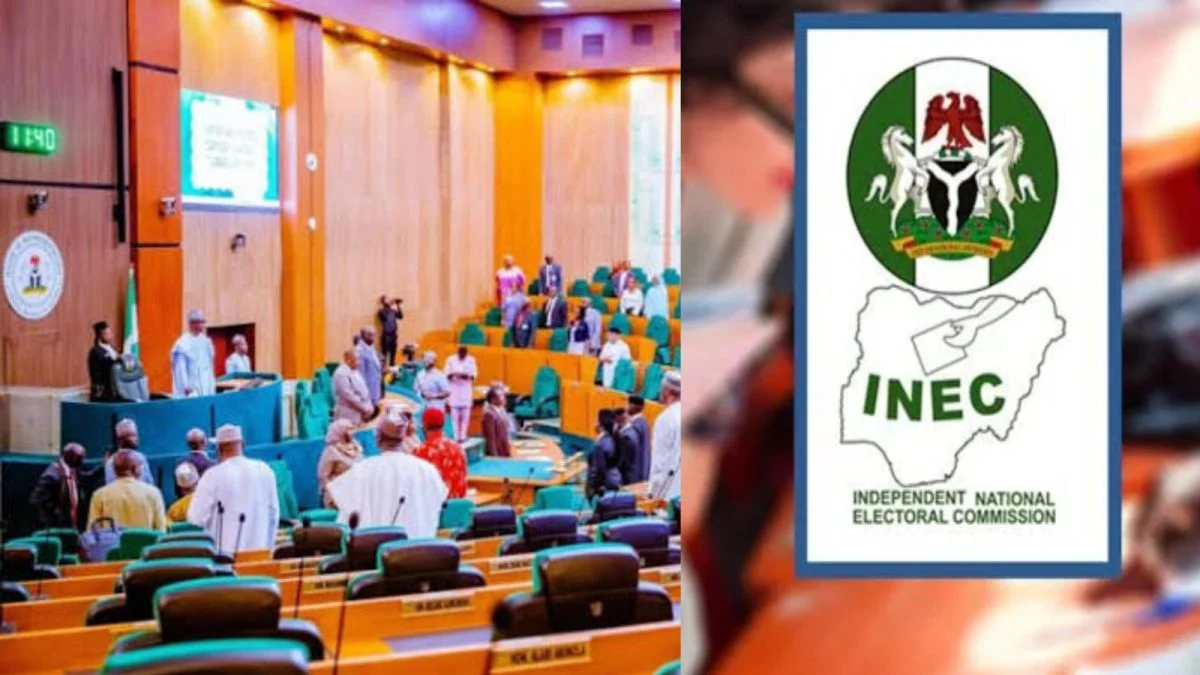
The House of Representatives Committee on Electoral Matters has asked the Independent National Electoral Commission (INEC) to disqualify candidates whose names are not contained in the membership registers of the political parties that nominated them.
The committee said the action is necessary to ensure compliance with the Electoral Act 2026 following the recent judgment of the Supreme Court on party membership registers and candidate nomination.
Chairman of the committee, Bayo Balogun, made the demand in a letter addressed to INEC, asking the electoral commission to enforce the provisions of Section 77 of the new electoral law across all registered political parties.
The directive comes barely two weeks after the Supreme Court restored key provisions of the Electoral Act 2026 which had earlier been voided by the Court of Appeal.
The apex court, in a judgment delivered on September 24, upheld INEC’s appeal and restored Sections 77(5), 77(6), 77(7) and 84(2) of the Electoral Act.
The decision has renewed attention on the membership status of politicians who emerged as candidates in party primaries for the 2027 general elections.
Balogun, in the letter, referred to an earlier response from INEC dated July 26, 2026, when the commission expressed concerns over the legal uncertainty surrounding the interpretation and implementation of Section 77.
According to the committee chairman, INEC’s position at the time was understandable because the commission was dealing with conflicting judicial decisions and pending litigation over the validity of the provisions.
He, however, said the situation had changed following the Supreme Court judgment.
Balogun said the ruling had settled the legal uncertainty and provided a basis for INEC to begin enforcing the affected provisions of the Electoral Act.
He therefore urged the commission to conduct a comprehensive review of the candidates submitted by political parties for the 2027 elections.
The review, according to him, should include checking whether the names of the candidates were contained in the membership registers submitted by their respective parties to INEC within the period prescribed by law.
The committee wants INEC to take action against candidates whose names do not appear in the relevant registers.
The demand is based particularly on Section 77(5), which limits participation in party primaries, congresses and conventions to members whose names are contained in the membership register submitted to INEC.
The provision requires the register to be submitted at least 21 days before the date fixed for the primary, congress or convention.
Section 77(6) also prevents a political party from using a different membership register for its primaries, congresses and conventions after submitting a register to INEC.
The law goes further under Section 77(7).
It provides that a political party that fails to submit its membership register within the stipulated period cannot field a candidate for the election.
The provisions became the subject of a major legal dispute after the Zenith Labour Party challenged them before the Federal High Court in Abuja.
The party had argued that the provisions were inconsistent with the 1999 Constitution and amounted to interference in the internal affairs of political parties.
The Federal High Court, presided over by Justice Mohammed Umar, dismissed the suit on May 5, 2026.
The ZLP subsequently appealed to the Court of Appeal in Abuja.
On July 16, the appellate court allowed the appeal in part and voided the disputed provisions relating to membership registers and party primaries.
The decision created uncertainty over how the provisions would be applied ahead of the 2027 elections.
INEC subsequently appealed to the Supreme Court, seeking the restoration of the provisions.
The apex court eventually reversed the Court of Appeal decision.
A seven-member panel led by Justice Adamu Jauro held that the disputed provisions were not inconsistent with the 1999 Constitution.
The Supreme Court consequently restored the Federal High Court judgment which had dismissed the ZLP’s challenge. It also awarded N2 million in costs against the party.
The ruling means that political parties are again required to operate within the framework set out in Sections 77(5), 77(6) and 77(7) of the Electoral Act.
Section 84(2), also restored by the Supreme Court, provides for direct primaries or consensus as methods for political parties to nominate candidates for elective positions.
The National Assembly had earlier explained that the new electoral framework was designed to strengthen the role of party members in the nomination process.
The law also requires political parties to maintain membership registers and submit them to INEC before conducting their primaries.
Moreover, A recent Federal High Court judgment in Gombe has already shown how Section 77 could affect a candidate.
The court nullified an APC primary for the Balanga/Billiri Federal Constituency and ordered the party to conduct a fresh exercise after finding that the candidate who emerged from the disputed primary was not listed in the party membership register submitted to INEC within the required period.
There have also been calls for INEC to review the status of individual candidates following the Supreme Court judgment.
In Rivers State, for instance, a group had asked the commission to disqualify the APC governorship candidate, Kingsley Chinda, over issues connected to his membership and the timing of the party’s primary.
The APC, however, rejected the call and maintained that the Supreme Court judgment did not affect Chinda’s eligibility.
INEC had earlier indicated that it would determine how the Supreme Court judgment affects candidates after obtaining and reviewing the certified true copy of the ruling.
The commission is also expected to engage political parties and other stakeholders as part of preparations for the 2027 elections.
Balogun said strict enforcement of the law would help prevent a situation where candidates who did not meet the statutory requirements are allowed to contest and later become subjects of prolonged litigation.
He urged INEC to ensure that political parties comply with the provisions before the 2027 election process advances further.


Anyone Who Feels He Is Not Getting Anything Should Resign – Zamfara Governor Tells Dissatisfied Appointees

Zamfara State Governor, Dauda Lawal, Flags Off Road in Tsafe, Says Infrastructure Will Enhance Connectivity, improve local economy

Exclusive: How Ondo Government Borrowed N30 Billion For Roads and Hospitals, Quietly Added an Unauthorised N15.2 Billion Private Loan, and Left N4.1 Billion Unaccounted For

“My girlfriend…” – Lady shares brother’s shocking response after siblings contributed ₦6m each for his UK relocation

JUST IN: Court orders INEC to upload Olawepo-Hashim as Accord’s 2027 presidential candidate – The Witness Nigeria

Ondo Igbokoda Aircraft Crash: Preliminary Count Puts Occupants At 32, Names And Condition Still Undisclosed

“One Day Their Actions Will Haunt Them, Even After Retirement” — Buba Galadima Warns Judges, Says They Will Answer For Selfish Decisions

Politics 38 minutes ago I Went To Tinubu, He Responded Despite My Being In Opposition – Bala Mohammed Bauchi State Governor Bala Mohammed has applauded President Bola Tinubu for responding to his plea to tackle insecurity in the state. According to the…

“I got my British passport in less than 16 months” – Man claims King’s convoy hit him, reveals alleged compensation

As Jihadists Slaughter Middle Belt Christians, Nigeria’s Wealthiest Megachurches Maintain a Politically Profitable Silence

Two foreigners arrested over alleged burglary, theft of pumping machines in Ogun

‘Buhari Was Not In Charge’ – Peter Obi

S’Court Ruling: Reps Ask INEC to Disqualify Candidates Not in Party Registers

Reps summon NNPCL, INEC over alleged N802bn audit breaches, give HYPREP 7-day ultimatum

“I’m totally innocent of these fabricated allegations made against me” — Rick Ross

FULL LIST: NAF releases names of 25 victims of Ondo aircraft crash

2027: While Atiku Wants To Win ‘At All Costs’, Tinubu Is Thinking Long-Term Sustainability – Presidency

PDP’s Turaki Sends Message To Nigerian Youths Ahead Of 2027

‘Profound tragedy’ — Matawalle mourns 32 NAF personnel after Ondo crash

2027: Anytime I Sleep, Eat, I Think About Tinubu’s Re-election – Wike

 Special Report23 hours ago
JUST IN: Court orders INEC to upload Olawepo-Hashim as Accord’s 2027 presidential candidate – The Witness Nigeria
- Metro21 hours ago
Ondo Igbokoda Aircraft Crash: Preliminary Count Puts Occupants At 32, Names And Condition Still Undisclosed
- Metro23 hours ago
“One Day Their Actions Will Haunt Them, Even After Retirement” — Buba Galadima Warns Judges, Says They Will Answer For Selfish Decisions
- Politics17 hours ago
Politics 38 minutes ago I Went To Tinubu, He Responded Despite My Being In Opposition – Bala Mohammed Bauchi State Governor Bala Mohammed has applauded President Bola Tinubu for responding to his plea to tackle insecurity in the state. According to the…
- Politics17 hours ago
As Jihadists Slaughter Middle Belt Christians, Nigeria’s Wealthiest Megachurches Maintain a Politically Profitable Silence
- News18 hours ago
How Emeka Woke’s NOSDRA Paid N229.75 Million To Three Companies In One Day For The Same Contract Including An Inactive Company And A Firm That Does Not Exist On CAC Records
- Viral22 hours ago
“Seriously, the entire budget is…”- Lady reveals talking stage’s estimate for a date, amount sparks buzz
- News19 hours ago
UNILAG VC Folasade Tolulope Ogunsola Hid N7.8 Billion Worth of Contracts From Nigeria’s Open Contracting Portal; Failed To Remit N3.89 Billion IGR To Gov’t Purse