News
FG Reports $3.5bn Gas Investments, Says Output Rises to 7.5bcf/d

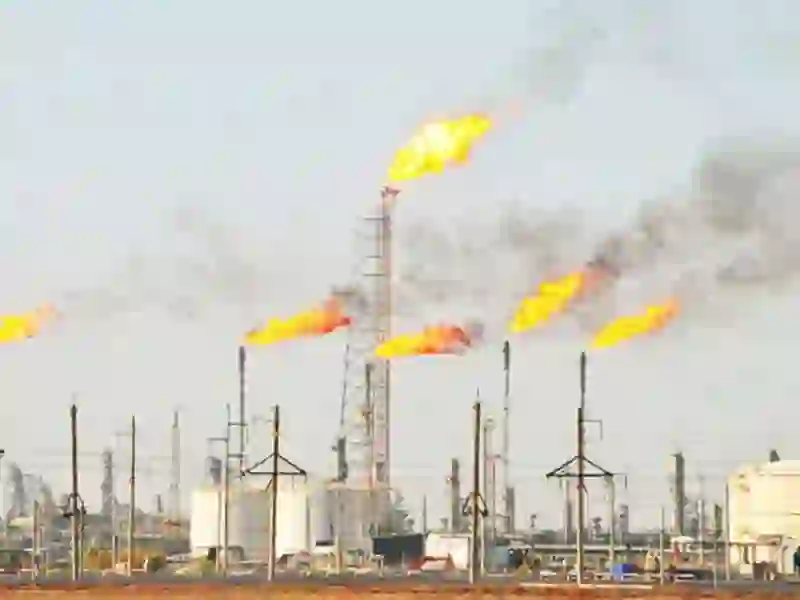
The Federal Government has disclosed that four major gas projects with a combined investment value of about $3.5 billion have reached Final Investment Decision (FID) under President Bola Tinubu’s administration.
Minister of State for Petroleum Resources (Gas), Ekperikpe Ekpo, disclosed this in Abuja during a media briefing, saying the development was evidence of renewed investor confidence in Nigeria’s gas sector.
According to Ekpo, the projects that have reached FID are the Iseni Project, valued at approximately $122 million; the Ubeta Project, estimated at $566 million; the HI Project, worth about $2 billion; and the Ima Project, valued at approximately $800 million.
He added that the $3.5 billion Brass Methanol Project had also moved closer to execution following the resolution of its Gas Sales and Purchase Agreement.
The minister said the government was focused on increasing gas production, expanding infrastructure, boosting domestic consumption and ensuring that Nigeria’s gas resources contribute more significantly to economic growth, job creation and industrial development.
Ekpo said Nigeria’s proven 2P gas reserves increased from about 208.83 trillion cubic feet (TCF) in 2023 to 215.19 TCF as of January 1, 2026.
He also disclosed that average gas production had risen from approximately 6.86 billion cubic feet per day (bcf/d) in 2023 to about 7.5 bcf/d, while domestic gas supply had exceeded 2 bcf/d.
The Federal Government, he said, is targeting gas production of 10 bcf/d by 2027 and 12 bcf/d by 2030 to meet increasing demand from electricity generation, manufacturing, fertiliser and petrochemical industries, LNG, transportation and other sectors.
Ekpo also highlighted the recovery of Nigeria LNG’s operations, stating that the company’s nameplate capacity utilisation had increased from about 59 per cent in 2023 to approximately 87 per cent year-to-date in 2026.
He attributed the improvement partly to greater stability in the Niger Delta and increased participation of indigenous companies in upstream gas production.
The minister said the Train 7 project, which is currently under construction and targeted for completion in June 2027, would further increase the country’s LNG capacity.
According to him, Train 7 is expected to add about eight million tonnes per annum (MTPA) to Nigeria LNG’s existing 22 MTPA capacity, raising total capacity to approximately 30 MTPA.
Ekpo said the expansion would improve gas processing, increase export capacity, support domestic LPG availability and strengthen Nigeria’s position in the international LNG market.
On gas-to-power, he disclosed that the National Economic Council had approved about N185 billion to settle validated legacy debts owed to upstream gas producers.
He said the payment was aimed not only at clearing outstanding obligations but also at restoring confidence in the gas and power sectors and improving the reliability of gas supplies to power plants.
The minister further announced that the Obiafu-Obrikom-Oben (OB3) gas pipeline had reached 100 per cent completion, with pre-commissioning activities concluded ahead of the delivery of first gas.
The pipeline, which has an estimated capacity of about 2 bcf/d, is expected to unlock more than 500 million standard cubic feet per day (MMscf/d) of additional domestic gas supply.
Ekpo said the Ajaokuta-Kaduna-Kano (AKK) gas pipeline was also about 95 per cent complete and expected to be completed in 2027.
Through the Midstream and Downstream Gas Infrastructure Fund (MDGIF), he said N671 billion in public funding had attracted approximately N1.6 trillion in private investment.
The funding, according to him, covers 31 projects and 205 infrastructure assets, which could provide about 475 MMscf/d of gas to the domestic market when fully operational.
The government, he added, is targeting approximately $30 billion in new investment in the gas sector by 2030.
Ekpo also pointed to the expansion of Compressed Natural Gas (CNG) as part of efforts to reduce transportation costs.
He said the number of vehicles converted to CNG had risen from about 11,000 in 2023 to more than 120,000 in 2026.
The government is targeting at least one million CNG-powered vehicles and up to 1,000 refuelling stations nationwide, although Ekpo stressed that private investors would play the leading role in driving the expansion.
On Liquefied Petroleum Gas (LPG), the minister said the government aims to provide access to five million households by 2030.
He added that President Tinubu had approved the extension of the National Grassroots LPG Penetration Programme to 2060, with the long-term objective of reaching more than 10 million households and promoting cleaner cooking.
Ekpo said Nigeria LNG and other gas producers had been directed to prioritise domestic LPG supply, stressing that gas-producing companies must ensure that available volumes are not diverted away from Nigerian consumers.
He also disclosed that the government was working to resolve issues surrounding Chevron’s deep offshore LPG production to ensure that the relevant volumes are made available domestically.
On gas flaring, Ekpo said 42 companies had been awarded contracts to convert flare gas into energy, feedstock, LPG, CNG and electricity.
He said about 20 of the companies had made significant progress, although some were facing technical and operational challenges in gaining access to flare sites.
The minister reiterated the Federal Government’s commitment to ending routine gas flaring by 2030, noting that the volume of gas being flared had already declined significantly.
He said companies that continue to flare gas would be required either to install technology capable of capturing and commercialising the gas or allow qualified companies to utilise it.
Ekpo further stressed that deep offshore producers are legally required to meet their domestic gas obligations before exporting their production, with the Nigerian Upstream Petroleum Regulatory Commission responsible for enforcing the requirement.
Beyond Nigeria’s domestic gas development, the minister highlighted the country’s growing role in international energy diplomacy.
He noted that Philip Mshelbila became Secretary-General of the Gas Exporting Countries Forum (GECF) on January 1, 2026, making him the first Nigerian to occupy the position.
Ekpo also said Nigeria’s role in international energy organisations would help strengthen the country’s access to technology, funding and investment opportunities.
He said the next phase of the government’s gas strategy would focus on increasing production, accelerating infrastructure development, attracting investment, expanding CNG and LPG access, reducing gas flaring and ensuring that gas-producing communities benefit more from the sector.
The minister maintained that although significant progress had been recorded, the government would be judged by its ability to sustain the gains and translate Nigeria’s abundant gas resources into reliable energy, stronger industries, employment and broader economic prosperity.
READ ALSO:



“My girlfriend…” – Lady shares brother’s shocking response after siblings contributed ₦6m each for his UK relocation

Zamfara State Governor, Dauda Lawal, Flags Off Road in Tsafe, Says Infrastructure Will Enhance Connectivity, improve local economy

Exclusive: How Ondo Government Borrowed N30 Billion For Roads and Hospitals, Quietly Added an Unauthorised N15.2 Billion Private Loan, and Left N4.1 Billion Unaccounted For

Anyone Who Feels He Is Not Getting Anything Should Resign – Zamfara Governor Tells Dissatisfied Appointees

“I got my British passport in less than 16 months” – Man claims King’s convoy hit him, reveals alleged compensation

Wunti Urges Africa to Process Lithium, Cobalt Locally Instead of Repeating Oil Mistake

2026 Ballon d’Or: Donnarumma picks player to win award ahead of Yamal, Mbappe, Kane

Interior Minister Olubunmi Tunji-Ojo Pays Hundreds of Millions To Unnamed Vendors Without Competition

DSS Asked to Probe Edo APC Chairman Over ‘AK-47’ Comment

Coker Gives 10,000 Dangote Refinery Shares to APC Members

Nigeria May Crash Chaotically Under Atiku – Babachir Lawal Reveals Why He Prefers Tinubu

One person killed in Kwara auto crash

Tinubu Reveals ₦50,000 Request That Almost Made Him Quit 2023 Presidential Race

Kano NDC Candidate Waves Gun at Campaign Rally [VIDEO]

MURIC kicks over denial of Muslim students right to wear Hijab in OAU school

“He didn’t even think about it” — Man shares how keke driver turned down ₦400k profit offer

Ondo: APC Names Aiyedatiwa Chairman Of 228-Member 2027 Election Campaign Council

FG Reports $3.5bn Gas Investments, Says Output Rises to 7.5bcf/d

Ondo Igbokoda Aircraft Crash: Preliminary Count Puts Occupants At 32, Names And Condition Still Undisclosed

“You can actually be what you wanna be” — Cubana Chief Priest shares weight loss progress

 News22 hours ago
Exclusive: How Ondo Government Borrowed N30 Billion For Roads and Hospitals, Quietly Added an Unauthorised N15.2 Billion Private Loan, and Left N4.1 Billion Unaccounted For
 Politics11 hours ago
Anyone Who Feels He Is Not Getting Anything Should Resign – Zamfara Governor Tells Dissatisfied Appointees
- Viral18 hours ago
“I got my British passport in less than 16 months” – Man claims King’s convoy hit him, reveals alleged compensation
- News8 hours ago
Interior Minister Olubunmi Tunji-Ojo Pays Hundreds of Millions To Unnamed Vendors Without Competition
- News6 hours ago
Exclusive: Lagos Governor Sanwo-Olu Builds Fence With N20 Billion, Buys Cars For His People With N15 Billion And Poured N79 Billion Into One Expressway in Three Months
- Special Report4 hours ago
JUST IN: Court orders INEC to upload Olawepo-Hashim as Accord’s 2027 presidential candidate – The Witness Nigeria
- News23 hours ago
Ijebu North Students Rally Behind ₦10 Million Solar Gift to Ijebu Igbo General Hospital
- News22 hours ago
Gbenga Daniel Launches Free Medical Outreach for Ogun East Residents