News
Dangote Plans Major Petroleum Distribution Network Across Africa

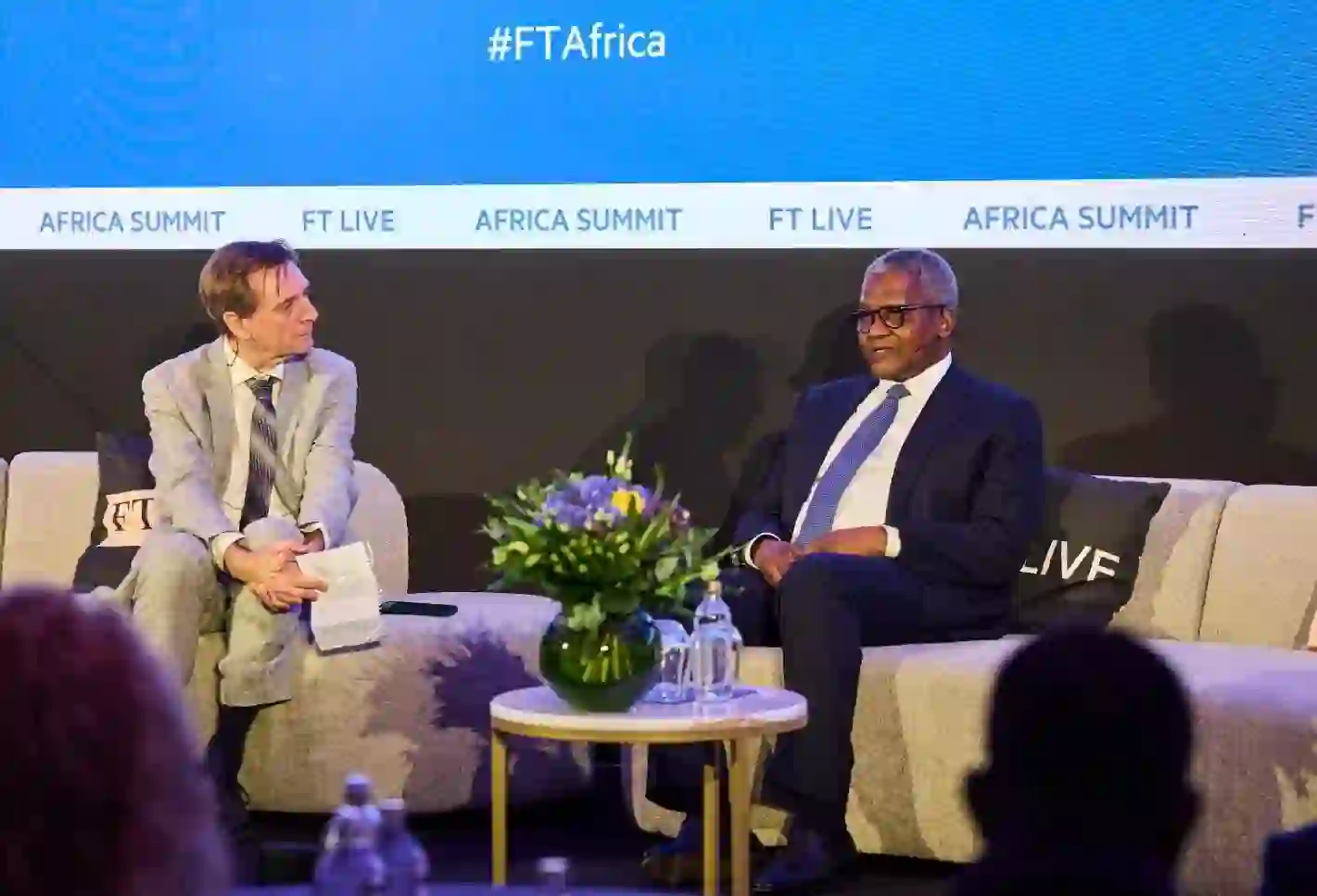
Aliko Dangote, President and Chief Executive of Dangote Industries Limited, has announced plans to establish a major petroleum distribution network across Africa through investments in pipelines, storage facilities and strategic supply routes.
The initiative is aimed at improving energy security, increasing the availability of refined petroleum products and reducing supply challenges across the continent. Dangote also called on African governments to protect local industries and introduce policies that would promote industrialisation, job creation and economic growth.
Speaking during an interview with Financial Times journalist David Pilling, the billionaire industrialist disclosed that his group had acquired a 25 per cent stake in a petroleum products pipeline network in Kenya.
He also revealed that the company was pursuing additional infrastructure projects in Djibouti, Ethiopia, Cameroon and Namibia as part of its plan to build an interconnected energy distribution system across Africa.
According to Dangote, the expansion will connect major refining centres with markets that have historically depended on imported petroleum products and inefficient distribution systems.
He explained that investments in pipelines, storage terminals and tank farms would make it easier to transport and distribute refined products across different African countries.
“We are very aggressive with that,” he said while discussing the group’s plans for petroleum distribution infrastructure.
Dangote acquires 25% stake in Kenya pipeline network
Dangote disclosed that the acquisition of a 25 per cent stake in Kenya’s petroleum pipeline network was completed with the support of the country’s government.
He said the investment would strengthen the transportation of refined petroleum products across East Africa and improve access to energy supplies in the region.
The industrialist also revealed plans to develop a major petroleum distribution corridor linking Djibouti with Addis Ababa, Ethiopia. The project is expected to include storage terminals and tank farms to facilitate the movement and storage of petroleum products.
In addition, he said another strategic project in Cameroon was approaching completion, while Namibia had been identified as an important entry point for expanding the group’s operations into Southern Africa.
Dangote explained that Namibia’s location makes it attractive for transporting petroleum products from the Dangote Petroleum Refinery in Lagos.
“From our refinery to Namibia is just about four days of steaming,” he said.
He added that petroleum products shipped to Namibia could be distributed to other markets, including Botswana and South Africa.
The group is also exploring supply routes into Zimbabwe and Zambia as part of its wider strategy to establish a continental distribution network supported by strategically located storage and transportation facilities.
Plans for 700,000-barrel-per-day refinery in Kenya
The petroleum distribution initiative complements Dangote’s plan to establish another refinery in Lamu, Kenya, with a proposed capacity of approximately 700,000 barrels per day.
He said East Africa’s growing economies, expanding mining industry and rising energy demand made the region an attractive destination for major refining investments.
According to him, the proposed refinery would source crude oil from different markets rather than rely entirely on supplies from Kenya or Uganda. This approach, he explained, would provide greater flexibility and support the project’s long-term sustainability.
Dangote said technical assessments identified Lamu as the preferred location because of its deep-water access, marine infrastructure and availability of resources needed for large-scale refining operations.
He added that the investment decision was reached within four months but alleged that some commercial interests attempted to delay the project through legal proceedings shortly before its public announcement.
Dangote calls for protection of African industries
Beyond the energy sector, Dangote urged African governments to adopt industrial policies that protect domestic manufacturers from unfair competition and encourage local production.
He argued that African economies would struggle to develop strong manufacturing sectors if local businesses were exposed to unrestricted imports from more established industrial economies.
According to him, excessive dependence on imported goods weakens domestic production, limits employment opportunities and prevents African countries from fully benefiting from their natural resources.
“Allowing imports to displace local production means we are exporting our jobs out of the continent and importing poverty into the continent,” he said.
Dangote questioned why African countries should hesitate to support their industries when major global economies also use protective measures to strengthen local manufacturing and preserve jobs.
“If America is now saying, no, we are going to protect our industries, who are we in Africa not to protect our own industries?” he asked.
He maintained that governments should create policies that encourage local production, promote investment and help African businesses compete effectively in domestic and international markets.
Dangote earmarks $50bn for investments
The industrialist also disclosed that Dangote Group had earmarked approximately $50 billion for investments between 2026 and 2030.
He described the investment programme as part of a broader effort to demonstrate that African companies can undertake large-scale industrial projects capable of transforming the continent’s economy.
According to him, the planned investments are intended not only to expand the group’s operations but also to encourage other African entrepreneurs and investors to pursue ambitious industrial ventures.
“The legacy we are trying to set up is how do we industrialise our continent?” he said.
Dangote stressed that Africa needed to move beyond exporting raw materials and importing finished products by developing industries capable of processing its resources locally.
He argued that stronger manufacturing industries would create jobs, increase economic opportunities and help African countries retain more value from their natural resources.
Power supply remains a major challenge
Dangote identified inadequate electricity supply, weak financial systems and insufficient industrial policies as major obstacles to Africa’s economic development.
He described reliable electricity as essential for industrialisation, particularly in manufacturing, mining and mineral processing, where consistent power supply is necessary to increase production and add value to raw materials.
The industrialist highlighted the continent’s electricity access gap, noting that an estimated 650 million Africans still lack access to electricity.
He said addressing the problem would create opportunities for industrial expansion, job creation and economic diversification.
Dangote questioned why Africa, despite its abundant natural resources, large areas of arable land and youthful population, continues to face widespread poverty and underdevelopment.
He maintained that the continent possesses the resources and human potential needed to become a major global industrial centre but must adopt policies that support local businesses and encourage long-term investment.
Despite the challenges, Dangote expressed optimism about Africa’s economic future, insisting that the continent’s industrial transformation had already begun.
“The journey has started,” he declared. “But now we’re awake, and we will make it happen.”
READ ALSO:





Court Hands UBA Major Victory in Landmark N156 Billion Debt Recovery Judgment Against The VASWANI Brothers and Stallion Group

“She Is A Level 17 Officer, Not A Political Appointee” — Showunmi Rejects Claims Wife’s INEC Posting Was Reward For Supporting Tinubu

Bayelsa Governor Douye Diri Who Now Twerks For Tinubu Stuffs N3 Billion Into His Deputy’s Office As N1 Billion Goes To Local Travel And Another N1 Billion To His Security

EXCLUSIVE: ₦1.37bn Ingawa Dam Payment Raises Questions as Newly Registered Business Name Receives Final Contract Funds Under Minister Utsev

EXCLUSIVE: Nasir Kwarra As Population Commission Boss Spent N4 Billion To Buy Calendars, N161.5 Billion On Census Procurements Without Bidding And Wasted Other Billions

“Millions Allegedly Collected For Undelivered Projects” — EFCC Arrests Innocent Ezuma Over $120m Ukrainian Investor Fraud

The London Property Company Now Controlled by Benin’s First Lady Nathalie Villette-Wadagni Was Part-Owned by Her Husband President Romuald Wadagni Until September 2023

Military says air strikes killed 103 ISWAP terrorists in Borno, Adamawa – The Witness Nigeria

Nigeria Arrests Five in Abduction of National Service Candidates, but Prosecutors Face Evidence Challenge

‘They Want To End Nigeria’ – Ex-INEC Commissioner, Mike Igini, Raises Alarm Over Threats To Democracy

Sowore Replies to APC Secretary Basiru Over ‘Skit Maker’ Comment

EPL: They need one goal – Paul Merson makes fresh title prediction

Businessman Tells EFCC Wike’s Son Claimed Father Approved Abuja Land Allocations in $2.1 Million Fraud Case

Ekiti Assembly Passes Bill to Establish State Police

Osun tax row: NANS, OIRS disagree over alleged extortion, double taxation claims

‘It Is Not Compulsory For Tinubu To Campaign In 36 States – Otubanjo

UN Expresses Confidence in Nigeria’s Efforts to Contain Ebola Outbreak

Akpabio Woos British Investors, Seeks Stronger Parliamentary Ties

Yobe court sentences man to death for killing wife

Dangote Plans Major Petroleum Distribution Network Across Africa

 Metro7 days ago
“The Nigeria Airways Mess Was Not Of Obasanjo’s Making” — Fani-Kayode Defends 2004 Liquidation, Says Airline Was Already Ruined By 1999
- Entertainment6 days ago
“I didn’t like him enough to date him” – Lady shares how she married the university friend she once rejected
- News5 days ago
Gov. Uzodimma Waste N400 Million To Rehabilitate Lagos Lodge, N250 Million For Just One-Storey Building In Government House, N175 Million For Chalet And Many More
- Metro7 days ago
“The Two-Week Suspension Is To Allow Government Honour Its Commitments” — Nasarawa JUSUN Temporarily Ends One-Month Strike
- Politics7 days ago
2027: Don’t Vote For Someone Who Celebrates Birthdays In IDP Camps Because He Wants To Be President – Wike
- Entertainment6 days ago
“He is lucky the meal did not purge him” — Lady jokes after secretly helping male friend who stopped replying to messages
- Metro6 days ago
“The Leave Is Not A Disciplinary Sanction” — Anglican Primate Sends Archbishop Ibezim On Six-Month Leave Over ₦2bn Church Land Allegation
- Entertainment7 days ago
“Adeleke is an APC puppet” – VeryDarkMan calls out Osun governor, drags Davido into political row