Metro
Tinubu Calls For Global Governance, Financial System Reforms At BRICS Summit

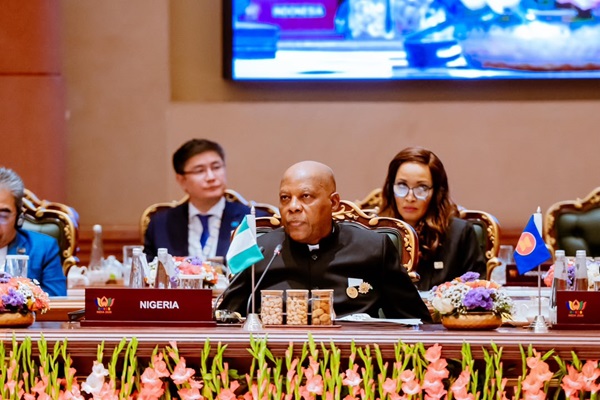
President Bola Ahmed Tinubu has called for an urgent reform of global governance structures and the international financial system, saying the rules guiding the global order must reflect current economic and demographic realities. Speaking at the 18th BRICS Leaders’ Summit in New Delhi, India, on Sunday, Tinubu made the call……
President Bola Ahmed Tinubu has called for an urgent reform of global governance structures and the international financial system, saying the rules guiding the global order must reflect current economic and demographic realities.
Speaking at the 18th BRICS Leaders’ Summit in New Delhi, India, on Sunday, Tinubu made the call in an address delivered on his behalf by Vice President Kashim Shettima.
In a statement issued by the Senior Special Assistant to the President on Media and Communications, Office of the Vice President, Stanley Nkwocha, Tinubu said Nigeria supports a more representative and equitable global system, including reforms to the United Nations Security Council and international financial institutions.
“Nigeria supports a more representative, equitable and responsive global governance architecture, including reform of the United Nations Security Council and the international financial system.
“BRICS amplifies the voice of the Global South and advances a more inclusive international order, consistent with Nigeria’s call for institutions that reflect contemporary economic and demographic realities,” he stated.
The President also called for BRICS cooperation to move beyond discussions and commitments towards practical outcomes capable of improving development across member and partner countries.
Read Also: Obafemi Martins To Organise Renewed Hope Football Tournament For Tinubu’s 2027 Campaign
Accordingly, President Tinubu made Nigeria’s case for “a BRICS partnership that moves from dialogue to delivery, from commitments to implementation, and from cooperation to measurable development outcomes.”

He also used the summit to invite international investors to explore opportunities in Nigeria, positioning the country as a strategic entry point into the continent’s growing market.
He urged investors to view Nigeria “as a gateway to Africa’s expanding market under the African Continental Free Trade Area.”
Tinubu said Nigeria’s economic resilience strategy was focused on building an economy capable of absorbing global shocks while creating sustainable opportunities for its citizens.
He said the approach was being pursued through his administration’s Renewed Hope Agenda, with reforms targeting macroeconomic stability, diversification of production, increased productivity, infrastructure and human-capital development, investment attraction, private-sector-led growth and climate resilience.
“We welcome BRICS cooperation in trade, agriculture, food security, energy, infrastructure, manufacturing, healthcare and critical minerals, especially partnerships that advance technology transfer, local value addition, industrial capacity and employment,” he added.
The President also highlighted Nigeria’s youthful population as a major economic asset, saying the creativity and enterprise of young Nigerians were helping to drive the country’s innovation agenda.

He identified digital skills, entrepreneurship, research, artificial intelligence and technology-driven businesses as key areas requiring investment, citing initiatives including 3MTT, Project BRIDGE and national AI programmes.
“We welcome deeper BRICS cooperation in artificial intelligence, digital public infrastructure, fintech, telecommunications, cybersecurity, biotechnology and advanced manufacturing, because developing countries must produce technology, create knowledge and own intellectual property. A nation that owns no technology risks renting its future.
“Nigeria sees cooperation with BRICS as a practical opportunity for trade, investment, technology transfer, and human-capital development. We support partnerships in infrastructure, connectivity, energy, agriculture, healthcare, education, and industrialisation, backed by development finance.

“As Project BRIDGE expands broadband, fibre and digital public services, we seek an open, secure, and inclusive digital ecosystem that advances innovation, digital trade, responsible artificial intelligence, and cybersecurity”
Tinubu further said Nigeria’s sustainability approach seeks to combine climate action with the development needs of emerging economies.
He reaffirmed Nigeria’s support for affordable climate finance, technology transfer and capacity-building for Africa, while identifying renewable energy, gas, clean technologies, climate-smart agriculture, sustainable infrastructure and responsible critical-mineral development as areas for cooperation.
According to him, such partnerships should ensure that climate action contributes to wider economic development.
The President said Nigeria was prepared to contribute to a BRICS partnership capable of responding to global shocks, embracing technological change, promoting shared prosperity and protecting future generations.
“Our partnerships must create jobs, expand trade, transfer technology, and strengthen our nations’ productive capacity. We must build a future in which Africa moves from the margins of global development to the frontiers of global growth and innovation,” he maintained.
Earlier, Indian Prime Minister Narendra Modi, who opened the 18th BRICS Leaders’ Summit, said the bloc had gained greater confidence among countries of the Global South because their voices were being heard and their experiences respected.
Modi said BRICS was developing solutions with countries rather than for them, while describing the bloc’s diversity and cooperation as key sources of its strength.
“We may be rooted in different realities, but together, we rise through cooperation and blossom for humanity,” he said.
The Indian Prime Minister also highlighted initiatives including BRICS CONNECT, the BRICS MSME Cooperation Portal and the BRICS Urban Mobility Hub, saying they were aimed at supporting skills development, employment, enterprise growth and knowledge-sharing among member and partner countries.
He further stressed the importance of balancing economic development with environmental responsibility, saying sustainability must remain central to BRICS cooperation and efforts to safeguard the interests of future generations.


Southern Kaduna genocide: Provide evidence of El-Rufai’s involvement – Dalung to Defence Minister, Musa

SEDC To Roll Out Community -Based Social Impact Programmes To Improve Livelihoods In Rural Communities

Evening Recap: Man stabs Sokoto Islamic cleric, FG pays ex-Nigeria Airways workers N18bn, other top stories

Lagos Government Dismisses Viral Video Showing People Living Under Oja Oba Bridge » Apples Bite Int’l Magazine

Morning recap: Again, Nigerians lose savings to Ponzi scheme, Dangote refinery raises petrol gantry price, other top stories

Evening recap: Bamanga Tukur dies at 90, Dangote projects N10,000 refinery shares, 54 countries offer eVisa, other top stories

Infinix Launches GT 50 Pro: The Ultimate Hardcore Gaming Flagship with Industry-First Cooling and Control

“You cannot pin anything on him” – Gospel minister, Lawrence Oyor speaks on Peter Obi’s political record

ALERT: Nigerian Army Warns of Possible Coordinated Terrorist Attacks on Churches, Schools and Youth Camps

“Is NELFUND Upkeep Meant To Feed The Student Or Her Family?” — APC Campaign Spokesman’s ₦10,000 Example Raises Questions

Police probe officer over shooting of seven-year-old boy in A’Ibom

VIDEO: Tinubu Arrives Paris as European Holiday Continues

Army confirms abduction of six Islamic scholars in Zamfara

Manchester Derby: United, City Fans Express Confidence Ahead of Old Trafford Clash

Sweden votes over immigration as right-wing bloc gains traction

PHOTOS: Ex-PDP Chair Bamanga Tukur Buried In Yola

Report suspicious movements promptly – Gov Adeleke to Osun residents

2027: Fayemi Urges Catholics To Join Politics, Warns Against ‘Dirty Game’ Mentality

2027: Sowore promises N500,000 wage, 24-hour electricity if elected

NDLEA intercepts colos shipments from UK

 News17 hours ago
Evening recap: Bamanga Tukur dies at 90, Dangote projects N10,000 refinery shares, 54 countries offer eVisa, other top stories
- Politics14 hours ago
ALERT: Nigerian Army Warns of Possible Coordinated Terrorist Attacks on Churches, Schools and Youth Camps
- Metro15 hours ago
“Is NELFUND Upkeep Meant To Feed The Student Or Her Family?” — APC Campaign Spokesman’s ₦10,000 Example Raises Questions
- Special Report17 hours ago
We Won’t Release You Until The Network Improves — Residents Tell Telecom Employee As They Tie Him To A Pole Over Poor Network
- Entertainment17 hours ago
Verydarkman shares first video of Poco Lee and Burna Boy following his alleged release from UK prison
- Special Report16 hours ago
Foreign Minister, Hon Okudzeto Ablakwa Presents Chop Boxes, Beds And 100 Bicycles To North Tongu Students Ahead Of SHS Resumption
- Metro24 hours ago
“My Husband Did Not Know What I Was Doing To Our Daughters” — Woman Arrested Over Alleged Child Sexual Exploitation
- Metro24 hours ago
“Responsible AI Begins With Institutional Readiness, Not Technology” — INEC Chairman Amupitan Says Ahead Of 2027 Elections