News
Stop counterfeit products! – TimesNG.com.ng

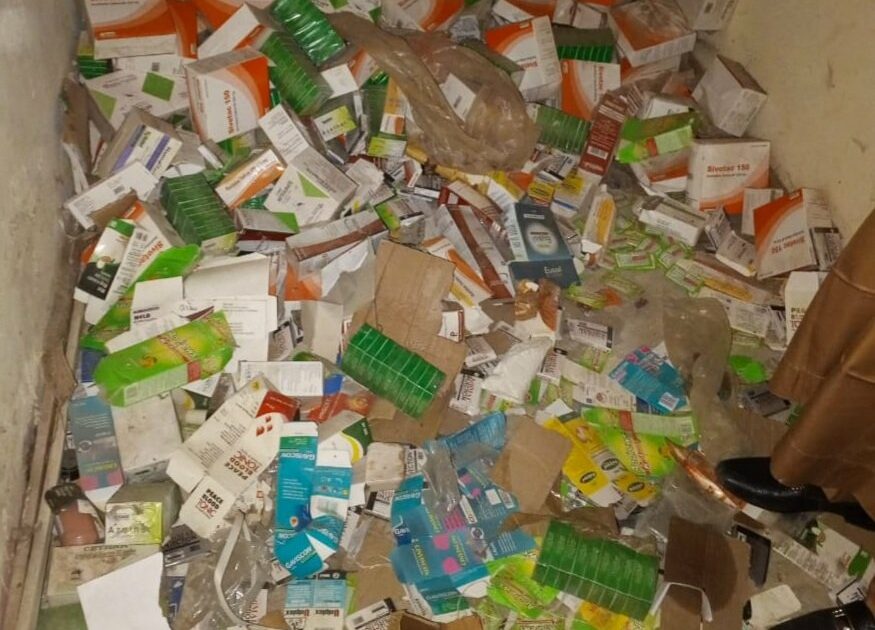
NIGERIA is facing a grave public health and economic emergency. Dangerous counterfeit products are increasingly entering Nigerian markets, hospitals, shops, and dining tables.
Almost any product you can imagine can be faked or adulterated and marketed online, on the streets, or in open markets. Children’s toys, cosmetics, electrical appliances, and automobile parts are increasingly counterfeited and sold to Nigerians.
Sadly, medicines and foods, the unlikeliest items to be counterfeited, are not spared.
In 2017, the World Health Organisation reported that at least one in 10 medicines circulating in developing countries were substandard or counterfeited.
The global health body also estimated that unsafe medicines were responsible for tens of thousands of deaths.
This is very dangerous. Nigeria must, by all means necessary, stop counterfeit products before they cause more damage.
The latest alarm sounded by the National Agency for Food and Drug Administration and Control should be taken with the utmost seriousness. The agency has warned of an emerging trend in which some Chinese nationals operating in Nigeria are allegedly involved in the local counterfeit trade.
Some are now establishing operations and logistics channels within the country rather than merely importing fake goods.
The counterfeiters reportedly identify popular products in Nigeria, arrange their replication and use logistics networks to distribute them.
The agency has also reported shutting down logistics companies linked to counterfeiters.
These allegations must be investigated rigorously and diligently prosecuted where evidence is established.
Whoever manufactures, imports, finances, distributes or sells dangerous counterfeit goods in Nigeria must face the law, whether Nigerian, Chinese or of any other nationality.
The warning is particularly disturbing because counterfeiting is becoming more sophisticated. Counterfeiters are exploiting new strategies to move fake products into and around the country.
WHO defines substandard medical products as those that fail to meet quality standards or specifications. Counterfeit pharmaceuticals deliberately misrepresent their identity, composition or source. Such products can contain the wrong ingredient, the wrong dosage or no active ingredient at all. They may also contain toxic contaminants.
WHO says substandard and falsified medical products are frequently sold online and in informal markets and constitute a serious global public-health threat.
The danger is obvious. Fake medicines can kill. Interpol warns that illicit medicines may contain too little, too much or none of the required active ingredient. It also says some fake medicines have been found to contain substances such as mercury, arsenic and rat poison.
In 2008, 48 children died in Nigeria after being given the infamous “My Pikin” teething medicine. The contaminated medicine contained diethylene glycol, a toxic substance used industrially, including in brake fluid.
Nigeria must never forget that tragedy.
Everyone is at risk from counterfeit products. The wealthy person buying an expensive cosmetic is as much at risk as the motorist replacing a brake pad or the mother purchasing medicine for her sick child.
So is the farmer buying agricultural chemicals, the consumer buying cooking oil or the family purchasing a household cleaning product. All can become victims.
The consequences of counterfeit pharmaceuticals are particularly devastating. A fake antihypertensive may leave high blood pressure untreated. A fake cancer medicine can kill, rather than cure a patient.
An ineffective antibiotic may fail to eliminate an infection and can contribute to antimicrobial resistance.
WHO notes that substandard and falsified medicines can cause treatment failure, poisoning, disease progression and increased drug resistance.
The danger is even greater for newborns, children, pregnant women and elderly people, whose bodies may be less able to tolerate toxic substances or treatment failure.
When a medicine contains the wrong active ingredient, an insufficient dose or a toxic contaminant, the consumer won’t know what harm is being inflicted.
Counterfeiters produce food, beverages, cosmetics, toothpaste, detergents, bleach and household products. They fake clothing, footwear, handbags, watches and jewellery. They also counterfeit smartphones, television sets, chargers and electrical components.
Dangerous fake automobile parts can include brake pads, airbags and engine components.
Food adulteration is particularly frightening. Reports of counterfeit palm oil coloured with industrial dyes to make inferior oil appear richer and more attractive illustrate the lengths to which unscrupulous traders can go.
The agricultural sector, too, needs closer supervision. The Ministry of Agriculture and relevant state authorities should intensify monitoring of farmers, produce handlers and traders. This will prevent the use of poisonous substances to artificially improve the appearance of crops or accelerate their ripening.
Viral footage of former Vice-President Yemi Osinbajo narrating his wife Dolapo’s experience with her favourite freshly pressed orange juice left many gasping.
After developing “strange headaches,” the orange juice was sent for a lab test.
The result was chilling: the juice was unfit for consumption. The orange was contaminated with dangerous chemicals.
Counterfeiting and product adulteration are also an assault on Nigeria’s economy. Legitimate manufacturers who make enormous investments and pay taxes find themselves competing with criminals who steal their brands and sell dangerous imitations at lower prices.
The result is lost revenue, weakened domestic industry, unemployment and diminished confidence in Nigerian markets.
WHO estimates that countries spend about $30.5 billion annually on substandard and falsified medical products alone, while ineffective treatment causes additional healthcare and productivity losses.
NAFDAC deserves commendation for recent enforcement efforts. The agency says it destroyed more than N1.5tn worth of regulated products in coordinated operations across Lagos and the South-East between February and March 2025. The raids targeted major markets including Idumota, Onitsha and Ariaria in Aba.
More recently, NAFDAC reported securing 64 convictions for counterfeiting between June 2025 and June 2026.
The agency says the convictions included cases involving fake antibiotics, falsified antimalarials and codeine-containing cough syrups.
These are encouraging developments. But seizures and destruction alone cannot be the end of the story. If warehouses are raided and products destroyed while the masterminds simply establish another warehouse elsewhere, the problem will continue.
Nigeria must attack the entire criminal chain, from manufacturers and financiers to importers, warehouse owners, logistics operators, distributors, retailers and online sellers.
China provides an instructive example of the severity with which pharmaceutical counterfeiting can be treated. Its Drug Administration Law provides for fines of 15 to 30 times the value of counterfeit drugs. Its Criminal Law provides for very severe imprisonment and, in cases involving death or especially serious consequences, life imprisonment or even the death penalty.
Without copying another country’s legal system wholesale, Nigeria must ensure that penalties are sufficiently severe to make counterfeiting unattractive.
Pharmaceutical counterfeiters should face long prison terms on conviction. There should also be substantial financial penalties and confiscation of the proceeds and equipment used for the criminal enterprise.
The law should equally go after anyone who knowingly provides storage, transportation, financing or other logistical support for counterfeiting.
NAFDAC and the Standards Organisation of Nigeria must step up surveillance, intelligence gathering and post-market testing.
They need stronger laboratories, more inspectors, and modern product-tracing systems. Deeper cooperation with Customs, the Police, the Department of State Services and other relevant agencies is equally critical.
The authorities must keep a keener eye on borders, ports, bonded terminals, warehouses, free-trade zones, markets and online marketing outlets.
The political will to stop counterfeit products is paramount. No counterfeit kingpin should be protected because of wealth, political connections, nationality or influence. There should be no sacred cows.
Enforcement officers who take bribes or deliberately facilitate the trade must themselves be prosecuted.
Consumers equally have a role. Nigerians should buy medicines and regulated products from authorised outlets. They must report suspicious products.
But the primary responsibility rests with government and regulators to keep dangerous products out of the country.
Nigeria has already paid a terrible price for unsafe products. It cannot afford another “My Pikin” tragedy before decisive action is taken.
Fake medicines do not cure; they kill. Counterfeit food does not nourish; it poisons. Fake automobile parts can turn vehicles into death traps.
Nigeria must stop counterfeit products at the point of manufacture and at the borders. It must rid warehouses, markets and online outlets of them.
The masterminds and collaborators must be punished, and their networks dismantled.






BREAKING: Soludo pardons jailed native doctor, Akwa Okuko, appoints him Ambassador of Youths Reformation

“I have the money” – Man who borrowed ₦170K from OPay in January 2026 cries out over amount to be repaid

“If I come to you to make love after our quarrel, that’s my apology” – Man shares controversial view on marriage

Tinubu reacts as Nigeria wins arbitration against Sunrise’s $2.35bn Mambilla claim – The Witness Nigeria

“He stopped paying school fees” – UK-based Nigerian man narrates friend’s ordeal with family after relocating to Nigeria

Evening recap: 67 miners crowded into NSCDC cell before 37 died, Tinubu orders prosecution of officials, other top stories

NSCDC Boss, Audi Abubakar Constitues High-Powered Probe Into Deaths of Suspected Illegal Miners in Niger State

Morning recap: Horror in NSCDC cell of death, mother, four children die in Rivers fire, other top stories

WOW Experience Launches TheNaijaDreams, Inviting Nigerians to Share Their Dreams for Nigeria — and the Part They Will Play

Poverty shaped my journey from bread seller to UK business leader – Scotland-based MSBM CEO, Ariyibi-Oke

Kaduna PHCs where health workers save women from severe bleeding after childbirth

PDP Campaign: Adebutu, Sowunmi-Kolapo Draw Crowds in Ijebu-Ode, Odogbolu

Ingentia targets drilling expansion after 150% output increase

Five investors take 72.35% stake in Abbey Bank

Let us talk about Albinism

Ed Sheeran calls Gaza situation ‘unjustifiable’ after Macklemore exit furore

Motor park herbal drinks may cause organ failure – NAFDAC

Stop counterfeit products! – TimesNG.com.ng

JUST IN: Injured Osimhen out of Nigeria’s AFCON qualifiers — Report

EFCC Arrests Olori Halima Tejuoso Over Alleged N600m Fraud

 News18 hours ago
Morning recap: Horror in NSCDC cell of death, mother, four children die in Rivers fire, other top stories
- News22 hours ago
Poverty shaped my journey from bread seller to UK business leader – Scotland-based MSBM CEO, Ariyibi-Oke
- Entertainment15 hours ago
“There was an ongoing road construction project” — Man discovers elder brother sold his ₦10m property for ₦100m
- Entertainment17 hours ago
“Then he finally asked”- Woman shares unusual encounter with man after informing him about her marital status
- Viral17 hours ago
“If it’s not Peter Obi, there is nobody like Tinubu” — Man says even his 5-year-old daughter can rule Nigeria better
- Politics6 hours ago
Security Alert: Intelligence Warns of Possible Attacks on Markets, Churches and Mining Sites Across Plateau
- News5 hours ago
Evening recap: Tinubu insists transport costs will drop from October 1, Jehovah’s Witnesses adjust blood transfusion policy, other top stories
- Entertainment5 hours ago
“On four occasions”- Femi Otedola reveals why he only prays to God, speaks on number of times Dangote prays daily