News
Nigeria needs risk-sharing fund for primary healthcare investment – Reps

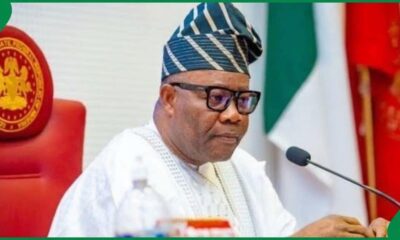
samiThe House of Representatives has called for the establishment of a risk-sharing fund to attract private investment into Nigeria’s primary healthcare system, citing weak revenue certainty and regulatory bottlenecks as major obstacles to investment.
The Chairman of the House Committee on Health Care Services/Establishments, Dr Amos Mogaji, made the call during a pre-summit dialogue organised by the Nigerian Economic Summit Group in collaboration with the Federal Ministry of Budget and Economic Planning.
The NESG disclosed this in a statement issued on Thursday after the virtual dialogue themed, “Powering PHC to UHC: Unlocking Private Sector Partnership.”
Mogaji said private investors in primary healthcare faced several constraints, including fragmented regulation, cumbersome government processes and weaknesses in contracting and procurement.
He noted that investors needed greater certainty over the risks they would assume, their responsibilities and the expected outcomes before committing capital to primary healthcare projects.
To address the problem, the lawmaker proposed “a PHC investment and risk-sharing facility to provide greater clarity around investment risks and responsibilities.”
He also advocated the establishment of a national primary healthcare public-private partnership framework that would clearly define the roles, responsibilities and expectations of the government and private-sector participants.
According to him, the lack of integrated systems connecting public and private primary healthcare providers, coupled with multiple regulatory and reporting requirements, has created unnecessary bureaucracy.
Mogaji stressed the need for policy continuity across administrations, arguing that agreements and frameworks developed to attract private investment must be sustained to strengthen investor confidence.
He said greater policy stability, institutional coordination and clarity would provide an enabling environment for increased private-sector investment, expertise and innovation in primary healthcare.
In her remarks, a member of the Steering Committee of the NESG Health Policy Commission, Dr Sade Adebanjo, described primary healthcare as the foundation and critical entry point of Nigeria’s healthcare system.
She said persistent gaps in financing, quality of care, human resources, infrastructure and service delivery had continued to limit the capacity of primary healthcare facilities to meet the needs of underserved communities.
Adebanjo noted that the private sector accounted for an estimated 60 to 70 per cent of healthcare service delivery in Nigeria.
She said harnessing the resources, expertise and capabilities of the public and private sectors would be essential to expanding access to affordable and quality healthcare and strengthening the country’s primary healthcare system.
Also speaking, the Managing Director of Almond Healthcare Services Limited, Dr Ben Nkechika, called for greater clarity on the role of the private sector in achieving Universal Health Coverage through primary healthcare.
Nkechika said private-sector participation should extend beyond treating private providers merely as contractors or profit-oriented businesses to areas such as advocacy, health sensitisation, community mobilisation, demand generation, financing, technology and service delivery.
He also warned against interventions that were disconnected from the operational realities of primary healthcare facilities.
Drawing from a programme implemented in Delta State, Nkechika said the concession of 15 primary healthcare facilities to private operators showed the potential of structured public-private partnerships.
According to him, the facilities, which received incentives, technology and expertise alongside support from local governments and communities, recorded zero maternal deaths over five years and improvements in infant health outcomes.
The Deputy Director, Health Systems Strengthening and Primary Healthcare at the Gates Foundation, Dr Nkata Chuku, identified government ownership and sustainable domestic financing as crucial to expanding public-private partnerships in healthcare.
Chuku said government participation should begin at the design and implementation stages rather than after private-sector models had already been developed and tested.
He also stressed the importance of establishing clear purchasing arrangements to determine who pays for healthcare services.
According to him, strategic purchasing could protect poor and vulnerable Nigerians from high out-of-pocket expenditure while providing private healthcare operators with a sustainable means of recovering their investments.
Chuku identified viability-gap funding and other de-risking mechanisms as potential instruments for attracting private capital into underserved communities.
He advocated building on existing health financing mechanisms, including the National Health Insurance Authority, the Basic Health Care Provision Fund and state health insurance schemes.
He added that improvements in strategic purchasing, provider accreditation, quality assurance and payment mechanisms could create opportunities for more private providers to serve underserved communities.
The Chief Executive Officer of EHA Clinics, Dr Ifunanya Ilodibe, said sustainable and predictable financing remained critical to private participation in primary healthcare.
She identified low insurance coverage, heavy dependence on out-of-pocket payments and delayed reimbursements as major threats to the sustainability of healthcare services in underserved areas.
Ilodibe also raised concerns over what she described as “regulatory asymmetry,” where private healthcare providers face stringent accreditation, regulatory and auditing requirements while government obligations under public-private partnership agreements may not be enforced with similar rigour.





2027: ‘I Will Stop Campaigning’ – Peter Obi Challenges Critics On Misappropriation Of Funds In Anambra

Tinubu reacts as Nigeria wins arbitration against Sunrise’s $2.35bn Mambilla claim – The Witness Nigeria

“We’ll Take A Back Seat After Choosing A Successor” — Otti Says He Won’t Control Abia Politics After Leaving Office

“You don old pass this kind performance” – Emeka Ike gets dragged over video of him reacting to Olu Jacobs’ demise

“Fuel is ₦1,300 in Nigeria, you people are protesting” – UK-based Nigerian compares fuel prices, praises Tinubu

WOW Experience Launches TheNaijaDreams, Inviting Nigerians to Share Their Dreams for Nigeria — and the Part They Will Play

NSCDC Boss, Audi Abubakar Constitues High-Powered Probe Into Deaths of Suspected Illegal Miners in Niger State

Meet The Visually Impaired Elderly Man Who Has Been Selling Coconuts In Akuapem Akropong For Over 20 Years Despite His Condition

Politics 6 minutes ago Insecurity Will Soon Be Defeated, Akpabio Assures Nigerians Senate President Godswill Akpabio has assured Nigerians that insecurity in the country will soon be defeated. NEWSNGR reports that the lawmaker made the…

Nursing Student Overwhelmed With Emotion After Father Surprised Her With Brand-new Jetour T2 SUV As Graduation gift

‘Insecurity Profitable Under Tinubu’ — ADC Slams FG Over Miners’ Deaths

2027: SDP pledges to rebuild economy

How Nigeria’s Media Rewrites Massacres into ‘Clashes’

Foundation urges police to probe Kano activist’s murder

How much has Iran war cost US? Pentagon estimates US$43.6 billion so far

Trump will host China's Xi Jingping next week, to talk AI and trade

Burna Boy to headline NFL’s first Paris game

Tinubu woos French business group for more investment in Nigeria

West African scientists warn of weakening health systems and urge stronger outbreak detection

Ex-PUNCH news editor unveils debut book

 Special Report20 hours ago
Tinubu reacts as Nigeria wins arbitration against Sunrise’s $2.35bn Mambilla claim – The Witness Nigeria
- News12 hours ago
WOW Experience Launches TheNaijaDreams, Inviting Nigerians to Share Their Dreams for Nigeria — and the Part They Will Play
- News21 hours ago
NSCDC Boss, Audi Abubakar Constitues High-Powered Probe Into Deaths of Suspected Illegal Miners in Niger State
- Politics17 hours ago
Politics 6 minutes ago Insecurity Will Soon Be Defeated, Akpabio Assures Nigerians Senate President Godswill Akpabio has assured Nigerians that insecurity in the country will soon be defeated. NEWSNGR reports that the lawmaker made the…
- News15 hours ago
Morning recap: Tinubu may broker Wike-APC govs truce, 40 miners die in NSCDC custody, other top stories
- Viral20 hours ago
“I just received alert of N20 million” — Burgled Ilesha shop owner thanks Adeleke, Pelumi Olajengbesi
- Entertainment6 hours ago
“I have the money” – Man who borrowed ₦170K from OPay in January 2026 cries out over amount to be repaid
- Entertainment7 hours ago
“If I come to you to make love after our quarrel, that’s my apology” – Man shares controversial view on marriage