Metro
NELFUND Raises Nursing Funding Nearly 14-Fold, Supports 5,381 Students


The Nigerian Education Loan Fund (NELFUND) has disbursed more than ₦1.08 billion to 5,381 student nurses and midwives across 21 federal and state institutions….
The Nigerian Education Loan Fund (NELFUND) has disbursed more than ₦1.08 billion to 5,381 student nurses and midwives across 21 federal and state institutions.
The intervention has seen funding for nursing and midwifery education rise almost 14-fold in three academic sessions, from ₦59.4 million in 2023/2024 to ₦205.8 million in 2024/2025 and ₦811.9 million in 2025/2026.
NELFUND said the beneficiaries are studying at institutions across the country, including colleges of nursing in Oyo, Lagos, Ogun, Katsina, Kebbi, Cross River, Bauchi, Anambra, Kaduna, Taraba, Zamfara and the Federal Capital Territory.
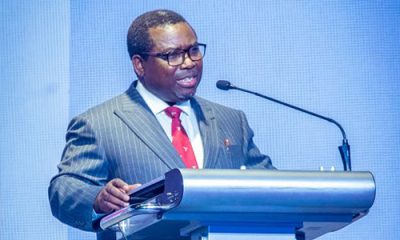
The Managing Director and Chief Executive of NELFUND, Akintunde Sawyerr, said the funding was designed to remove financial barriers facing students pursuing professional healthcare training.
“NELFUND is not simply providing financial assistance to students; we are investing in the human capital that Nigeria needs to move forward,” Sawyerr said.
He said the increase in funding showed the impact of expanding financial support for young Nigerians seeking professional qualifications.
Sawyerr added that many of the beneficiaries were young women pursuing nursing and midwifery, saying the intervention would provide them with greater access to professional opportunities and participation in Nigeria’s healthcare system.
The Executive Director, Operations, Mustapha Iyal, said NELFUND was working to ensure that eligible students received financial support promptly.
“Our focus remains on ensuring the seamless and timely delivery of support to eligible students, so that more young Nigerians can obtain the skills and qualifications the country needs,” Iyal said.
NELFUND said the intervention forms part of its broader mandate to expand access to higher education by reducing the impact of financial constraints on eligible students.


Police invite late singer, Toluwanisings’s wife, father, as parties sign peace deal – The Witness Nigeria

Fatal Bayelsa clash: Monarch clears Nembe E&P, questions link to land acquisition – The Witness Nigeria

US elections: Same cabal ousted Jonathan, installed Buhari, unleashed Boko Haram in Nigeria – Ex-Mayor

After four years in detention, DSS clears four IPOB suspects, pays N20m compensation – The Witness Nigeria

“Renting Your Property To A Terrorist Is Also An Offence” — FG Warns Landlords, Says Terrorism Support Attracts Minimum 20-Year Jail Term

“No Degree Of Rigging Can Silence The Will Of The People” — Obi’s Camp Warns Governors Against Manipulating 2027 Elections

Lafia Presidential Rally: RELAX DG Ahmed Bala leads members to campaign flag-off, highlights Tinubu’s North-Central projects

Namibia President hails Dangote’s $2.5bn investment as historic milestone for African industrialisation – The Witness Nigeria

They Want To Persecute Me – Karimi Reacts To Court Judgement Sacking Him As Kogi West Senatorial Candidate

“INEC Cannot Investigate INEC” — Ezekwesili Demands Independent Voter Register Audit, Warns Against Compromised 2027 Elections

EFCC probes ex-banker over alleged N515m customer fund theft

Bauchi gov directs LG chairmen to submit monthly security reports

₦70,000 Allowance: Tinubu Has Shown That He Cares For The Masses – Oshiomhole

No more power woes? Lagos unveils new electricity plan

Obi Has No Other Alternatives To Tinubu’s Reforms— Oshiomhole

False complaints attract six months’ jail or N500,000 fine – PCC

Bandits attack Kebbi community, kill one, abduct several residents

Kogi West: Karimi rejects court judgement, vows to go on with campaigns

Och’Idoma seeks stronger action against hunger, malnutrition in Benue

From illegal detention to courtroom abuse: NJC punishes three judges

 Politics6 days ago
Over 200 Boko Haram Terrorists Are Moving To Attack Military Camp In Buni Yadi As Rockets Target Troops; IED Threat Raises Travel Concerns
- Metro5 days ago
“Publishing His Name Is Subject To The Final Outcome Of A Court Order” — INEC Leaves Gwarzo Off Updated Kano Governorship List
- Metro5 days ago
“The Election Must Hold As Scheduled” — INEC Chairman Rules Out Postponement Of 2027 General Elections
- Metro5 days ago
“Ebola Outbreak Is Not Yet Under Control” — Africa CDC Warns As Confirmed Cases Exceed 10,200, Death Toll Surpasses 5,000
- Metro6 days ago
“Death Benefits Will Be Fully Paid To Next Of Kin” — NAF Pledges Continued Salaries For Personnel Killed In October 5 Aircraft Crash
- Metro5 days ago
“Sowore’s Whereabouts Remain Unknown” — Armed Men Allegedly Abduct AAC Presidential Candidate In Ado-Ekiti, Damage Vehicles And Restaurant
- Metro5 days ago
“They Beat Me Like A Criminal” — Sowore Recounts Ekiti Attack As Govt Denies Involvement, Calls For Police Investigation
- Metro5 days ago
“We Know What They Did And How They Did It, But I Don’t Know Why” — INEC Reveals Findings On AI-Generated Photos In Voters’ Register