Politics
It’s A Lie – Wike’s Aide Dismisses Peter Obi’s ‘I Don’t Give Shishi’ Claims

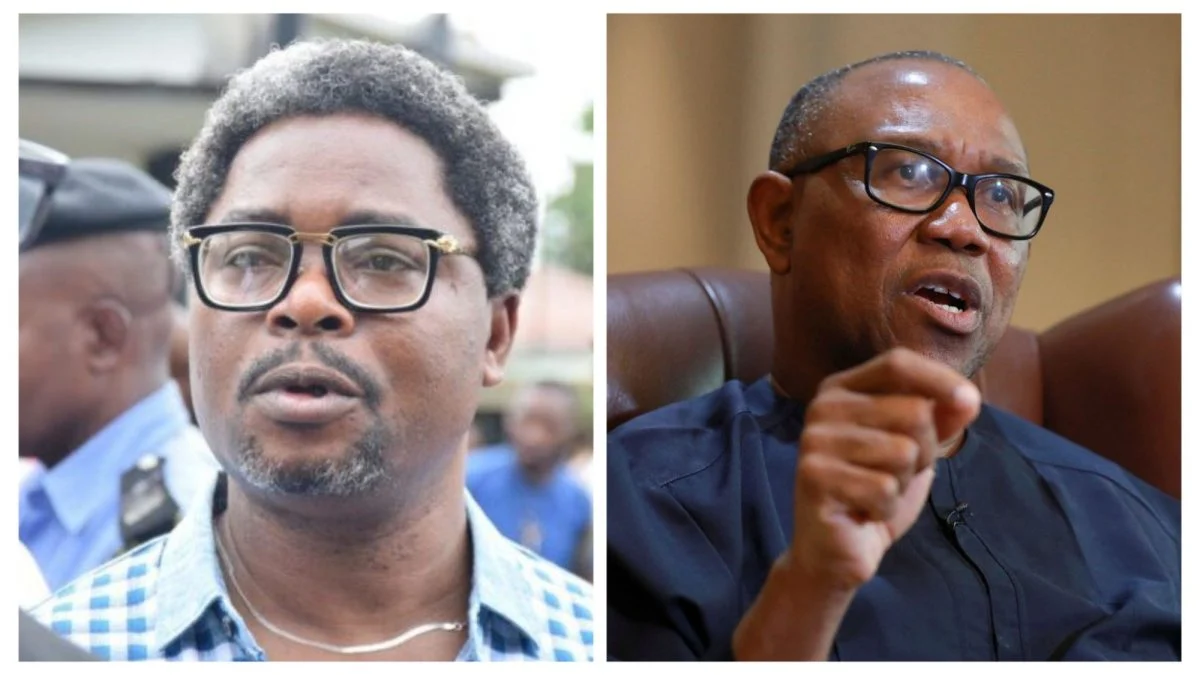
Lere Olayinka, media aide to the Minister of the Federal Capital Territory (FCT), Nyesom Wike, has countered claims by the presidential candidate of the Nigeria Democratic Congress (NDC), Peter Obi, that he does not give money to politicians or delegates during electioneering.
Olayinka described the claim as untrue, alleging that Obi distributed money to party delegates in Ekiti State during the 2023 election cycle.
The FCT minister’s spokesman made the disclosure during an interview on AIT’s Democracy Today, where he argued that financial resources are an integral part of political contests.
According to him, politicians routinely spend money to secure party nominations, mobilise supporters and run campaigns, insisting that Nigerians should not be deceived about the financial realities of elections.
Olayinka, who said he contested for the House of Representatives in 2023, maintained that candidates often provide financial support during party primaries.
He said, “They said that the candidate of the NDC, Peter Obi does not give ‘shishi,’ it’s a lie. I was a delegate in Ekiti when he was in PDP before going to the Labour Party, he came to Ekiti and dropped money for delegates.”
He further argued that political participation should be viewed both as a means of rendering public service and as a competitive enterprise, noting that politicians risk losing influence and opportunities when opponents emerge victorious.
“As a politician or a businessman, if your competitor wins, what happens to you? If you are seeking a contract from somewhere and your competitor wins, what happens to you? You will lose out,” Olayinka said.
He added that politicians spend money during elections because gaining political power is necessary for those seeking to implement their programmes.
“You want to serve me, for instance, why do politicians spend money including the US? Don’t politicians spend money on campaigns? They spend money to seek election,” he said.
Meanwhile, Director of the Abuja School of Social and Political Thought, Dr Sam Amadi, has weighed in on a recent confrontation between Arise TV presenter Rufai Oseni and Olayinka, calling for greater professionalism from both journalists and public officials during interviews.
The disagreement occurred during an appearance by Olayinka on Arise News’ Morning Show on Friday, after Oseni asked questions that reportedly drew a sharp response from the minister’s aide.
Olayinka indicated that he would not respond to questions from the presenter, resulting in the interview being abruptly terminated.
The incident subsequently generated reactions on social media, with Amadi arguing that although public officials should be prepared to answer questions when they agree to appear on programmes, journalists must equally conduct interviews professionally.
“If Lere was invited, he is still expected to address the questions. Refusing to do so sets a poor precedent,” Amadi said.
He, however, noted that the relationship between the two individuals had previously been characterised by tension, which could have contributed to the combative nature of the exchange.
Amadi urged media presenters to concentrate on extracting useful information for the public rather than turning interviews into confrontations.
“The media’s role is to inform and communicate with the audience, not to engage in shouting matches,” he said.
On political discourse ahead of the 2027 general elections, Amadi said politicians would naturally seek to outmanoeuvre their opponents, but argued that the media and other influential institutions should push the conversation beyond personality clashes and political drama.
He identified the economy, hunger, insecurity, health insurance and the rule of law as issues that should dominate political discussions ahead of the elections.
According to him, political actors are likely to respond to the issues that voters, the media and intellectual institutions place at the centre of public discourse.
Amadi also stressed that voters should assess candidates beyond their policy proposals, saying their integrity, credibility and past conduct were equally important in determining whether they could be trusted with public office.
“Effective governance is about policy and personality,” he said, adding that voters should examine candidates’ past conduct and credibility before making their electoral choices.


Nigerian Christians Warn of Political Exclusion as Nasarawa’s Ruling Party Selects All‑Muslim Slate for 2027

Electricity: Nigerian university campuses will be taken off national grid — Education Minister Alausa

“Politics Is My Business” — Ebonyi LG Chairman Threatens Political Opponents After Nwifuru Warns Chairmen Against Losing Their Councils

Exclusive: How NSIA MD Aminu Umar-Sadiq Started Assets Construction Project With N363 Million And Jumped To N44.8 Billion In One Year – Part 1 – Secrets Reporters Nigeria

‘Everybody Knows Wike Is Synonymous With Violence’ – ADC Dismisses Claims Of Winning Rivers, FCT For Tinubu

Yobe Chairman Ask Wives To Divorce Husbands If They Stop Them From Voting APC, Vows To Pay New Bride Price

Cash In Hand: The Multi Million Naira Olubunmi Tunji-Ojo Federal Ministry Of Interior Money Paid Directly To Individual Staff Accounts Without Vendors – Secrets Reporters Nigeria

₦1.37 Trillion Unrecovered: The Auditor General’s Report That Put Governor Yemi Cardoso Central Bank On Trial – Secrets Reporters Nigeria

Morning recap: FG counters opposition on Tinubu’s 2027 chances, 37 die from toxic fumes in Rivers, other top stories

N2.05bn Customs Audit Bombshell: N1.94bn Taxes Unremitted, N103.5m Legal Fees Questioned Under Hameed Ali – Secrets Reporters Nigeria

Atiku’s lobbyist deletes Trump appointment post after Tinubu aide’s comment

US envoys Witkoff and Kushner are in Moscow in a new push for peace between Russia and Ukraine

“Why I’m very happy” – Verydarkman reacts as Regina Daniels reportedly returns to husband’s house after messy separation

Fire destroys shops, stores at Kano market
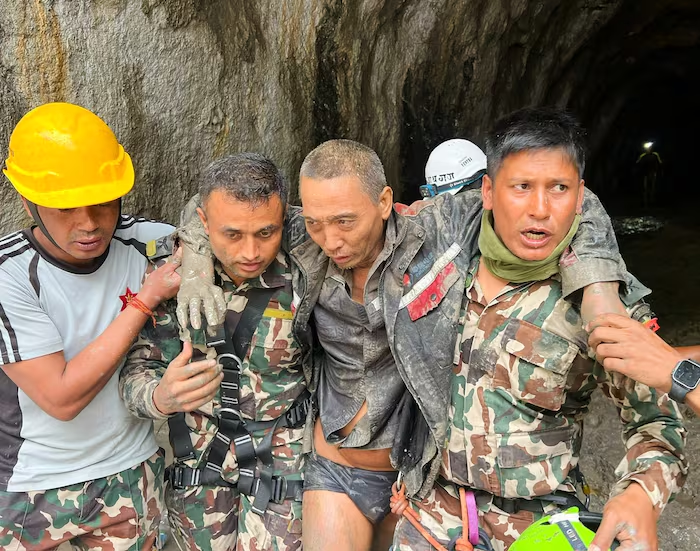
Rescuers in Nepal pull 2 people alive from the debris 10 days after devastating floods
Iran accuses the US of targeting a tanker near Kharg Island, and other Mideast news

“Sister your bumbum is showing” — Lady recounts embarrassing BRT experience after trousers tear at the back

“Don’t Disgrace Me” — Nigerian Man Begs Wife After She Catches Him With Another Woman in His Car

JAMB Releases 2026 UTME Results For Underage Candidates

Two killed, seven arrested after reprisal attack in Dass violent clash

 News18 hours ago
Morning recap: FG counters opposition on Tinubu’s 2027 chances, 37 die from toxic fumes in Rivers, other top stories
- Entertainment20 hours ago
“If women are called gold diggers, what do we call those men who benefit from their fellow men’s wealth?” – Mary Njoku asks
- Viral22 hours ago
“Wickedness dey oo” – Lady calls out ‘desperate’ abroad men who pay bride price, sleep with women and later request dowry
- Metro23 hours ago
“Patient Received ₦93,950 Support, No Treatment Was Delayed” — Lagos Govt Rejects Hospital Extortion Claim
- Entertainment6 hours ago
“Make una keep deceiving una sef with brand deals” – Phyna reacts to Tochi’s advice to BBNaija ex-housemates
- News7 hours ago
Trump Appoints Atiku’s US Lobbyist Karl Von Batten to White House Commission » Apples Bite Int’l Magazine
- Viral23 hours ago
[JUST IN]: APC GOVERNORSHIP CANDIDATES LANDS IN BIG TROUBLE AS TERRORISTS ATTACKS CONVOY WHILE TRAVELLING
- Viral21 hours ago
2027: Rivers Votes Must Count, Obi Warns Ahead of Election