News
Humanitarian aid must lead to recovery, prosperity – Minister

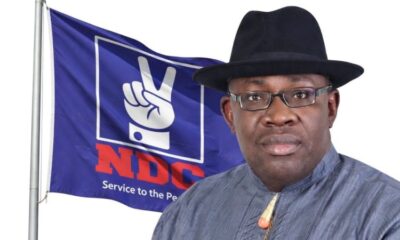
The Minister of Humanitarian Affairs and Poverty Reduction, Dr. Bernard Doro has stated that Nigeria will present its humanitarian and poverty reduction agenda to the global community at a High-Level Side Event of the 81st Session of the United Nations General Assembly (UNGA 81) in New York
He said the event, themed “Beyond Assistance: Reducing Poverty, Advancing Protection and Building Shared Prosperity,” with the sub-theme “Reimagining Humanitarian Action, Human Mobility and Social Protection for Sustainable Futures,” will hold on Thursday, September 24, 2026, from at Conference Room 12, United Nations Headquarters, New York.
This was disclosed in a statement by the Senior Technical Adviser on Information Systems and Data Analysis to the Minister, Dr. Abimbola Fasanu on Saturday.
According to him, the event is being convened by the Federal Ministry of Humanitarian Affairs and Poverty Reduction in partnership with IOM, UN Migration; Innovations for Poverty Action (IPA); IQS; PVBLIC; and Learning Economic Foundation.
According to the statement, Nigeria will use the global platform to advance a simple but important proposition: while humanitarian assistance remains essential for saving lives and responding to emergencies, assistance alone cannot sustainably address the conditions that keep vulnerable households trapped in cycles of poverty and repeated humanitarian need.
The minister, said Nigeria’s emerging approach seeks to better connect humanitarian response, human mobility, social protection, poverty reduction and economic inclusion, while strengthening national systems capable of anticipating shocks, protecting vulnerable populations and supporting households towards recovery and self-reliance.
“Our message at UNGA 81 is simple: humanitarian assistance must save lives, but it must also become a bridge to recovery, resilience and prosperity. We must build systems that do not merely help vulnerable households survive the next shock, but give them a credible pathway out of vulnerability,” Doro said.
At the centre of Nigeria’s emerging approach is the One Humanitarian One Poverty Response System (OHOPRS), the Minister’s flagship reform under the Renewed Hope Agenda.
The system is designed to strengthen coordination across humanitarian response, social protection, poverty reduction and economic inclusion.
Through a household-centred approach, OHOPRS seeks to reduce fragmentation and duplication, improve the use of data, strengthen coordination across levels of government and development partners, and ensure that vulnerable households can be connected to appropriate interventions throughout their journey from vulnerability towards resilience and prosperity.
“Through OHOPRS, we are changing the question from simply, ‘How many people received assistance?’ to ‘What happened to the household after we intervened?’ Our success must ultimately be measured by whether people recover, become more resilient and progressively move towards self-reliance,” Doro stated.
The Side Event will also highlight the importance of human mobility within the humanitarian-development landscape, recognising the relationship between conflict, displacement, migration, climate shocks, poverty and vulnerability.
Discussions are expected to explore how humanitarian response, social protection and development systems can better support displaced populations, vulnerable migrants, returnees and host communities while strengthening pathways towards durable solutions and economic inclusion.
Nigeria will continue to advocate for stronger international partnerships around sustainable humanitarian and development financing, adaptive and shock-responsive social protection, data and digital public infrastructure, institutional capacity, livelihoods, and economic inclusion.
The minister said the emerging approach reflects the Federal Government’s determination, under the leadership of President Bola Ahmed Tinubu, GCFR, to strengthen national ownership of humanitarian and poverty reduction interventions while working closely with international partners.
“The future of humanitarian action must be about more than managing vulnerability. It must be about building the systems, partnerships and opportunities that enable people to overcome it. Our ambition is to move from palliatives to pathways, from vulnerability to resilience, and ultimately to shared prosperity,” Doro added.
Amid growing humanitarian pressures from conflict, displacement, food insecurity, climate shocks and economic vulnerability worldwide, Nigeria is expected to use the UNGA platform to advocate a global development architecture that links immediate assistance with long-term protection, resilience and opportunity.
The “Beyond Assistance” proposition places vulnerable individuals and households at the centre of this approach, calling for humanitarian response to serve not as an endpoint, but as a bridge towards recovery, dignity, self-reliance and sustainable prosperity.






BREAKING: Soludo pardons jailed native doctor, Akwa Okuko, appoints him Ambassador of Youths Reformation

“I have the money” – Man who borrowed ₦170K from OPay in January 2026 cries out over amount to be repaid

“If I come to you to make love after our quarrel, that’s my apology” – Man shares controversial view on marriage

Tinubu reacts as Nigeria wins arbitration against Sunrise’s $2.35bn Mambilla claim – The Witness Nigeria

Evening recap: 67 miners crowded into NSCDC cell before 37 died, Tinubu orders prosecution of officials, other top stories

“He stopped paying school fees” – UK-based Nigerian man narrates friend’s ordeal with family after relocating to Nigeria

NSCDC Boss, Audi Abubakar Constitues High-Powered Probe Into Deaths of Suspected Illegal Miners in Niger State

Morning recap: Horror in NSCDC cell of death, mother, four children die in Rivers fire, other top stories

Poverty shaped my journey from bread seller to UK business leader – Scotland-based MSBM CEO, Ariyibi-Oke

WOW Experience Launches TheNaijaDreams, Inviting Nigerians to Share Their Dreams for Nigeria — and the Part They Will Play

La Liga: Raphinha scores hat-trick as Barcelona beat Sevilla 3-1

Embrace discipline, professionalism, army tells young soldiers

LaLiga: Raphinha Hat-Trick Fires Barcelona Past Sevilla

Niger miners’ deaths: PRP demands justice, inquiry

Salah hat-trick fires Trabzonspor to 4-0 win over Galatasaray

Humanitarian aid must lead to recovery, prosperity – Minister

FG urges Vietnam to raise trade volume to $2bn

Anambra reviews 180 criminal cases linked to land disputes

Aiyedatiwa unveils solar initiative to power 1,000 Ondo businesses

EPL: Man United Muslim supporters demand new owners after Ratcliffe comments

 News15 hours ago
Morning recap: Horror in NSCDC cell of death, mother, four children die in Rivers fire, other top stories
- News18 hours ago
Poverty shaped my journey from bread seller to UK business leader – Scotland-based MSBM CEO, Ariyibi-Oke
- Entertainment12 hours ago
“There was an ongoing road construction project” — Man discovers elder brother sold his ₦10m property for ₦100m
- Viral14 hours ago
“If it’s not Peter Obi, there is nobody like Tinubu” — Man says even his 5-year-old daughter can rule Nigeria better
- Entertainment14 hours ago
“Then he finally asked”- Woman shares unusual encounter with man after informing him about her marital status
- Special Report24 hours ago
Father Jumps Into Fight After Seeing Another Man Overpowering His Son
- Special Report17 hours ago
NDC wins as Appeal Court upholds registration
- Special Report17 hours ago
Trump bars CNN, MS NOW, Politico from White House over ‘fake news’